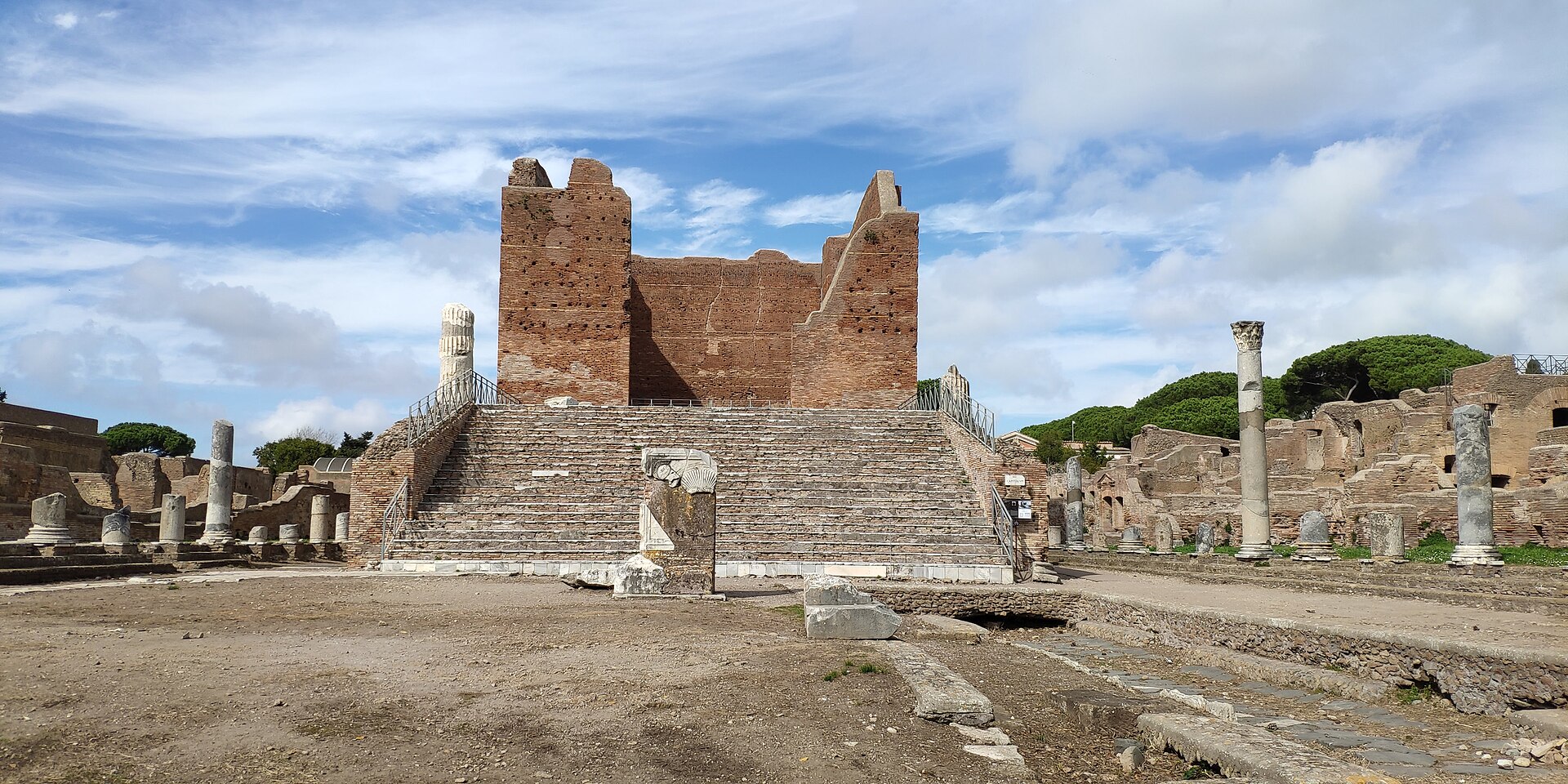
The Capitolium, formally known as the Temple of Jupiter Optimus Maximus, was the principal state temple of ancient Rome, located on the Capitoline Hill. Dedicated to the Capitoline Triad—Jupiter, Juno, and Minerva—it functioned as a religious and political center of the Roman state. Originally constructed in the late 6th century BCE under the Roman kings, the temple was rebuilt multiple times following fires and destruction. Although only foundations and fragments survive, it remained one of the most symbolically significant structures of Roman civic identity.
Key Facts
- Materials
- Tuff, Wood, Terracotta, Marble (later phases)
- Civilization
- Roman Kingdom and Roman Republic
- Date(s)
- Dedicated 509 BCE (multiple reconstructions)
- Condition
- Archaeological remains and foundations visible within Capitoline Museums area
- Original Function
- State temple dedicated to Jupiter, Juno, and Minerva
- Key Figures
- Lucius Tarquinius Superbus, Marcus Horatius Pulvillus, Sulla, Vespasian
Archaic Construction
Late 6th century BCETraditionally attributed to King Lucius Tarquinius Superbus, the temple was dedicated in 509 BCE at the beginning of the Roman Republic. Built in an Etruscan style with a deep pronaos and triple cella, it housed the Capitoline Triad.
Republican Destruction and Rebuilding
83 BCEA major fire destroyed the temple in 83 BCE. It was rebuilt under Sulla with increased use of marble and expanded scale, reflecting Rome’s growing imperial power.
Imperial Reconstructions
69-80 CEThe temple suffered destruction during civil conflict in 69 CE and was rebuilt under Vespasian and later Domitian. Each reconstruction emphasized the monument’s role as a symbol of imperial legitimacy.
Late Antique Decline
4th-5th centuries CEWith the Christianization of the Roman Empire, the temple lost its religious function. Materials were repurposed, and the structure gradually fell into ruin.
Cultural Significance
The Capitolium represented the religious and political heart of the Roman state. Major civic rituals, triumphal processions, and senatorial ceremonies culminated at the temple, reinforcing its role in articulating Roman authority. Its architectural form influenced the construction of Capitolia across Roman provinces, demonstrating the diffusion of Roman religious and political identity throughout the empire.
Interpretive Notes
Scholarly debates and areas of uncertainty
Scholars debate the precise layout and decorative program of the earliest Archaic temple due to limited surviving remains. Discussion continues regarding the extent of Etruscan influence on its architectural design and how successive reconstructions altered its symbolic meaning.
Visiting Information
Entry Rules
The original temple no longer stands. Archaeological remains are accessible through the Capitoline Museums and surrounding public areas. Standard museum admission policies apply.
Best Times to Visit
Accessible during Capitoline Museums operating hours. Early morning visits reduce crowd density.
Photography
Photography permitted in outdoor archaeological areas. Museum photography subject to institutional regulations.
Preservation Notes
Do not climb on visible foundations or stone remains. Follow museum conservation guidelines when visiting associated exhibits.
Nearby POIs
11 shownSources & Further Reading
- [1]The Roman Forum — David Watkin. Harvard University Press (2009)
- [2]Roman Religion — John Scheid. Harvard University Press (2003)
- [3]Etruscan and Early Roman Architecture — Axel Boëthius. Yale University Press (1978)
Key Facts
- Materials
- Tuff, Wood, Terracotta, Marble (later phases)
- Civilization
- Roman Kingdom and Roman Republic
- Date(s)
- Dedicated 509 BCE (multiple reconstructions)
- Condition
- Archaeological remains and foundations visible within Capitoline Museums area
- Original Function
- State temple dedicated to Jupiter, Juno, and Minerva
- Key Figures
- Lucius Tarquinius Superbus, Marcus Horatius Pulvillus, Sulla, Vespasian