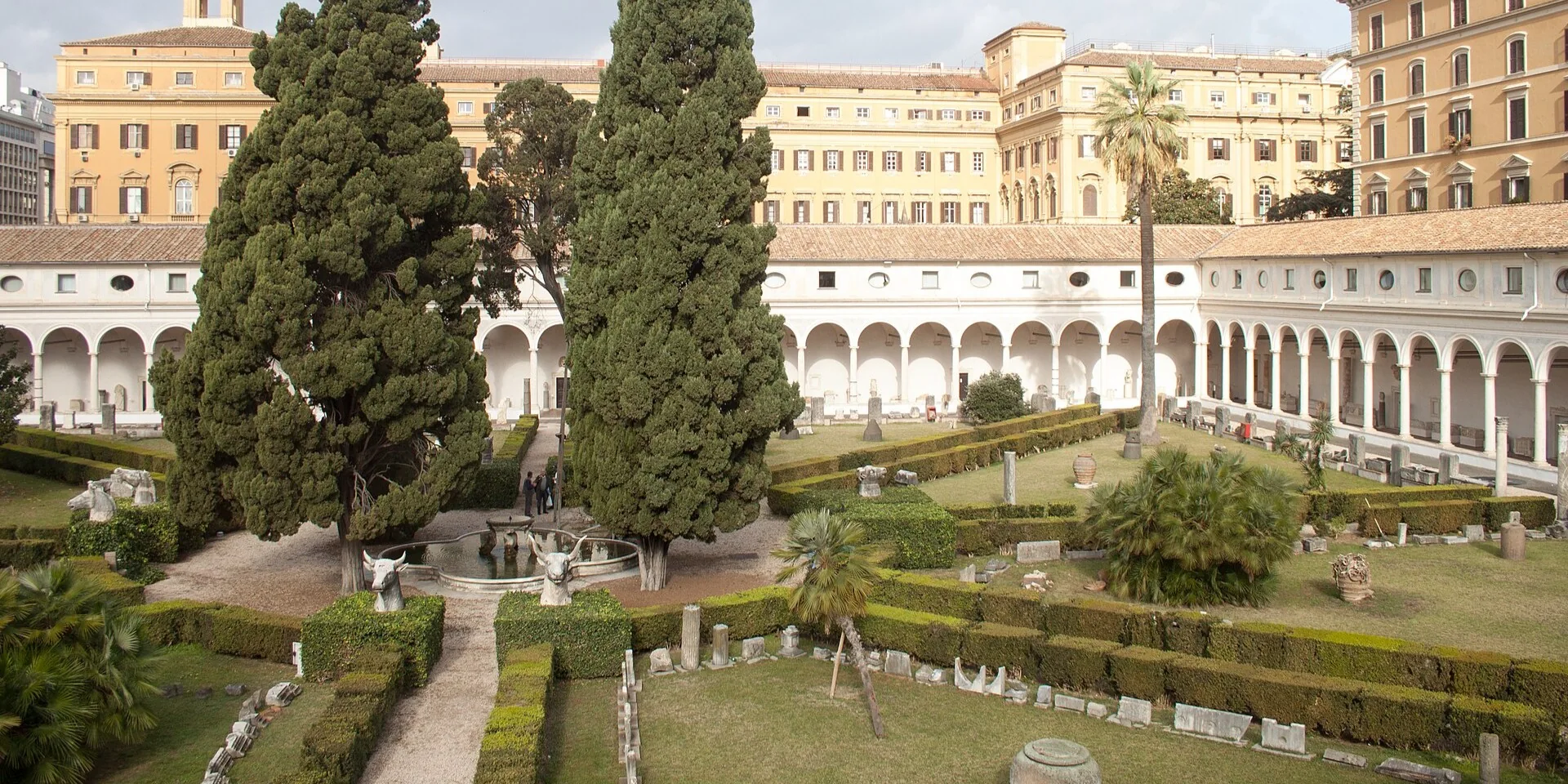
The Museo Nazionale Romano is a multi-site museum complex in Rome, Italy, dedicated to the preservation and exhibition of archaeological findings from the city's history. Established in 1889, the museum is distributed across several historic locations, including the Palazzo Massimo alle Terme, the Baths of Diocletian, the Palazzo Altemps, and the Crypta Balbi.
The collections span from the pre-Roman era through the late imperial period, housing some of the most significant examples of Roman sculpture, frescoes, mosaics, and epigraphy. By distributing its vast collection across distinct architectural sites, the museum provides a comprehensive overview of Roman artistic evolution and daily life, serving as a primary repository for artifacts recovered during urban excavations in Rome since the late 19th century.
Key Facts
- Materials
- Marble, Bronze, Terracotta, Fresco
- Civilization
- Roman
- Accessibility
- Wheelchair accessible at most locations
- Date(s)
- 1889 (Foundation)
- Condition
- Active, well-maintained
- Original Function
- Archaeological Museum
- Key Figures
- Felice Barnabei, Ludovico Pollak
Foundation and Early Collection
1889The museum was founded to house the vast quantity of archaeological material discovered during the urban renewal of Rome following its designation as the capital of the unified Kingdom of Italy.
Expansion of Sites
20th CenturyThe museum expanded its footprint significantly throughout the 20th century, incorporating the Baths of Diocletian and later acquiring the Palazzo Massimo and Palazzo Altemps to better organize its growing collection.
Modern Curation
21st CenturyRecent efforts have focused on the digital cataloging of artifacts and the renovation of exhibition spaces, particularly within the Crypta Balbi, which highlights the stratigraphy and urban development of Rome.
Cultural Significance
The Museo Nazionale Romano is central to the understanding of Roman identity, acting as the primary custodian of the city's material heritage. Its collection of portraiture and decorative arts provides essential insights into the social hierarchy and aesthetic values of the Roman world.
Beyond its academic value, the museum plays a vital role in the cultural life of Rome, bridging the gap between the ancient ruins visible in the city and the specific artifacts that once adorned them. It remains a critical site for international research into classical archaeology.
Interpretive Notes
Scholarly debates and areas of uncertainty
There is ongoing scholarly discussion regarding the provenance of certain bronze statues within the collection, particularly those recovered from clandestine excavations prior to the implementation of modern heritage laws. Additionally, the debate over the optimal display of fragmented sculptures—whether to restore them or present them in their found state—remains a point of contention among curators.
Visiting Information
Entry Rules
Tickets are required for entry and can be purchased online or at the ticket offices of the individual sites. The museum is generally closed on Mondays. Visitors are expected to adhere to standard museum conduct, including no food or drink in exhibition galleries.
Best Times to Visit
Weekday mornings are generally less crowded. The museum is best visited over multiple days due to the geographic distribution of its four main sites.
Photography
Personal photography is permitted for non-commercial use without the use of flash or tripods. Professional photography requires prior authorization from the museum administration.
Preservation Notes
Do not touch the artifacts or display cases. Maintain a respectful distance from all exhibits to ensure the preservation of delicate materials like frescoes and ancient textiles.
Nearby POIs
11 shownSources & Further Reading
- [1]
- [2]The Archaeology of Rome — John B. Ward-Perkins. Oxford University Press (1984)
Key Facts
- Materials
- Marble, Bronze, Terracotta, Fresco
- Civilization
- Roman
- Accessibility
- Wheelchair accessible at most locations
- Date(s)
- 1889 (Foundation)
- Condition
- Active, well-maintained
- Original Function
- Archaeological Museum
- Key Figures
- Felice Barnabei, Ludovico Pollak