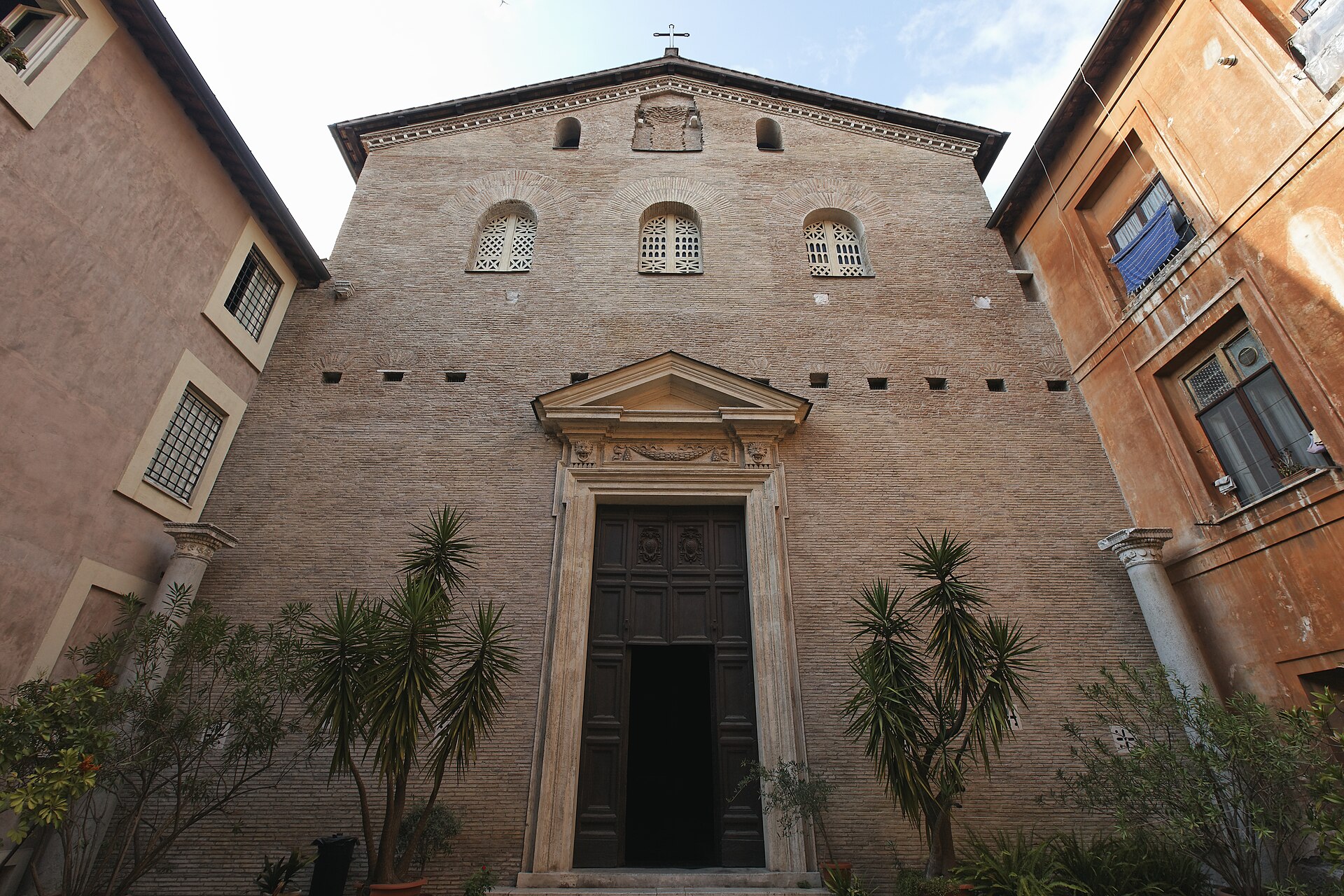
The Basilica di Santa Prassede is an ancient titular church and minor basilica located near the Basilica di Santa Maria Maggiore in Rome. Originally commissioned by Pope Hadrian I in the late 8th century and significantly expanded by Pope Paschal I in 822 CE, the church is renowned for its exceptional collection of Carolingian-era mosaics that decorate the apse, the triumphal arch, and the Chapel of San Zeno.
The architecture reflects a synthesis of early Christian basilica design and Byzantine artistic influence. While the exterior remains relatively austere, the interior houses a wealth of historical art, including the 9th-century mosaics that are considered among the most important examples of Byzantine-influenced art in Rome. The church underwent various modifications during the Renaissance and Baroque periods, yet it retains its medieval structural core and spiritual significance.
Key Facts
- Materials
- Brick, Marble, Glass tesserae, Gold leaf
- Civilization
- Medieval Roman
- Accessibility
- Ground level access, limited space in side chapels
- Date(s)
- 822 CE (current structure)
- Condition
- Active place of worship, well-preserved
- Original Function
- Titular church
- Key Figures
- Pope Paschal I, Saint Praxedes, Pope Hadrian I
Early Origins
2nd century CEThe site is traditionally associated with the home of Saint Praxedes, a 2nd-century Roman martyr. An early oratory was established here to honor her memory, serving the local Christian community during the period of Roman persecutions.
Carolingian Reconstruction
822 CEPope Paschal I commissioned the current basilica to replace the older, dilapidated structure. He sought to house the relics of saints transferred from the Roman catacombs, resulting in the creation of the elaborate mosaic programs that define the church today.
Baroque Modifications
17th centuryDuring the 17th century, the basilica underwent significant interior renovations under the patronage of Cardinal Ludovico de Torres. These changes included the addition of new altars and decorative elements that reflect the aesthetic sensibilities of the Baroque era.
Modern Preservation
20th century - presentRecent decades have seen extensive restoration efforts focused on the conservation of the 9th-century mosaics. These projects utilize modern scientific methods to stabilize the glass tesserae and prevent moisture damage to the structural masonry.
Cultural Significance
Santa Prassede serves as a vital link between the late antique Roman tradition and the medieval artistic revival. Its mosaics are central to the study of Byzantine influence in Italy, demonstrating how the Papacy utilized visual art to assert religious authority and continuity with the early Church.
Locally, the basilica remains an active parish church, maintaining a continuous tradition of worship that spans over a millennium. It is a key site for pilgrims visiting the relics of Roman martyrs and serves as a primary reference point for the study of Carolingian-era ecclesiastical architecture.
Interpretive Notes
Scholarly debates and areas of uncertainty
The exact provenance of the mosaic artists remains a subject of academic discussion. While the style is distinctly Byzantine, scholars debate whether the artisans were local Romans trained in the Eastern tradition or itinerant masters brought directly from Constantinople or Ravenna to execute the papal commission.
Visiting Information
Entry Rules
Open daily. Entry is free. Modest dress is required (shoulders and knees must be covered). As an active church, visitors are requested to maintain silence and refrain from visiting during liturgical services.
Best Times to Visit
Early morning or late afternoon on weekdays to avoid tourist crowds. The mosaics are best viewed with natural light, though coin-operated lighting is available for the Chapel of San Zeno.
Photography
Personal photography is permitted without flash. Tripods and professional equipment require prior authorization from the parish office.
Preservation Notes
The mosaics are extremely fragile; do not touch the walls or the mosaic surfaces. Use of flash is strictly prohibited as it accelerates the degradation of the pigments and gold leaf.
Nearby POIs
11 shownSources & Further Reading
- [1]The Mosaics of Rome: 3rd–12th Centuries — O.M. Dalton. Oxford University Press (1925)
- [2]Santa Prassede: The Carolingian Mosaics — John Osborne. Journal of the Warburg and Courtauld Institutes (1984)View
Key Facts
- Materials
- Brick, Marble, Glass tesserae, Gold leaf
- Civilization
- Medieval Roman
- Accessibility
- Ground level access, limited space in side chapels
- Date(s)
- 822 CE (current structure)
- Condition
- Active place of worship, well-preserved
- Original Function
- Titular church
- Key Figures
- Pope Paschal I, Saint Praxedes, Pope Hadrian I