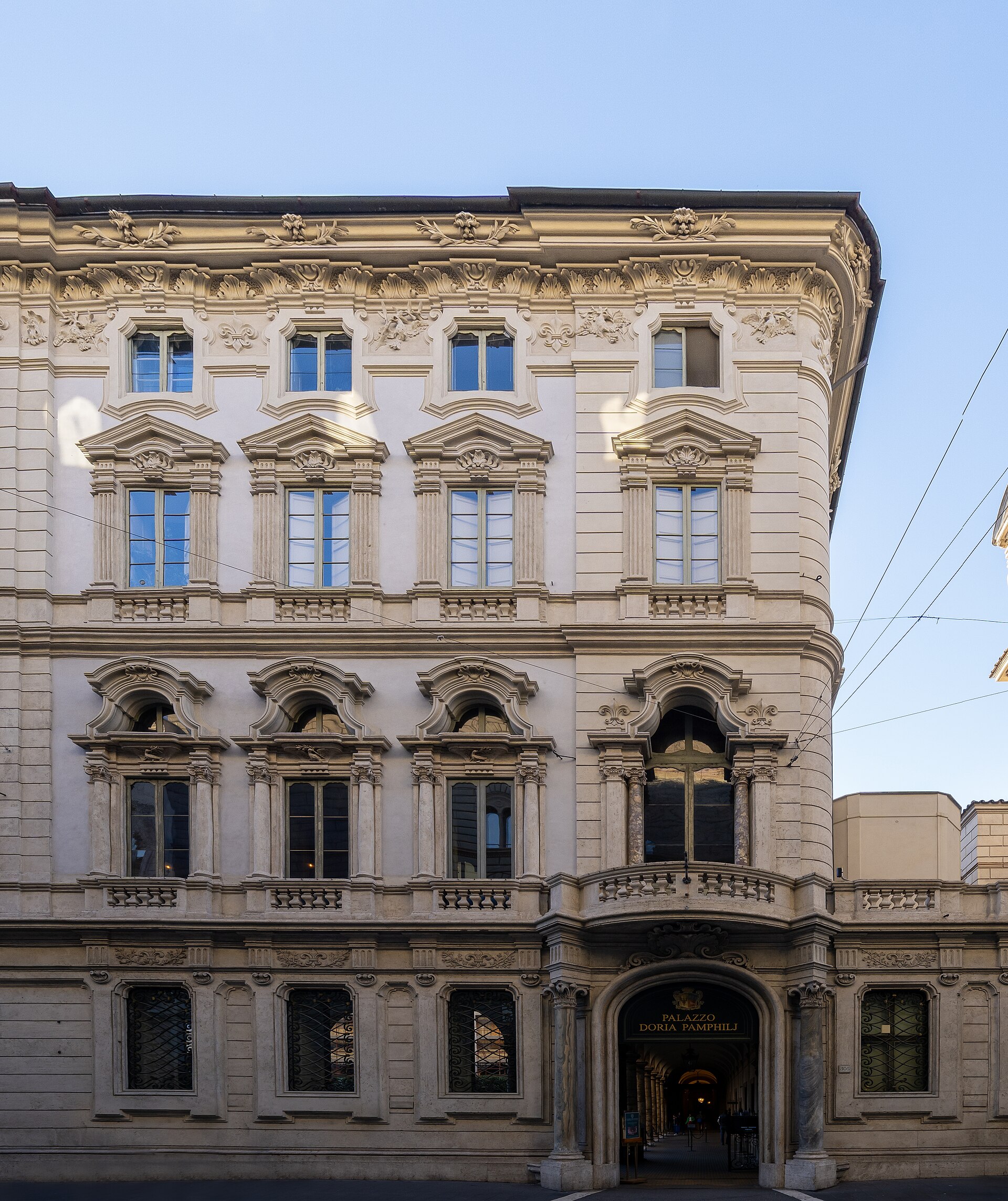
The Galleria Doria Pamphilj is a significant private art collection housed within the Palazzo Doria Pamphilj in Rome. The palace remains the residence of the Doria Pamphilj family, who have curated and maintained the collection over several centuries, preserving the original layout and atmosphere of a noble Roman residence.
The gallery is renowned for its extensive collection of 16th and 17th-century masterpieces, including works by Velázquez, Caravaggio, Titian, and Bernini. The interior spaces, particularly the Hall of Mirrors, reflect the opulent aesthetic of the Roman Baroque period and provide a rare glimpse into the private display habits of the Italian aristocracy.
Key Facts
- Materials
- Marble, Stucco, Gilded wood, Frescoes
- Civilization
- Italian
- Accessibility
- Partially accessible; some areas involve stairs
- Date(s)
- 15th - 18th century
- Condition
- Well-preserved, active private museum
- Original Function
- Private residence and art gallery
- Key Figures
- Pope Innocent X, Diego Velázquez, Gian Lorenzo Bernini
Palace Origins
15th centuryThe original structure was built by the Della Rovere family. It was later acquired and expanded by the Aldobrandini family before passing into the hands of the Pamphilj family through marriage.
The Pamphilj Expansion
17th centuryUnder the patronage of Pope Innocent X (Giovanni Battista Pamphilj), the palace underwent significant architectural expansion. The family consolidated their art collection during this period, commissioning works from the leading artists of the Roman Baroque.
Modern Preservation
20th century - presentThe gallery remains under the stewardship of the Doria Pamphilj family. It continues to operate as a private museum, maintaining the historical arrangement of the paintings and furniture as established in the 18th century.
Cultural Significance
The Galleria Doria Pamphilj serves as a primary example of the 'quadreria' or private picture gallery tradition in Rome. Unlike state-run museums, it offers a unique perspective on the continuity of aristocratic patronage and the preservation of family heritage within an original domestic setting.
It is particularly significant for its role in the history of art collecting, as the collection has remained largely intact and in its original location for centuries, resisting the dispersal that affected many other noble Roman collections.
Interpretive Notes
Scholarly debates and areas of uncertainty
There is ongoing academic discussion regarding the attribution of certain works within the collection, as well as debates concerning the ethics of maintaining private collections of significant cultural heritage versus public acquisition. Additionally, the interpretation of the original hanging scheme—whether it reflects 18th-century taste or later modifications—remains a subject of study.
Visiting Information
Entry Rules
Open daily. Tickets can be purchased online or at the entrance. Visitors are required to leave large bags in the cloakroom. Modest dress is recommended.
Best Times to Visit
Weekday mornings are generally quieter. The gallery is less crowded during the winter months compared to the peak summer tourist season.
Photography
Personal photography is permitted without flash or tripods. Professional photography requires prior written authorization.
Preservation Notes
Do not touch the artworks, frames, or furniture. Maintain a respectful distance from the paintings. Flash photography is strictly prohibited to prevent light damage to the canvases.
Nearby POIs
11 shownSources & Further Reading
- [1]The Doria Pamphilj Gallery: A Guide — Andrea G. De Marchi. Silvana Editoriale (2016)
- [2]Art and Patronage in the Roman Baroque — Francis Haskell. Yale University Press (1980)
Key Facts
- Materials
- Marble, Stucco, Gilded wood, Frescoes
- Civilization
- Italian
- Accessibility
- Partially accessible; some areas involve stairs
- Date(s)
- 15th - 18th century
- Condition
- Well-preserved, active private museum
- Original Function
- Private residence and art gallery
- Key Figures
- Pope Innocent X, Diego Velázquez, Gian Lorenzo Bernini