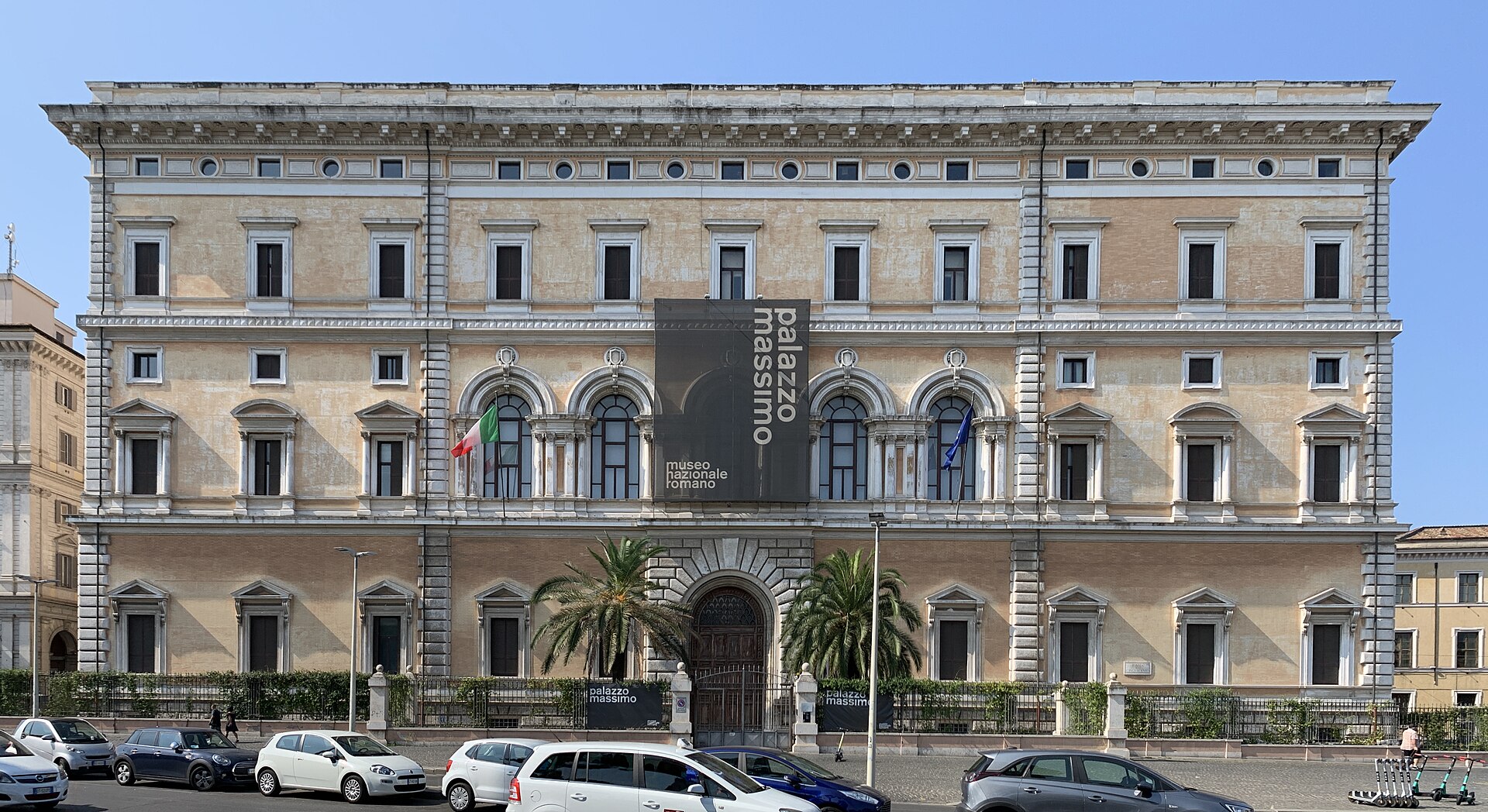
Palazzo Massimo alle Terme is a late 19th-century palace located in Rome, Italy, designed by architect Camillo Pistrucci. Originally constructed to serve as a Jesuit college, the building is now one of the four primary sites of the National Roman Museum. It houses one of the world's most significant collections of classical art, spanning the Republican, Imperial, and Late Antique periods.
The museum's collection is renowned for its exceptional preservation of Roman frescoes, mosaics, and stucco work, alongside iconic statuary such as the Boxer at Rest and the Discobolus of Castelporziano. The interior layout maintains much of the original palatial architecture, providing a formal setting for the display of artifacts recovered from excavations across Rome and its surrounding regions.
Key Facts
- Materials
- Brick, Travertine, Stucco
- Civilization
- Roman
- Accessibility
- Fully accessible with elevators
- Date(s)
- 1883-1887
- Condition
- Restored and active museum
- Original Function
- Jesuit College
- Key Figures
- Camillo Pistrucci, Massimiliano Massimo
Construction and Early Use
1883-1887The palace was commissioned by the Jesuit order to house the Collegio Massimo, an educational institution. Architect Camillo Pistrucci designed the structure in a Neo-Renaissance style, incorporating elements that reflected the grandeur of Roman palatial architecture.
Acquisition by the State
1981The Italian state acquired the building from the Jesuit order with the intention of converting it into a dedicated space for the National Roman Museum's extensive collection of classical antiquities, which had previously been dispersed across various locations.
Museum Transformation
1995-1998Following a comprehensive restoration and adaptation project led by architect Costantino Dardi, the building opened to the public as a museum in 1998. The renovation focused on integrating modern display technologies while preserving the historical integrity of the palace's interior spaces.
Cultural Significance
Palazzo Massimo serves as a vital repository for the material culture of ancient Rome. Its collection provides a comprehensive overview of Roman artistic evolution, particularly through its unique display of domestic decorative arts, which offer insight into the private lives and aesthetic preferences of the Roman elite.
Interpretive Notes
Scholarly debates and areas of uncertainty
Debates often center on the provenance and restoration techniques of specific high-profile sculptures, such as the Boxer at Rest. Scholars frequently discuss the ethical implications of modern cleaning methods versus the preservation of historical patina on bronze and marble surfaces.
Visiting Information
Entry Rules
Open Tuesday through Sunday. Tickets can be purchased on-site or online. Standard museum conduct applies; large bags must be checked in the cloakroom.
Best Times to Visit
Weekday mornings are generally less crowded. The museum is typically busiest on weekends and during peak tourist seasons in spring and autumn.
Photography
Personal photography is permitted without flash or tripods. Professional photography requires prior authorization from the museum administration.
Preservation Notes
Maintain a respectful distance from all artifacts. Do not touch the surfaces of sculptures or frescoes. The climate-controlled environment is strictly regulated to protect sensitive organic materials and pigments.
Nearby POIs
11 shownSources & Further Reading
- [1]Museo Nazionale Romano: Palazzo Massimo alle Terme — Rita Paris. Electa (2005)
- [2]The National Roman Museum: A Guide — Adriano La Regina. Soprintendenza Archeologica di Roma (2010)
Key Facts
- Materials
- Brick, Travertine, Stucco
- Civilization
- Roman
- Accessibility
- Fully accessible with elevators
- Date(s)
- 1883-1887
- Condition
- Restored and active museum
- Original Function
- Jesuit College
- Key Figures
- Camillo Pistrucci, Massimiliano Massimo