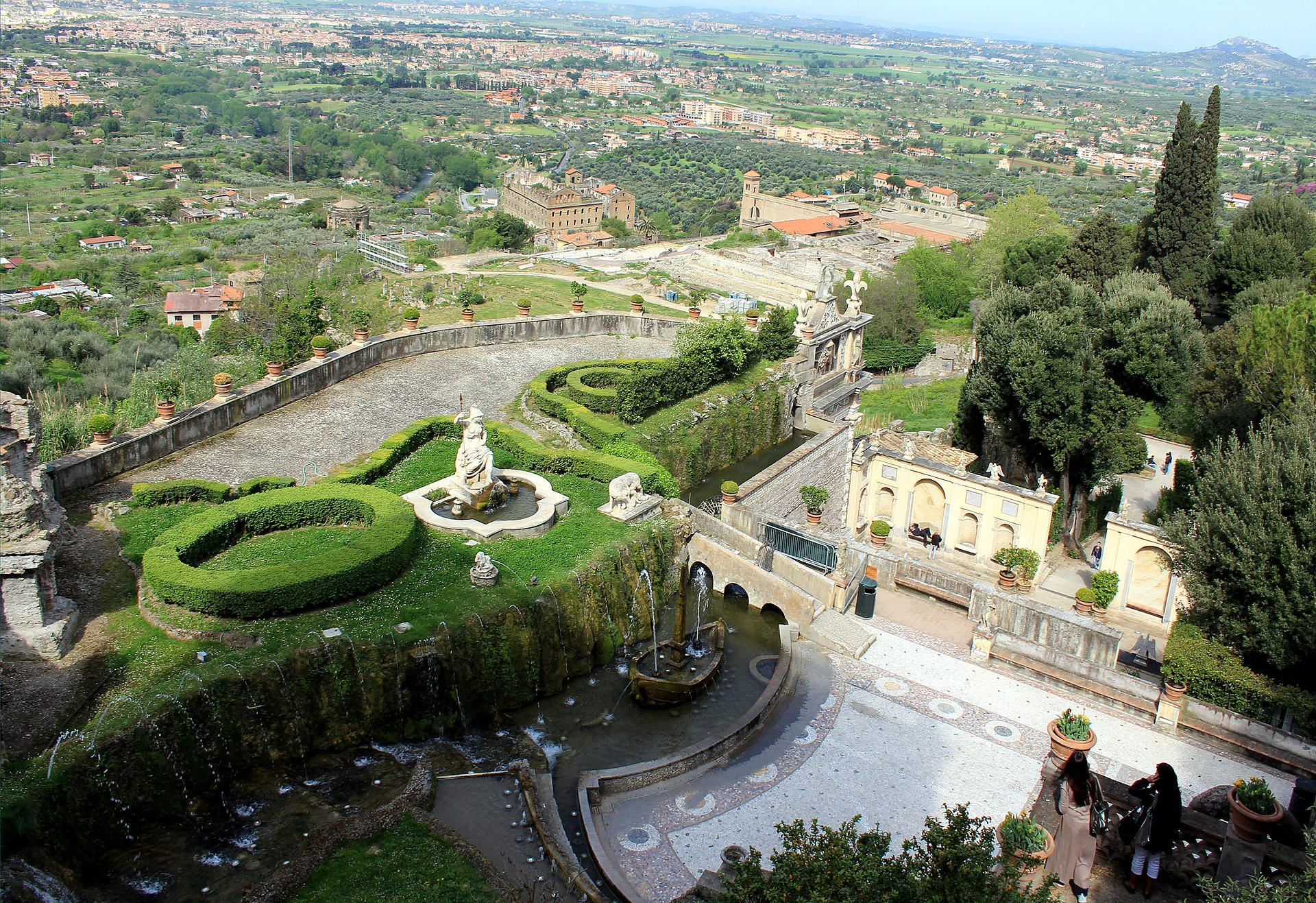
The Villa d'Este in Tivoli is a masterpiece of Italian Renaissance garden design, commissioned by Cardinal Ippolito II d'Este in the mid-16th century. Designed by the architect Pirro Ligorio, the villa transformed a former Franciscan convent into a lavish residence, utilizing the steep hillside to create a complex system of terraces, grottos, and water features.
The gardens are renowned for their innovative hydraulic engineering, which powers hundreds of fountains without the use of mechanical pumps. By leveraging the natural slope and the diversion of the Aniene River, the site created a sensory experience that influenced European garden design for centuries, blending architectural precision with the dramatic natural landscape of the Roman countryside.
Key Facts
- Materials
- Travertine, Tufa, Marble, Terracotta
- Civilization
- Italian Renaissance
- Accessibility
- Partially accessible; steep terrain limits some areas for wheelchair users
- Date(s)
- 1550-1572
- Condition
- Well-preserved, public museum and garden
- Original Function
- Residential villa and pleasure garden
- Key Figures
- Cardinal Ippolito II d'Este, Pirro Ligorio, Alberto Galvani
Commission and Design
1550-1560Cardinal Ippolito II d'Este, having been appointed governor of Tivoli, sought to create a residence reflecting his status. He commissioned Pirro Ligorio to design a villa that would integrate the existing convent structure with an expansive, terraced garden.
Hydraulic Engineering
1560-1572The primary challenge was water supply. Engineers diverted a portion of the Aniene River through a tunnel beneath the town of Tivoli to feed the complex network of fountains, including the famous Organ Fountain and the Fountain of Neptune.
Decline and Restoration
17th-19th centuryFollowing the death of the Cardinal, the villa passed through various noble families, eventually falling into neglect during the 18th and 19th centuries. Significant restoration efforts were undertaken in the early 20th century to stabilize the structures and restore the hydraulic systems.
Modern Status
20th century - presentThe site was acquired by the Italian State and opened to the public. It was inscribed as a UNESCO World Heritage site in 2001, recognized for its profound influence on the development of European garden design.
Cultural Significance
The Villa d'Este represents the pinnacle of the Italian Mannerist garden, serving as a symbol of the wealth and intellectual ambition of the Renaissance papacy. Its integration of water, architecture, and landscape design established a template for the 'water garden' that was subsequently emulated in royal estates across Europe, including Versailles.
Beyond its aesthetic value, the villa serves as a testament to 16th-century hydraulic engineering. It remains a critical site for the study of Renaissance iconography, as the garden's decorative program is laden with mythological allegories reflecting the Cardinal's political and personal aspirations.
Interpretive Notes
Scholarly debates and areas of uncertainty
There is ongoing academic discussion regarding the extent of Pirro Ligorio's original intent versus the modifications made by subsequent architects during the long construction phase. Additionally, scholars debate the specific symbolic meanings of the garden's iconographic program, particularly whether the layout represents a moral journey or a purely political statement of the d'Este family's power.
Visiting Information
Entry Rules
Open Tuesday through Sunday. Tickets are required for entry. Visitors are advised to wear comfortable walking shoes due to the steep terrain and numerous stairs throughout the garden.
Best Times to Visit
Spring and early autumn offer the most pleasant weather for exploring the outdoor terraces. Weekday mornings are recommended to avoid weekend crowds.
Photography
Personal photography is permitted. Tripods and professional equipment require prior authorization from the site administration.
Preservation Notes
The hydraulic systems are fragile; do not obstruct water channels or fountains. Stay on designated paths to protect the historic landscaping and garden beds.
Nearby POIs
11 shownSources & Further Reading
- [1]The Villa d'Este at Tivoli — David R. Coffin. Princeton University Press (1960)
- [2]Pirro Ligorio and the Villa d'Este — Maria Ann Conelli. Pennsylvania State University Press (2002)
Key Facts
- Materials
- Travertine, Tufa, Marble, Terracotta
- Civilization
- Italian Renaissance
- Accessibility
- Partially accessible; steep terrain limits some areas for wheelchair users
- Date(s)
- 1550-1572
- Condition
- Well-preserved, public museum and garden
- Original Function
- Residential villa and pleasure garden
- Key Figures
- Cardinal Ippolito II d'Este, Pirro Ligorio, Alberto Galvani