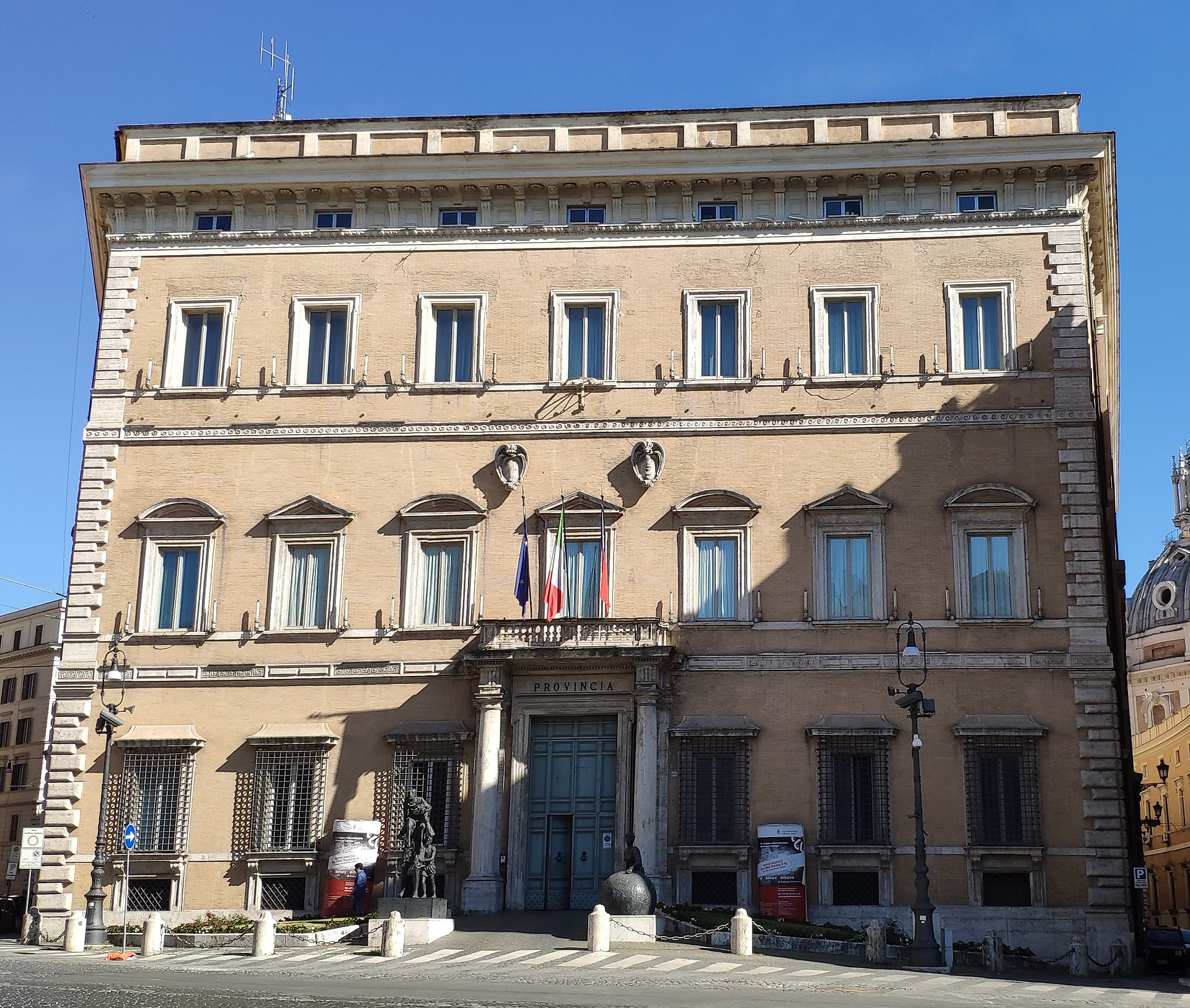
Palazzo Valentini is a historic palace located in the heart of Rome, situated between Piazza Venezia and the Imperial Forums. Originally commissioned in the 16th century by Cardinal Michele Bonelli, the building has undergone numerous architectural modifications over the centuries, serving as the residence for various noble families and foreign ambassadors before becoming the seat of the Metropolitan City of Rome Capital.
The site is particularly renowned for the 'Domus Romane' located beneath the palace. These archaeological excavations reveal the remains of ancient Roman patrician houses, featuring intricate mosaics, wall paintings, and private thermal baths, which have been integrated into a modern multimedia exhibition space.
Key Facts
- Materials
- Travertine, Brick, Stucco
- Civilization
- Italian
- Accessibility
- Partially accessible; archaeological area requires guided tour
- Date(s)
- 1585 CE
- Condition
- Well-preserved, active administrative office and museum
- Original Function
- Noble residence
- Key Figures
- Cardinal Michele Bonelli, Vincenzo Valentini
Origins and Construction
16th CenturyThe palace was commissioned by Cardinal Michele Bonelli, nephew of Pope Pius V, on land previously occupied by smaller structures. It was designed to reflect the prestige of the Bonelli family in the late Renaissance period.
The Valentini Era
19th CenturyIn 1827, the banker Vincenzo Valentini purchased the building and initiated significant renovations. The palace took its current name from this family, who expanded the structure and updated its interior to suit 19th-century aristocratic tastes.
Administrative Transformation
20th CenturyThe palace was acquired by the Province of Rome in 1873. It underwent extensive structural adaptations to serve as the administrative headquarters for the provincial government, a function it continues to fulfill today.
Archaeological Discovery
21st CenturyDuring restoration work in the early 2000s, significant Roman-era ruins were discovered in the basement. These were meticulously excavated and opened to the public as the 'Domus Romane,' utilizing light projections to reconstruct the original appearance of the ancient rooms.
Cultural Significance
Palazzo Valentini serves as a unique intersection of Rome's layered history, bridging the gap between the administrative functions of the modern Italian state and the preserved domestic life of the ancient Roman elite. It is a primary example of how urban archaeology can be integrated into functional government buildings.
The site is highly regarded for its innovative use of technology in heritage interpretation. By using virtual reconstructions to overlay the ancient ruins, the palace has become a model for the presentation of subterranean archaeological sites in dense urban environments.
Interpretive Notes
Scholarly debates and areas of uncertainty
There is ongoing academic discussion regarding the exact identification of the owners of the ancient Domus found beneath the palace. While some scholars suggest they belonged to high-ranking imperial officials due to the luxury of the materials, others argue for a more diverse range of occupants over the centuries of the site's use.
Visiting Information
Entry Rules
The palace offices are restricted, but the archaeological area (Domus Romane) is open to the public via guided tours. Advance booking is mandatory for all visitors. Security checks are required upon entry.
Best Times to Visit
Weekday mornings are generally quieter for guided tours. The site is climate-controlled, making it suitable for year-round visitation regardless of external weather conditions.
Photography
Photography is permitted in the archaeological area without flash. Professional equipment and tripods are prohibited.
Preservation Notes
The archaeological site is highly sensitive; visitors must remain on designated walkways and follow the guide's instructions to avoid damaging the ancient mosaics and wall surfaces.
Nearby POIs
11 shownSources & Further Reading
- [1]Le Domus Romane di Palazzo Valentini — Provincia di Roma. Electa (2010)
- [2]The Architecture of the Palazzo Valentini — G. Spagnesi. Edizioni Kappa (2005)
Key Facts
- Materials
- Travertine, Brick, Stucco
- Civilization
- Italian
- Accessibility
- Partially accessible; archaeological area requires guided tour
- Date(s)
- 1585 CE
- Condition
- Well-preserved, active administrative office and museum
- Original Function
- Noble residence
- Key Figures
- Cardinal Michele Bonelli, Vincenzo Valentini