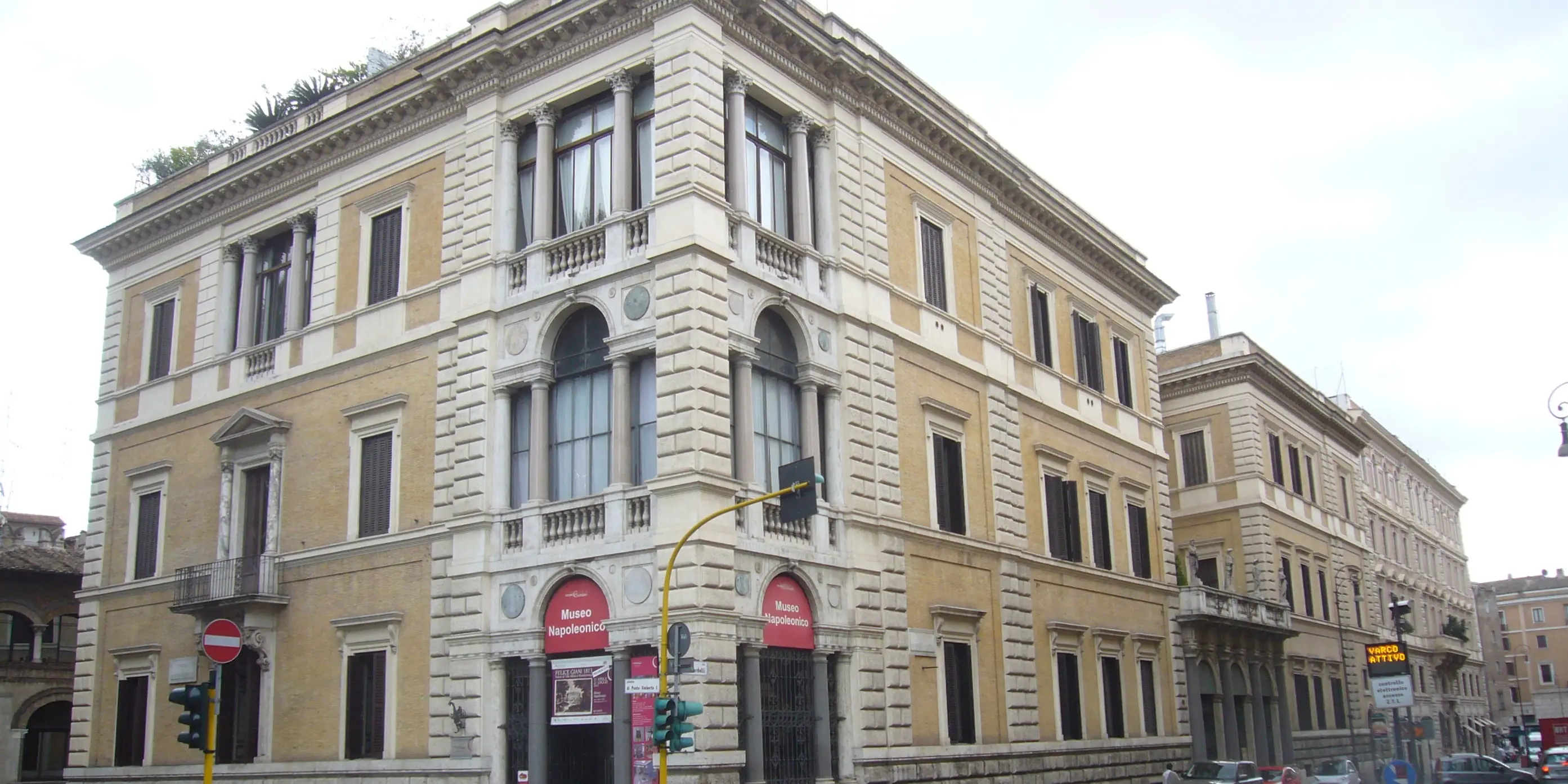
The Museo Napoleonico is housed within the Palazzo Primoli, a 16th-century building located near the Tiber River in Rome. The museum was established following the 1927 donation of Count Giuseppe Primoli, a descendant of the Bonaparte family, who bequeathed his extensive collection of Napoleonic memorabilia, artworks, and personal documents to the city of Rome.
The collection is organized into three distinct sections: the Napoleonic era, the Roman period of the Bonaparte family, and the Second Empire. It features a diverse array of artifacts including paintings, sculptures, fine furniture, and personal items that illustrate the complex relationship between the Bonaparte dynasty and the city of Rome throughout the 19th century.
Key Facts
- Materials
- Brick, Stucco, Marble
- Civilization
- Italian
- Accessibility
- Limited; historic building with stairs
- Date(s)
- 16th century
- Condition
- Well-preserved, active museum
- Original Function
- Private residence (Palazzo Primoli)
- Key Figures
- Giuseppe Primoli, Napoleon Bonaparte, Charlotte Bonaparte
Origins of the Palazzo
16th centuryThe Palazzo Primoli was constructed in the 16th century. Over time, it became the residence of the Primoli family, who were connected to the Bonaparte lineage through the marriage of Carlotta Bonaparte to Pietro Primoli.
The Bonaparte Connection
19th centuryFollowing the fall of Napoleon I, several members of the Bonaparte family sought refuge in Rome. The palazzo became a focal point for the family's social and cultural life in the city, accumulating a vast collection of heirlooms and art.
Establishment of the Museum
1927Count Giuseppe Primoli, a passionate collector and descendant of the family, donated the palazzo and its contents to the Municipality of Rome. The museum was officially opened to the public to preserve the historical memory of the Bonaparte family's Roman tenure.
Cultural Significance
The museum serves as a unique repository of the Bonaparte family's history in Italy, bridging the gap between French imperial history and Roman aristocratic life. It provides critical insight into how the Bonaparte family integrated into the Roman social fabric after their exile from France.
Interpretive Notes
Scholarly debates and areas of uncertainty
Debates often center on the provenance of specific artifacts within the collection and the extent to which the Primoli family curated their own history to emphasize their connection to the French imperial legacy.
Visiting Information
Entry Rules
Open Tuesday to Sunday. Entry is free for all visitors. No specific dress code is required, but respectful behavior is expected.
Best Times to Visit
Weekday mornings are generally quieter, allowing for a more focused viewing of the smaller rooms and detailed documents.
Photography
Personal photography is permitted for non-commercial use without the use of flash or tripods.
Preservation Notes
Visitors are requested not to touch the furniture or display cases. Due to the historic nature of the building, some areas may have uneven flooring.
Nearby POIs
11 shownSources & Further Reading
- [1]Museo Napoleonico: Guida alle collezioni — Elena Papagna. Palombi Editori (2005)
- [2]The Bonaparte Family in Rome — Giuseppe Primoli. Rome Municipal Archives (1927)
Key Facts
- Materials
- Brick, Stucco, Marble
- Civilization
- Italian
- Accessibility
- Limited; historic building with stairs
- Date(s)
- 16th century
- Condition
- Well-preserved, active museum
- Original Function
- Private residence (Palazzo Primoli)
- Key Figures
- Giuseppe Primoli, Napoleon Bonaparte, Charlotte Bonaparte