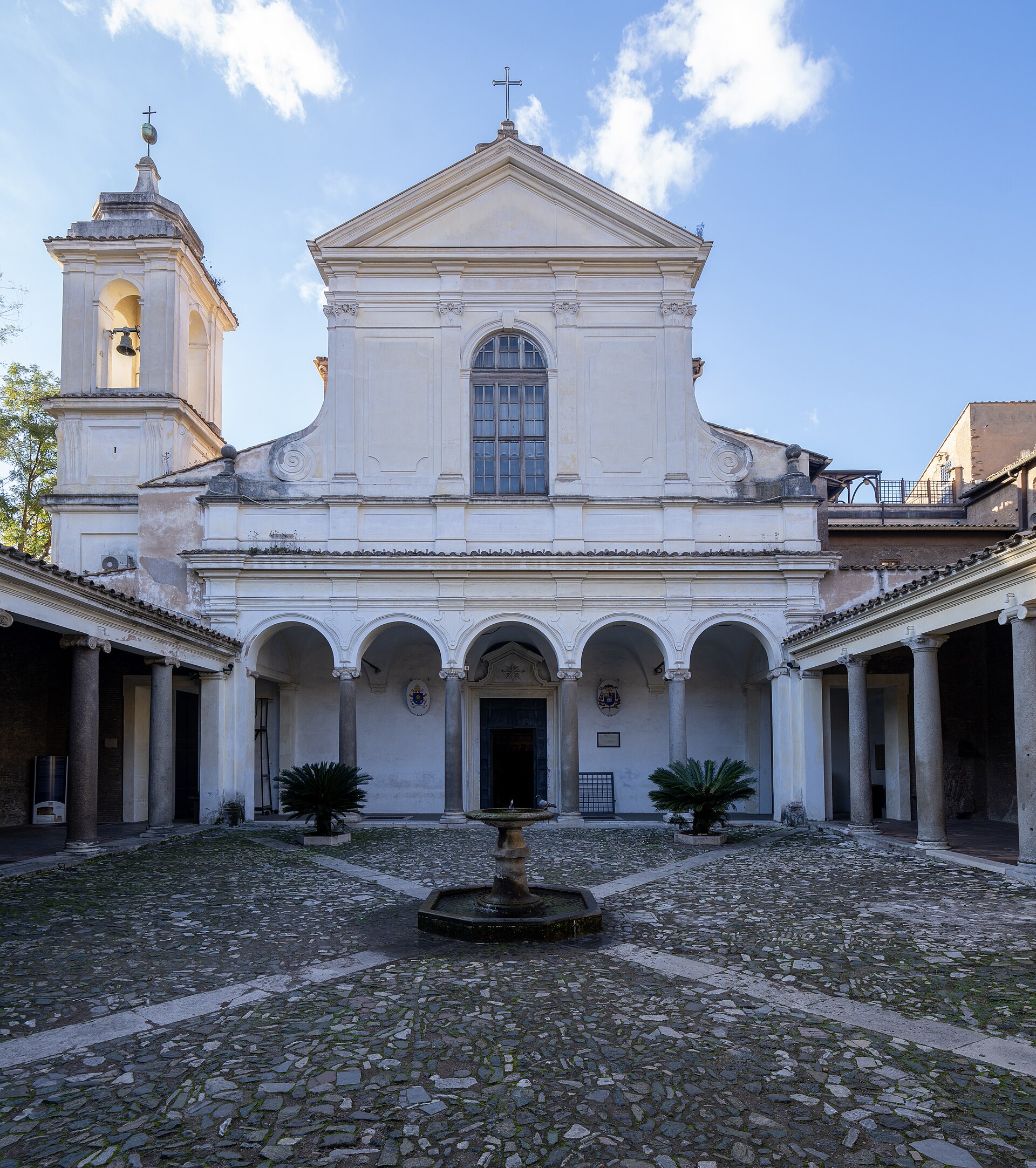
The Basilica of San Clemente is a complex archaeological site in Rome that features three distinct layers of history built one atop the other. The current 12th-century basilica stands at street level, constructed over a 4th-century church, which in turn was built upon a 1st-century Roman house and a 2nd-century Mithraeum.
The site provides a unique vertical cross-section of Roman history, illustrating the transition from pagan worship to early Christianity and the evolution of medieval ecclesiastical architecture. The subterranean levels are particularly noted for their well-preserved frescoes and the ancient Roman masonry that forms the foundation of the entire complex.
Key Facts
- Materials
- Travertine, Brick, Marble, Tufa
- Civilization
- Roman / Medieval
- Accessibility
- Ground floor accessible; lower levels require navigating stairs
- Date(s)
- 1st century CE - 12th century CE
- Condition
- Active basilica and archaeological museum
- Original Function
- Roman private residence and Mithraeum
- Key Figures
- Pope Clement I, Paschal II
Roman Origins
1st century CEThe lowest level consists of a large Roman house and a warehouse structure. By the 2nd century, a portion of this complex was converted into a Mithraeum, a sanctuary dedicated to the mystery cult of Mithras.
Early Christian Basilica
4th century CEFollowing the legalization of Christianity, the Roman house was repurposed into a titular church. This structure served as the primary place of worship until it was damaged during the Norman sack of Rome in 1084.
Medieval Reconstruction
12th centuryThe current upper basilica was commissioned by Pope Paschal II. It incorporated many architectural elements from the older church, including the marble choir screen and the floor mosaics.
Baroque Additions
17th-18th centuryThe interior of the upper basilica underwent significant Baroque modifications, including the addition of a new ceiling and various side chapels, while maintaining the medieval mosaic layout.
Cultural Significance
San Clemente is a primary example of the 'stratigraphic' nature of Rome, where modern structures are physically rooted in antiquity. It serves as a vital site for understanding the architectural transition from domestic Roman space to public Christian worship.
The site is also significant for the study of the Mithraic mysteries, as the preserved Mithraeum remains one of the most complete examples of such cult spaces found within the city limits.
Interpretive Notes
Scholarly debates and areas of uncertainty
The exact identification of the original 1st-century structure remains a subject of discussion. While traditionally associated with the house of Saint Clement, some scholars argue it may have been a public building or a different private residence later attributed to the saint to bolster the church's historical prestige.
Visiting Information
Entry Rules
Open daily. Tickets are required to access the subterranean archaeological levels. Modest dress is required for entry into the upper basilica.
Best Times to Visit
Early morning or late afternoon to avoid peak tourist crowds. Weekdays are generally quieter than weekends.
Photography
Photography is permitted in the upper basilica without flash. Photography is strictly prohibited in the subterranean archaeological levels.
Preservation Notes
The lower levels are damp and require careful climate control. Visitors must stay on designated paths to protect the ancient frescoes and floor surfaces.
Nearby POIs
11 shownSources & Further Reading
- [1]The Basilica of San Clemente in Rome — Joseph Wilpert. Vatican Press (1909)
- [2]San Clemente: A Guide to the Basilica and the Excavations — Federico Guidobaldi. Edizioni San Clemente (1992)
Key Facts
- Materials
- Travertine, Brick, Marble, Tufa
- Civilization
- Roman / Medieval
- Accessibility
- Ground floor accessible; lower levels require navigating stairs
- Date(s)
- 1st century CE - 12th century CE
- Condition
- Active basilica and archaeological museum
- Original Function
- Roman private residence and Mithraeum
- Key Figures
- Pope Clement I, Paschal II