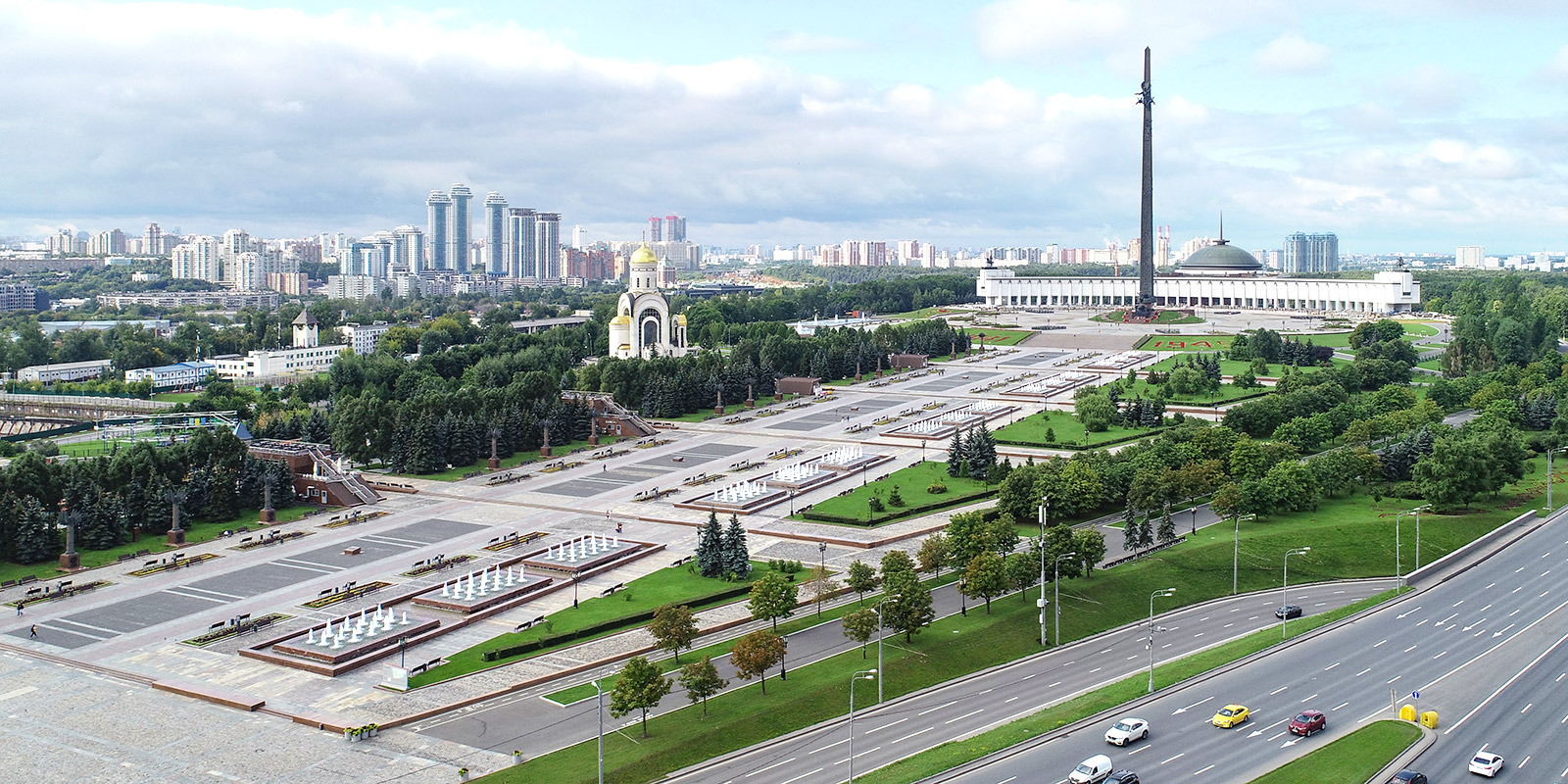
Poklonnaya Hill is a historic site and memorial complex in western Moscow, dedicated to Russia’s victory in the Great Patriotic War (World War II). The hill has long served as a ceremonial and symbolic location, with monuments and museums commemorating military history. Today, the site includes the Victory Park, the Central Museum of the Great Patriotic War, and various sculptures and memorials, making it a significant cultural and educational destination.
Key Facts
- Materials
- Granite, Bronze, Concrete, Marble
- Civilization
- Russian Federation
- Date(s)
- Victory Park and memorial complex constructed: 1995-1997
- Condition
- Operational memorial and museum complex
- Original Function
- Commemorative site for military victories
- Key Figures
- Mikhail Kalashnikov, Soviet military leaders, Russian government officials
Historical Significance of the Hill
Medieval - 20th centuryPoklonnaya Hill has historically served as a landmark for entering Moscow, where travelers and armies would symbolically ‘bow’ upon approach. During the Napoleonic invasion of 1812, it was associated with Russian resistance and remembrance.
Soviet Era Development
1940s-1980sThe area remained largely open parkland with minor commemorations. Plans for a major memorial were discussed but not realized during the Soviet period.
Creation of Victory Park and Memorial
1995-1997The modern memorial complex was built to commemorate the 50th anniversary of victory in the Great Patriotic War. It includes the Triumphal Arch, the Central Museum of the Great Patriotic War, and various statues and fountains celebrating military achievements.
Modern Role
1997-presentPoklonnaya Hill serves as a major cultural and educational site, hosting ceremonies, exhibitions, and public events. The park and museum educate visitors about wartime history and celebrate Russia’s military heritage.
Cultural Significance
Poklonnaya Hill symbolizes Russian national resilience and remembrance of the Great Patriotic War. It provides a space for reflection, public ceremonies, and education about military history, making it central to Moscow’s commemorative landscape.
Interpretive Notes
Scholarly debates and areas of uncertainty
Debates focus on the design choices of the memorial complex, the balance between historical authenticity and modern presentation, and interpretations of national memory expressed through monuments.
Visiting Information
Entry Rules
Free public access to outdoor park areas. Paid admission for museum exhibits. Security screening is in place for indoor areas.
Best Times to Visit
Weekday mornings for smaller crowds. Victory Day (May 9) and other national holidays feature ceremonies that attract large audiences.
Photography
Personal photography allowed outdoors and in museum areas without flash. Tripods and commercial photography require permits. Flash is prohibited in sensitive museum exhibits.
Preservation Notes
Visitors must follow marked paths, avoid touching monuments, and respect memorial protocols. Restoration or maintenance work may temporarily restrict access to some areas.
Nearby POIs
11 shown- Museum of the Great Patriotic War0.1 km
- Stalin's Dacha1.5 km
- Novodevichy Convent3.2 km
- State Darwin Museum5.7 km
- Multimedia Art Museum5.9 km
- The Garage Museum6 km
- Cathedral of Christ the Saviour6.4 km
- Peter the Great Statue6.4 km
- Pushkin State Museum of Fine Arts6.5 km
- Tretyakov Gallery7.2 km
- Cathedral of the Dormition7.3 km
Sources & Further Reading
- [1]Poklonnaya Hill: History and Memorials — Sergey Ivanov. Moscow Historical Press (2010)
- [2]Victory Park and the Great Patriotic War Memorial — Olga Smirnova. Russian Museum Studies (2005)
Key Facts
- Materials
- Granite, Bronze, Concrete, Marble
- Civilization
- Russian Federation
- Date(s)
- Victory Park and memorial complex constructed: 1995-1997
- Condition
- Operational memorial and museum complex
- Original Function
- Commemorative site for military victories
- Key Figures
- Mikhail Kalashnikov, Soviet military leaders, Russian government officials
Nearby POIs
11 shown- Museum of the Great Patriotic War0.1 km
- Stalin's Dacha1.5 km
- Novodevichy Convent3.2 km
- State Darwin Museum5.7 km
- Multimedia Art Museum5.9 km
- The Garage Museum6 km
- Cathedral of Christ the Saviour6.4 km
- Peter the Great Statue6.4 km
- Pushkin State Museum of Fine Arts6.5 km
- Tretyakov Gallery7.2 km
- Cathedral of the Dormition7.3 km