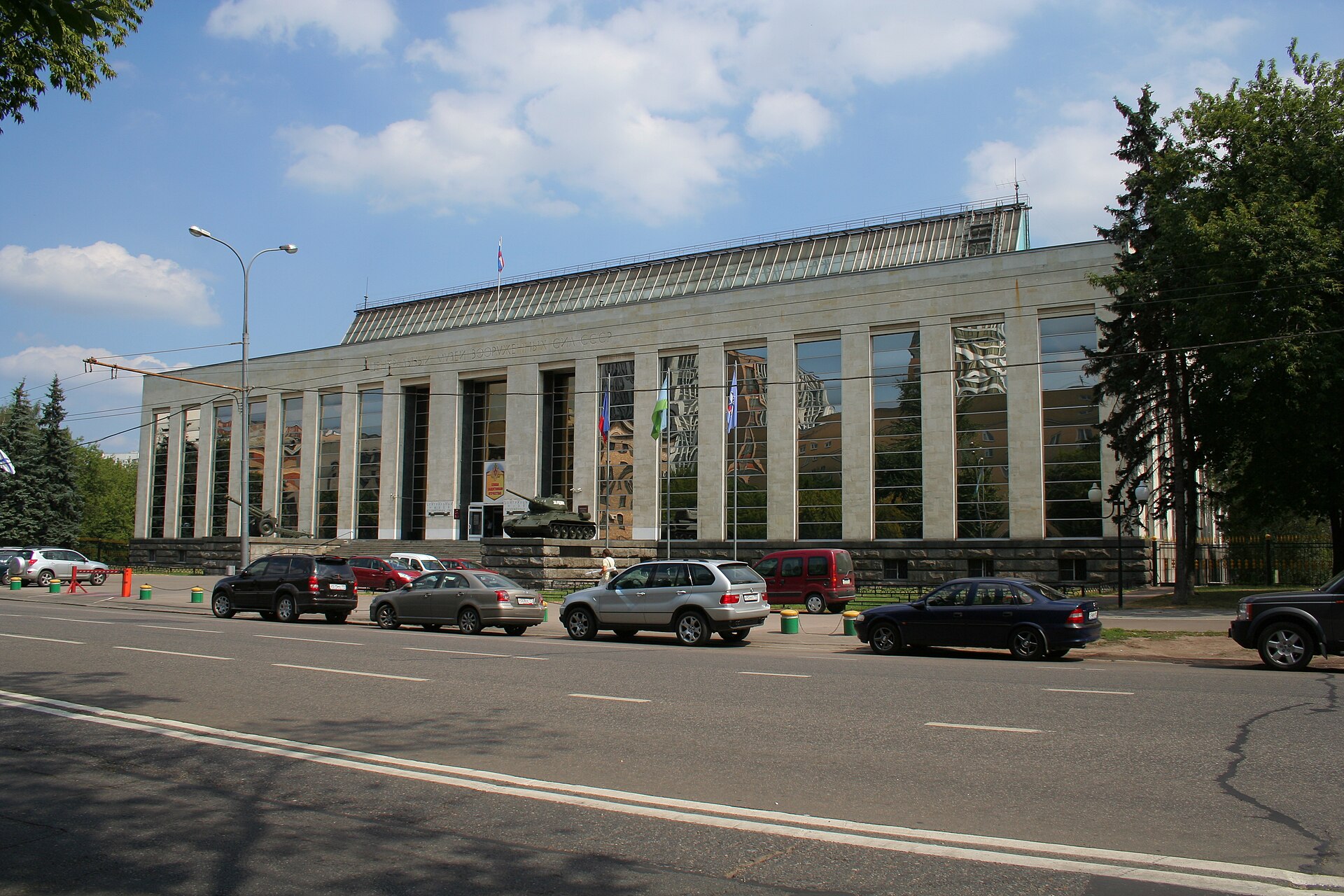
The Central Armed Forces Museum is one of Russia’s largest military museums, dedicated to the history of the Russian and Soviet armed forces. Established in 1919, it presents exhibitions covering military development from the Imperial Russian Army through the Soviet period to the modern Russian Federation. The museum complex includes extensive indoor exhibition halls and an outdoor display area featuring tanks, artillery, aircraft, and missile systems.
Key Facts
- Established
- 1919
- Civilization
- Soviet Union; Russian Federation
- Notable Exhibits
- WWII artifacts, Captured German standards from 1945, Soviet armored vehicles, Cold War missile systems
- Collections Focus
- Russian and Soviet military history
- Condition
- Active museum
- Original Function
- Military history museum
- Architectural Style
- Soviet-era institutional architecture
Foundation
1919The museum was founded shortly after the Russian Revolution to document and promote the history of the Red Army. It played a role in shaping Soviet military memory and identity.
Soviet Era Expansion
1920s-1991During the Soviet period, the museum expanded significantly, especially after World War II. Exhibitions emphasized the Great Patriotic War and the role of the Red Army in defeating Nazi Germany.
Post-Soviet Developments
1991-presentAfter the dissolution of the Soviet Union, the museum updated its narrative to include Imperial Russian military history and the modern Russian Armed Forces, while retaining its extensive Soviet-era collections.
Cultural Significance
The Central Armed Forces Museum serves as a major institution for preserving and presenting Russia’s military heritage. It plays an important role in commemorating the Great Patriotic War and shaping public understanding of Soviet and Russian military history.
Interpretive Notes
Scholarly debates and areas of uncertainty
Scholars analyze the museum’s exhibitions in the context of state-sponsored historical narratives, particularly regarding interpretations of World War II, the Cold War, and contemporary military policy.
Visiting Information
Entry Rules
Open to the public during regular museum hours. Tickets required. Security screening may apply. Some exhibitions may have restricted photography policies.
Best Times to Visit
Weekday mornings for lower visitor numbers. Public holidays and Victory Day (May 9) periods tend to be busier.
Photography
Photography may be restricted in certain indoor exhibitions. Outdoor displays are generally permitted without flash or tripods.
Preservation Notes
Visitors must not climb on outdoor military equipment unless explicitly permitted. Some artifacts are sensitive historical items requiring controlled environmental conditions.
Nearby POIs
11 shown- Moscow Museum of Modern Art2 km
- Bolshoi Theatre2.7 km
- Cathedral of Our Lady of Kazan3.3 km
- State Historical Museum3.3 km
- Lenin's Mausoleum3.5 km
- Cathedral of Vasily the Blessed3.6 km
- Kremlin3.7 km
- Cathedral of the Dormition3.8 km
- Ostankino Tower3.9 km
- Pushkin State Museum of Fine Arts4.3 km
- Moscow Contemporary Art Center Vinzavod4.4 km
Sources & Further Reading
- [1]
Key Facts
- Established
- 1919
- Civilization
- Soviet Union; Russian Federation
- Notable Exhibits
- WWII artifacts, Captured German standards from 1945, Soviet armored vehicles, Cold War missile systems
- Collections Focus
- Russian and Soviet military history
- Condition
- Active museum
- Original Function
- Military history museum
- Architectural Style
- Soviet-era institutional architecture
Nearby POIs
11 shown- Moscow Museum of Modern Art2 km
- Bolshoi Theatre2.7 km
- Cathedral of Our Lady of Kazan3.3 km
- State Historical Museum3.3 km
- Lenin's Mausoleum3.5 km
- Cathedral of Vasily the Blessed3.6 km
- Kremlin3.7 km
- Cathedral of the Dormition3.8 km
- Ostankino Tower3.9 km
- Pushkin State Museum of Fine Arts4.3 km
- Moscow Contemporary Art Center Vinzavod4.4 km