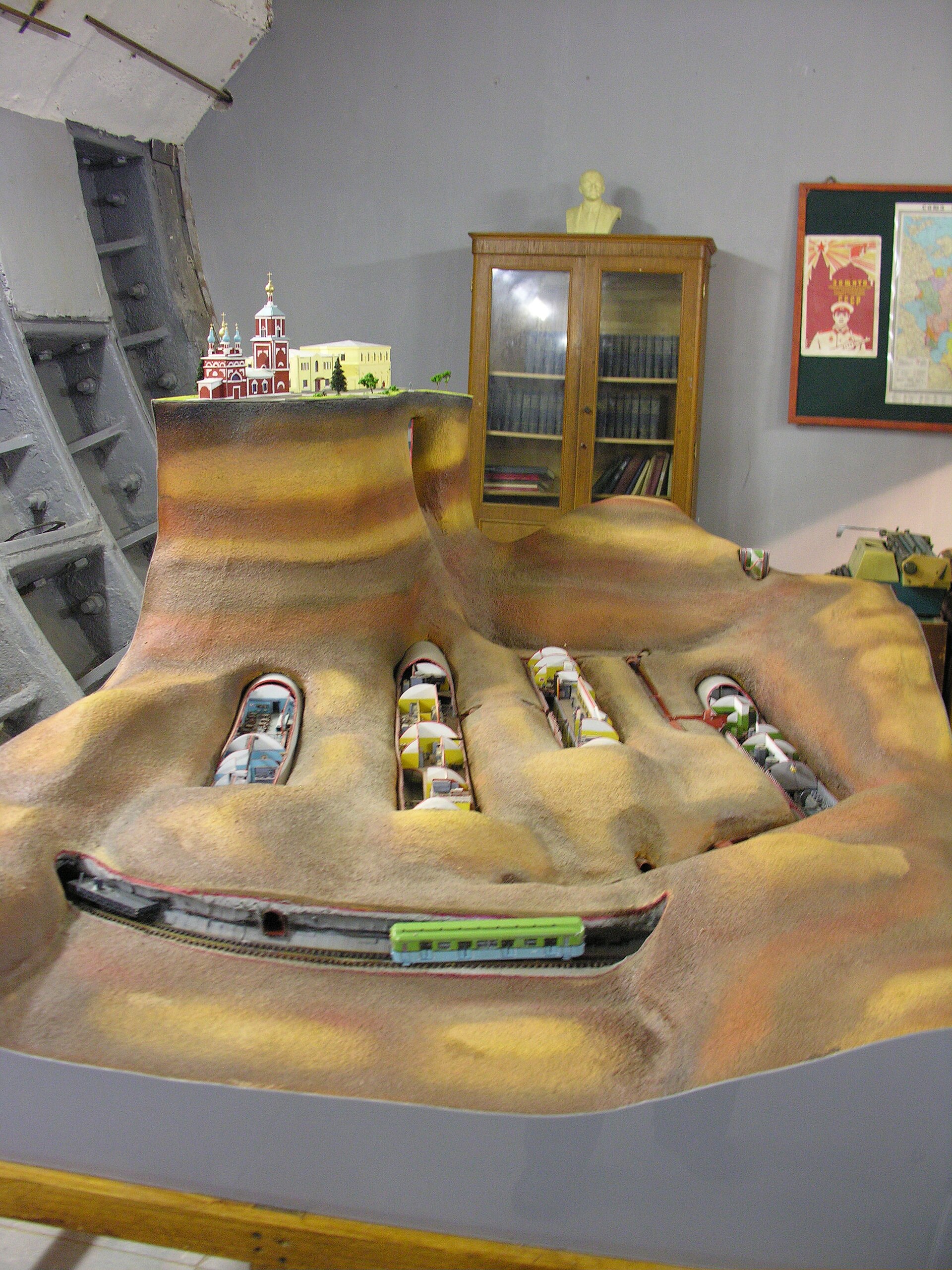
The Cold War Museum in Moscow, also known as **Bunker‑42 on Taganka**, is an underground military historical museum and exhibition complex located 65 meters below ground in a former Soviet command bunker. Originally built in the 1950s as a top‑secret facility to coordinate defense operations in the event of a nuclear war, it now offers visitors immersive tours and displays about the Cold War era and Soviet military preparedness. The museum features preserved corridors, command posts, communications equipment, and interactive exhibits that illustrate daily life and strategic planning during one of the most tense periods of 20th‑century geopolitics. Guided tours provide historical context about nuclear strategy, espionage, and life in secret military installations.
Key Facts
- Materials
- Reinforced concrete, Metal, Communications equipment
- Civilization
- Soviet Union; Russian Federation
- Date(s)
- 1951-1956
- Condition
- Operational museum and exhibition complex
- Original Function
- Secret Cold War military command bunker
- Key Figures
- Soviet military command officials (Cold War era)
Cold War Origins
1951-1956The facility now housing the museum was constructed during the early years of the Cold War as a secret underground command and communications post designed to withstand nuclear attack. Built with reinforced concrete and connected to the Taganskaya Metro station, it was a critical element of Soviet strategic planning.
Operational Role
1956-1991Throughout the Cold War, the bunker served as a secure command center where communications, military planning, and civil defense strategies could be coordinated in the event of conflict. Its systems included air filtration, independent power, and living quarters for extended operations.
Post‑Cold War Declassification
1990s-2000sAfter the Cold War, the bunker was declassified and eventually opened to the public. Its historical significance as a relic of nuclear tensions and superpower rivalry made it an educational site, preserving Cold War‑era architecture and artifacts.
Museum and Tours
2006-presentReopened as a museum complex, Bunker‑42 offers guided tours that combine historical exhibits with interactive experiences. Visitors can explore the labyrinth of underground corridors, view Cold War communication systems, and learn about the technological and geopolitical challenges of the era.
Cultural Significance
The Cold War Museum encapsulates a vivid chapter of 20th‑century global history, illustrating the anxieties, technologies, and strategic thinking of the nuclear age. It preserves a rare, intact example of Cold War infrastructure, allowing visitors to experience the material culture and strategic mindset of superpower confrontation.
Interpretive Notes
Scholarly debates and areas of uncertainty
Debates among historians focus on how Cold War history is interpreted in museum settings, especially regarding narratives of deterrence, nuclear strategy, and the balance between military preparedness and popular fear. The museum’s presentation blends educational content with immersive tour formats that prompt discussion about the ethics and legacy of nuclear weapons.
Visiting Information
Entry Rules
Paid admission required. Security screening at entrance. Guided tours may be scheduled in advance; individual entry is subject to availability. Adherence to safety protocols in the underground environment is required.
Best Times to Visit
Book tours early in the day to avoid crowds. Weekday mornings or early afternoons typically offer quieter experiences; weekends are often busier.
Photography
Personal photography allowed without flash in most areas. Tripods and commercial photography require prior permission. Flash photography is discouraged due to sensitive displays.
Preservation Notes
Visitors must remain with their tour group and follow all safety instructions in the underground complex. The bunker’s historical infrastructure is preserved, so touching exhibits or straying from marked paths is prohibited.
Nearby POIs
11 shown- Tretyakov Gallery1.8 km
- Moscow Contemporary Art Center Vinzavod1.9 km
- Cathedral of Vasily the Blessed2 km
- Kremlin2.2 km
- Cathedral of the Dormition2.3 km
- Lenin's Mausoleum2.3 km
- Cathedral of Our Lady of Kazan2.4 km
- State Historical Museum2.5 km
- Peter the Great Statue2.6 km
- Cathedral of Christ the Saviour2.8 km
- Pushkin State Museum of Fine Arts2.8 km
Key Facts
- Materials
- Reinforced concrete, Metal, Communications equipment
- Civilization
- Soviet Union; Russian Federation
- Date(s)
- 1951-1956
- Condition
- Operational museum and exhibition complex
- Original Function
- Secret Cold War military command bunker
- Key Figures
- Soviet military command officials (Cold War era)
Nearby POIs
11 shown- Tretyakov Gallery1.8 km
- Moscow Contemporary Art Center Vinzavod1.9 km
- Cathedral of Vasily the Blessed2 km
- Kremlin2.2 km
- Cathedral of the Dormition2.3 km
- Lenin's Mausoleum2.3 km
- Cathedral of Our Lady of Kazan2.4 km
- State Historical Museum2.5 km
- Peter the Great Statue2.6 km
- Cathedral of Christ the Saviour2.8 km
- Pushkin State Museum of Fine Arts2.8 km