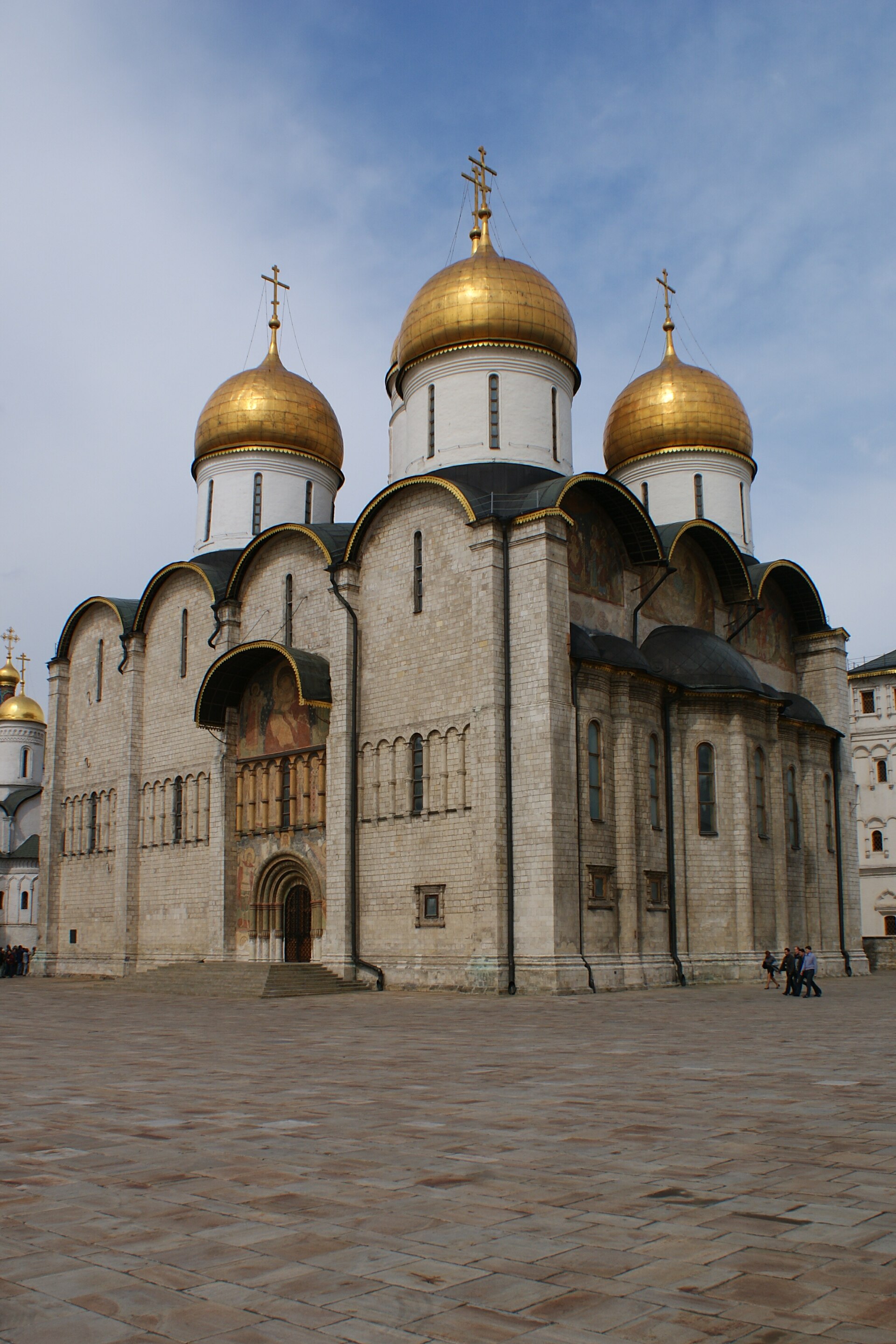
The Cathedral of the Dormition is the principal church of the Moscow Kremlin. Built between 1475 and 1479 under the direction of Italian architect Aristotele Fioravanti, it became the central cathedral of the Russian state. For centuries, it served as the coronation church of Russian tsars and the seat of the Metropolitan and later Patriarch of Moscow. The cathedral combines traditional Russian church architecture with Renaissance engineering techniques introduced by Fioravanti.
Key Facts
- Materials
- White limestone, Brick
- Civilization
- Grand Duchy of Moscow
- Date(s)
- 1475-1479
- Condition
- Museum and occasional liturgical use
- Original Function
- Principal cathedral of the Russian state
- Key Figures
- Ivan III, Aristotele Fioravanti, Ivan IV, Peter the Great
- Architectural Style
- Russian medieval architecture with Italian Renaissance influence
Construction Under Ivan III
1475-1479Commissioned by Ivan III as part of the Kremlin’s reconstruction, the cathedral replaced an earlier structure. Italian architect Aristotele Fioravanti was invited to design a cathedral inspired by the Dormition Cathedral in Vladimir while incorporating advanced Renaissance construction methods.
Coronation Cathedral of Russia
16th-19th centuriesThe cathedral became the site of coronations for Russian rulers from Ivan IV (the Terrible) onward. It also hosted major state ceremonies and ecclesiastical councils.
Imperial and Soviet Periods
18th-20th centuriesAfter the capital moved to Saint Petersburg, the cathedral remained symbolically important. Following the 1917 Revolution, it was closed and converted into a museum as part of the Kremlin State Museum complex.
Modern Era
Late 20th century-presentToday the cathedral functions primarily as a museum within the Kremlin complex, with occasional religious services conducted on significant Orthodox holidays.
Cultural Significance
The Cathedral of the Dormition symbolizes the consolidation of Moscow as the political and spiritual center of Russia. As the coronation church of the tsars, it represents the fusion of religious authority and state power in Russian history.
Interpretive Notes
Scholarly debates and areas of uncertainty
Scholars debate the extent of Italian Renaissance influence in Fioravanti’s design and its role in shaping subsequent Russian ecclesiastical architecture. Discussions also address conservation challenges within the UNESCO-listed Kremlin complex.
Visiting Information
Entry Rules
Access is via the Moscow Kremlin ticketed museum complex. Visitors must pass security screening. Interior access may be limited during official events or religious services.
Best Times to Visit
Weekday mornings outside peak tourist season (May–September). Winter visits offer lower visitor density.
Photography
Photography is generally prohibited inside the cathedral. Exterior photography within the Kremlin grounds is permitted in designated areas.
Preservation Notes
Visitors must remain within designated areas and avoid contact with frescoes and iconostasis. The cathedral is part of the UNESCO-listed Kremlin ensemble and subject to strict preservation regulations.
Nearby POIs
11 shown- Kremlin0.1 km
- Lenin's Mausoleum0.4 km
- Cathedral of Vasily the Blessed0.4 km
- State Historical Museum0.5 km
- Cathedral of Our Lady of Kazan0.5 km
- Pushkin State Museum of Fine Arts0.8 km
- Cathedral of Christ the Saviour1 km
- Bolshoi Theatre1 km
- Tretyakov Gallery1.1 km
- Peter the Great Statue1.5 km
- Multimedia Art Museum1.6 km
Key Facts
- Materials
- White limestone, Brick
- Civilization
- Grand Duchy of Moscow
- Date(s)
- 1475-1479
- Condition
- Museum and occasional liturgical use
- Original Function
- Principal cathedral of the Russian state
- Key Figures
- Ivan III, Aristotele Fioravanti, Ivan IV, Peter the Great
- Architectural Style
- Russian medieval architecture with Italian Renaissance influence
Nearby POIs
11 shown- Kremlin0.1 km
- Lenin's Mausoleum0.4 km
- Cathedral of Vasily the Blessed0.4 km
- State Historical Museum0.5 km
- Cathedral of Our Lady of Kazan0.5 km
- Pushkin State Museum of Fine Arts0.8 km
- Cathedral of Christ the Saviour1 km
- Bolshoi Theatre1 km
- Tretyakov Gallery1.1 km
- Peter the Great Statue1.5 km
- Multimedia Art Museum1.6 km