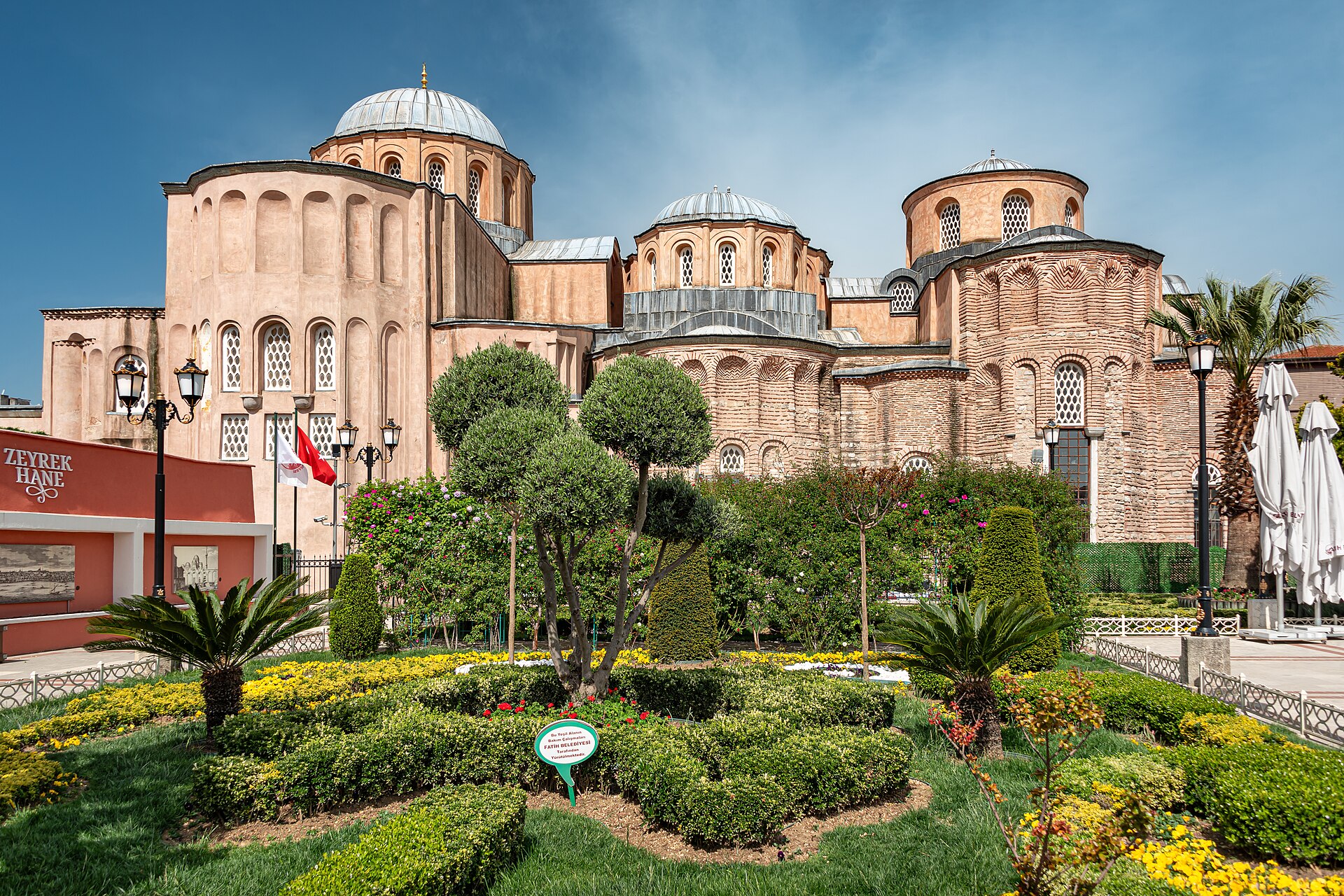
Zeyrek Mosque in Istanbul is a former Byzantine monastic complex originally constructed as the Monastery of Christ Pantokrator in the 12th century during the reign of Emperor John II Komnenos. The complex consisted of three interconnected churches and served as one of the most important religious and intellectual centers in Constantinople, housing a library, hospital, and burial spaces for imperial figures. Following the Ottoman conquest of Constantinople in 1453, the complex was converted into a mosque and became known as Zeyrek Mosque. It remains one of the largest surviving examples of Middle Byzantine architecture in the city and forms part of the Historic Areas of Istanbul UNESCO World Heritage Site. Restoration efforts in the 21st century have aimed to stabilize and preserve its layered Byzantine and Ottoman architectural elements.
Key Facts
- Materials
- Brick, Stone
- Civilization
- Byzantine
- Current Function
- Mosque
- Date(s)
- 1118–1143 CE
- Condition
- Restored and active religious site
- Original Function
- Monastic complex (Monastery of Christ Pantokrator)
- Key Figures
- Emperor John II Komnenos, Empress Irene of Hungary
Foundation and Construction
1118–1143 CEThe complex was commissioned by Byzantine Emperor John II Komnenos and his wife Irene of Hungary. It was constructed as the Monastery of Christ Pantokrator and included three churches: a main church dedicated to Christ Pantokrator, a secondary church dedicated to the Virgin Eleousa, and an imperial chapel. The site functioned as both a religious and charitable institution, with attached hospital and library facilities.
Komnenian and Late Byzantine Period
12th–15th centuriesThe monastery became one of the most prominent religious institutions in Constantinople and served as an imperial burial site. Members of the Komnenian dynasty were interred within the complex. It remained active throughout the late Byzantine period, although it experienced decline during the Latin occupation (1204–1261).
Ottoman Conversion
15th centuryFollowing the Ottoman conquest of Constantinople in 1453, the complex was converted into a mosque. It was named after Molla Zeyrek, a scholar who established a madrasa in the former monastic buildings. Structural modifications were made to adapt the churches for Islamic worship, including the addition of a mihrab and minaret.
Modern Restoration
20th–21st centuriesThe building suffered from structural deterioration over centuries but retained significant Byzantine architectural features. Extensive restoration efforts were undertaken in the late 20th and early 21st centuries to stabilize the structure and preserve both its Byzantine and Ottoman elements. It reopened for worship and visitors after major conservation work.
Cultural Significance
The Monastery of Christ Pantokrator was a major center of religious, intellectual, and charitable activity in Byzantine Constantinople. Its hospital was among the most advanced medical institutions of the medieval period, reflecting the integration of healthcare and religious life within Byzantine society. The complex also functioned as an imperial mausoleum, reinforcing its political and dynastic significance. Under Ottoman rule, the site was integrated into the Islamic urban fabric as Zeyrek Mosque, while still preserving its earlier architectural identity. Today, it represents a layered historical monument that reflects both Byzantine and Ottoman cultural traditions and remains an important part of Istanbul’s historical landscape.
Interpretive Notes
Scholarly debates and areas of uncertainty
Scholarly debate continues regarding the exact layout and functions of auxiliary buildings within the original monastic complex, particularly the organization of the hospital and library facilities. Archaeological evidence is limited, and reconstructions rely heavily on textual sources. There is also discussion about the extent to which Ottoman modifications altered the original Byzantine structure, especially in the interior spaces where later interventions may obscure earlier architectural features.
Visiting Information
Entry Rules
Open daily. Active mosque with free entry outside of prayer times.
Best Times to Visit
Early morning or outside of prayer hours for easier interior access. Weekdays tend to be quieter.
Photography
Personal photography permitted. Avoid flash during prayer times and be respectful of worshippers.
Preservation Notes
Visitors should avoid touching historic surfaces and remain in designated areas. Ongoing conservation work may restrict access to certain sections.
Nearby POIs
11 shownSources & Further Reading
- [1]The Pantokrator Monastery in Constantinople — Robert Ousterhout. Dumbarton Oaks Papers (1995)
- [2]Byzantine Architecture — Cyril Mango. Yale University Press (1986)
- [3]
Key Facts
- Materials
- Brick, Stone
- Civilization
- Byzantine
- Current Function
- Mosque
- Date(s)
- 1118–1143 CE
- Condition
- Restored and active religious site
- Original Function
- Monastic complex (Monastery of Christ Pantokrator)
- Key Figures
- Emperor John II Komnenos, Empress Irene of Hungary