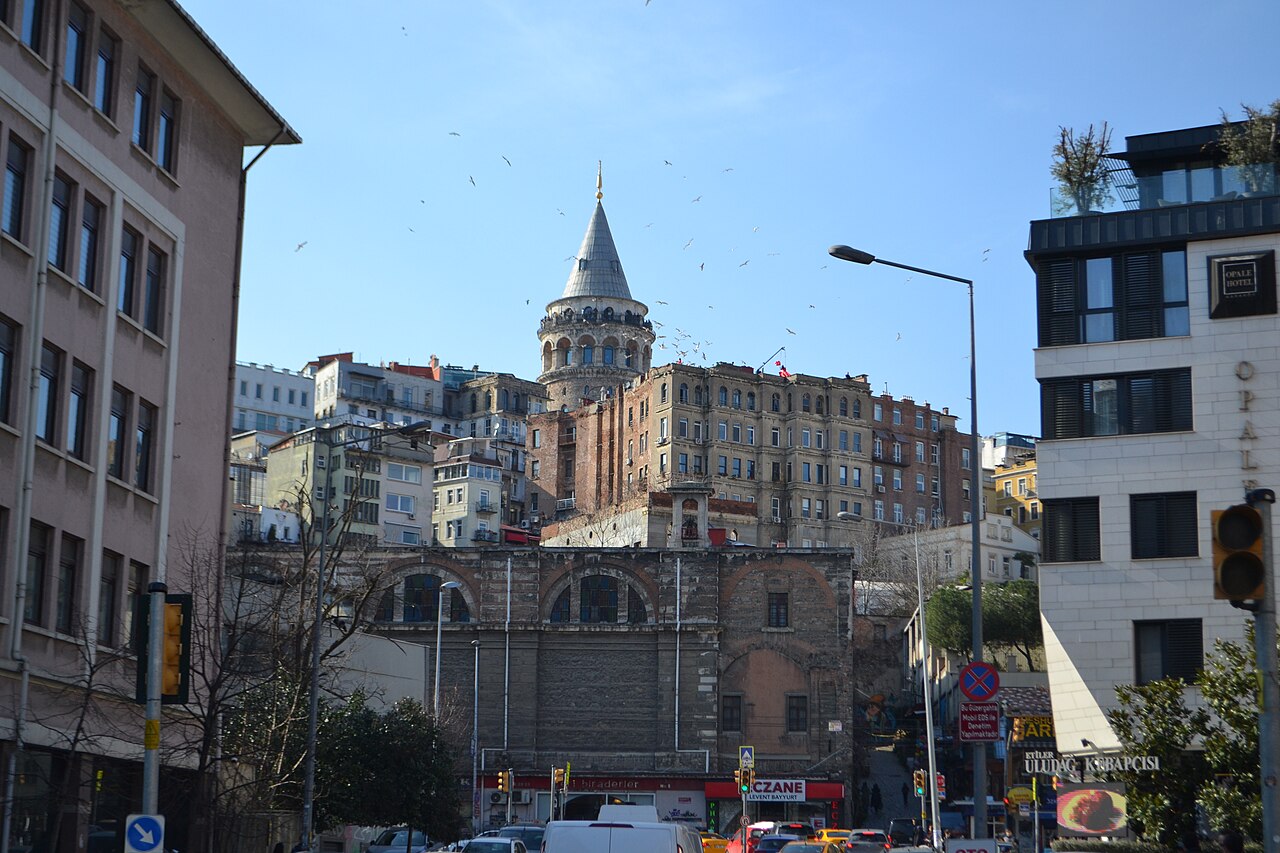
Galata Tower is a medieval stone tower located in the Galata district of Istanbul, overlooking the Golden Horn and the Bosphorus. The current structure was built in 1348 by the Genoese colony of Constantinople as part of the fortifications of their settlement, then known as Pera. Originally called the Tower of Christ (Christea Turris), it formed the northernmost point of the Genoese defensive walls. Following the Ottoman conquest of Constantinople in 1453, the tower was incorporated into the Ottoman urban system and used for various purposes including a watchtower, fire lookout, and occasionally as a prison. Today it functions as a museum and observation tower, offering panoramic views of historic Istanbul and serving as a prominent landmark in the city’s skyline.
Key Facts
- Height
- Approximately 67 meters
- Materials
- Stone masonry
- Civilization
- Genoese (later Ottoman)
- Date(s)
- 1348 CE
- Condition
- Restored; open as museum and observation deck
- Original Function
- Defensive watchtower within the Genoese fortifications of Pera
- Key Figures
- Hezarfen Ahmed Çelebi
Genoese Construction
14th centuryIn 1348 the Genoese, who controlled the district of Pera under agreements with the Byzantine Empire, constructed the tower as part of a larger defensive wall system protecting their commercial colony. Known as the Tower of Christ, it symbolized both military security and the autonomy of the Genoese community within Constantinople.
Ottoman Incorporation
15th-18th centuriesAfter the Ottoman conquest in 1453, the tower was integrated into the new imperial capital. It was used variously as a watchtower, storage facility, and prison. By the 16th century it also served as a fire observation post, reflecting the persistent threat of urban fires in the densely built wooden neighborhoods of Istanbul.
Legend of Hezarfen Ahmed Çelebi
17th centuryAccording to the Ottoman traveler Evliya Çelebi, Hezarfen Ahmed Çelebi allegedly flew from the tower across the Bosphorus to Üsküdar using artificial wings during the reign of Sultan Murad IV. While the historicity of the account is debated, the story remains embedded in the cultural memory of the site.
Modern Restoration and Museum Use
19th century - presentThe tower underwent significant repairs following fires and storms, particularly in the 19th century when its conical roof was restored. In the late 20th and early 21st centuries it was converted into a museum and observation platform. Today it is managed as a cultural heritage monument and remains one of Istanbul’s most recognizable historic structures.
Cultural Significance
Galata Tower has long functioned as a visual and symbolic marker of the Galata district, historically associated with foreign merchants, maritime trade, and cross-cultural exchange. As part of the Genoese fortification system, it represented the autonomy and economic power of the Italian maritime republic within Byzantine Constantinople. Under Ottoman rule, the tower became integrated into the broader urban fabric of Istanbul, serving practical civic functions such as fire surveillance. In modern Turkey, it is both a historic monument and a major urban landmark, frequently appearing in visual representations of Istanbul’s skyline and embodying the layered imperial histories of the city.
Interpretive Notes
Scholarly debates and areas of uncertainty
The historical accuracy of the Hezarfen Ahmed Çelebi flight narrative remains debated. The primary source is the 17th-century account of Evliya Çelebi, whose travel writings blend observation with anecdote. Some historians regard the episode as symbolic or literary rather than strictly factual. Scholars have also examined the extent of the original Genoese fortification network connected to the tower. While sections of the walls survive, reconstructing the full defensive layout of medieval Pera relies on fragmentary archaeological and textual evidence.
Visiting Information
Entry Rules
Open daily. Ticketed entry required for access to the observation deck and exhibition areas. Security screening in place at the entrance. Temporary closures may occur during restoration or maintenance.
Best Times to Visit
Arrive shortly after opening to avoid peak midday crowds, particularly in summer. Weekdays are generally less congested than weekends. Clear weather conditions provide maximum visibility from the observation platform.
Photography
Personal photography permitted without flash or tripods. Commercial photography and drone use require prior authorization from relevant authorities.
Preservation Notes
Visitors must remain within designated pathways and follow staff instructions. The tower has undergone recent structural restoration; certain interior sections may be temporarily restricted. High winds may result in temporary closure of the observation deck.
Nearby POIs
11 shownSources & Further Reading
- [1]Galata Tower. Republic of Türkiye Ministry of Culture and Tourism (2023)
- [2]Constantinople and the Latins: The Foreign Policy of Andronicus II, 1282–1328 — Angeliki E. Laiou. Harvard University Press (1972)
- [3]Istanbul: The Imperial City — John Freely. Penguin Books (1996)
Key Facts
- Height
- Approximately 67 meters
- Materials
- Stone masonry
- Civilization
- Genoese (later Ottoman)
- Date(s)
- 1348 CE
- Condition
- Restored; open as museum and observation deck
- Original Function
- Defensive watchtower within the Genoese fortifications of Pera
- Key Figures
- Hezarfen Ahmed Çelebi