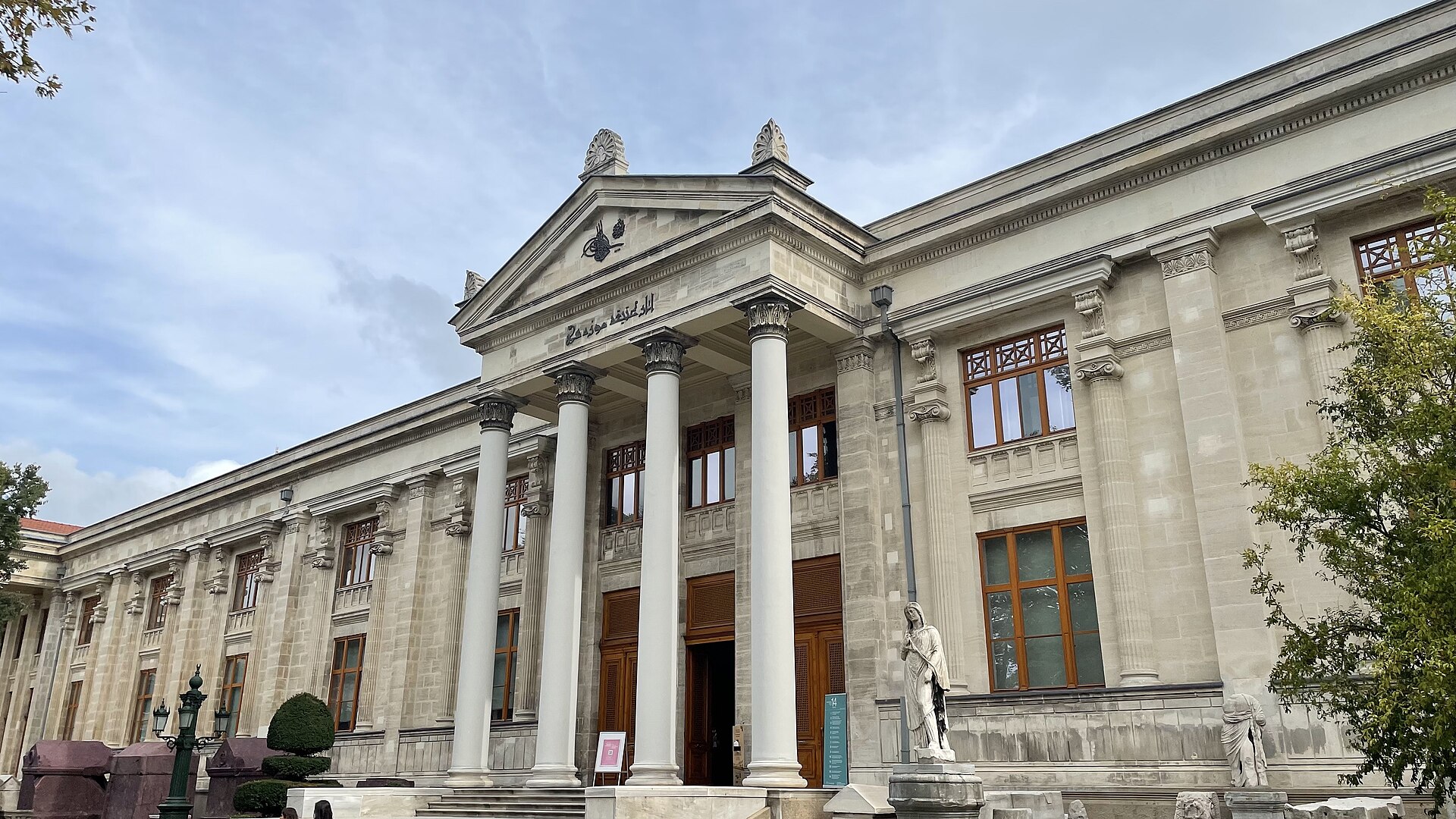
The Istanbul Archaeology Museums were founded in 1891 under the direction of Osman Hamdi Bey, painter, archaeologist, and museum director of the Ottoman Empire. Established during a period of growing interest in antiquities and heritage preservation, the institution became one of the first purpose-built museum complexes in the Ottoman world. Located near Topkapi Palace in Istanbul’s historic peninsula, the complex consists of three main buildings: the Archaeological Museum, the Museum of the Ancient Orient, and the Tiled Kiosk Museum. The collections span civilizations from Anatolia, Mesopotamia, Egypt, Arabia, and the Balkans, with holdings ranging from prehistoric artifacts to late antiquity. The museum gained international recognition with the display of the Alexander Sarcophagus and significant cuneiform tablets, including one of the earliest known peace treaties. It remains one of Turkey’s most important archaeological institutions.
Key Facts
- Founder
- Osman Hamdi Bey
- Established
- 1891 CE
- Accessibility
- Wheelchair accessible in main buildings; partial access in older sections
- Condition
- Active national museum complex
- Notable Artifacts
- Alexander Sarcophagus, Treaty of Kadesh tablet, Ishtar Gate fragments, Sidon sarcophagi collection
- Original Function
- Imperial archaeological museum
- Civilization Focus
- Anatolian, Mesopotamian, Egyptian, Greek, Roman, Byzantine, Ottoman
- Architectural Style
- Neoclassical (main building)
Foundation and Ottoman Antiquities Law
Late 19th centuryThe museum was created amid new Ottoman legislation regulating excavations and antiquities export. Osman Hamdi Bey played a key role in drafting laws that centralized control of archaeological finds within the empire.
Expansion of Collections
19th–early 20th centuriesArtifacts from excavations in Sidon, Mesopotamia, and Anatolia enriched the museum’s holdings. The discovery of the Alexander Sarcophagus in 1887 significantly elevated its international status.
Republican Era Developments
20th centuryFollowing the establishment of the Republic of Turkey, the museum continued to expand and modernize, integrating conservation laboratories and updated exhibition strategies.
Recent Renovations
21st centuryMajor restoration and reorganization projects have updated display methods, improved visitor circulation, and reinforced structural elements while preserving the historic character of the buildings.
Cultural Significance
The Istanbul Archaeology Museums represent a turning point in Ottoman cultural policy, reflecting a shift toward institutional preservation of antiquities within imperial borders. The museum played a central role in shaping national heritage discourse in both the late Ottoman and Republican periods. Its collections provide critical material evidence for ancient Near Eastern diplomacy, Hellenistic art, and Anatolian archaeology. As one of the earliest imperial museums outside Western Europe, it also illustrates the global competition over archaeological heritage in the 19th century.
Interpretive Notes
Scholarly debates and areas of uncertainty
Scholarly discussions focus on the museum’s role within late Ottoman imperial identity and debates surrounding ownership of antiquities excavated during the colonial era. The interpretation of artifacts such as the Alexander Sarcophagus continues to generate debate about cultural attribution and artistic influence. There is also ongoing research into provenance documentation and repatriation ethics.
Visiting Information
Entry Rules
Open daily except Mondays. Ticket required for entry. Combined tickets may include access to nearby historic sites.
Best Times to Visit
Morning hours generally offer lighter visitor traffic. School groups are more common during late morning on weekdays.
Photography
Personal photography permitted in most galleries without flash. Tripods and commercial filming require authorization. Some temporary exhibitions may restrict photography.
Preservation Notes
Do not touch displayed artifacts or lean on cases. Follow posted circulation routes. Food and drink are not permitted inside exhibition halls.
Nearby POIs
11 shownSources & Further Reading
- [1]Osman Hamdi Bey and the Ottoman Museum — Edhem Eldem. Istanbul Research Institute (2010)
- [2]Scramble for the Past: A Story of Archaeology in the Ottoman Empire, 1753–1914 — Zeynep Celik. Princeton University Press (2016)
- [3]Archaeology, Museums and the Ottoman Empire — Wendy M. K. Shaw. University of California Press (2003)
Key Facts
- Founder
- Osman Hamdi Bey
- Established
- 1891 CE
- Accessibility
- Wheelchair accessible in main buildings; partial access in older sections
- Condition
- Active national museum complex
- Notable Artifacts
- Alexander Sarcophagus, Treaty of Kadesh tablet, Ishtar Gate fragments, Sidon sarcophagi collection
- Original Function
- Imperial archaeological museum
- Civilization Focus
- Anatolian, Mesopotamian, Egyptian, Greek, Roman, Byzantine, Ottoman
- Architectural Style
- Neoclassical (main building)