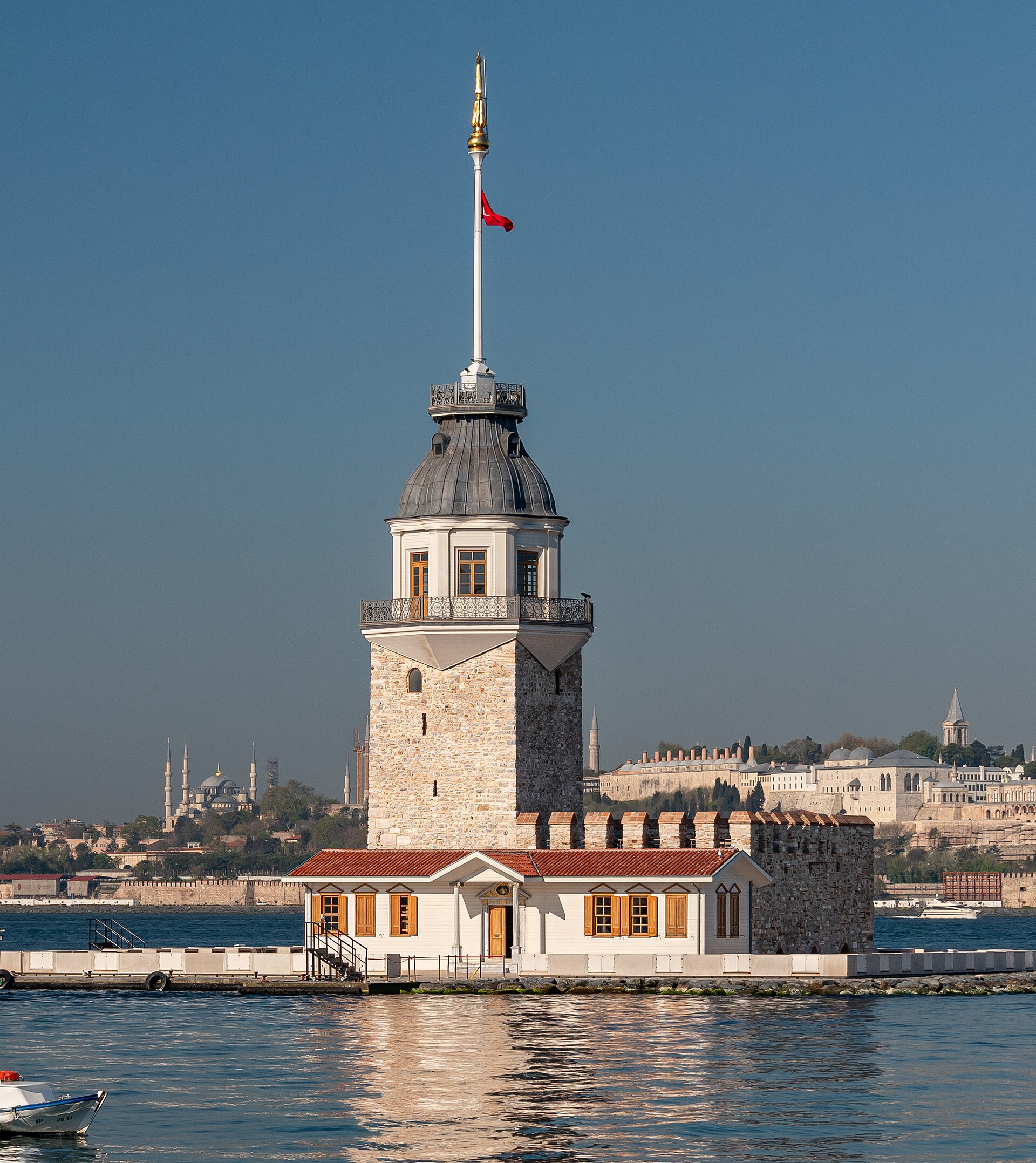
Kız Kulesi, or the Maiden’s Tower, is a historic tower situated on a small islet at the southern entrance of the Bosphorus Strait in Istanbul. The structure has served various functions over time, including a watchtower, lighthouse, and customs station. Its origins date back to the Byzantine period, and it has been rebuilt and renovated multiple times throughout Ottoman rule. Today, Kız Kulesi operates as a cultural and tourist site, featuring a café and restaurant within the tower. It is accessible by boat from the Üsküdar and Salacak shores and remains a prominent symbol of Istanbul visible from both the European and Asian sides of the city.
Key Facts
- Materials
- Stone, Brick, Wood
- Civilization
- Byzantine; Ottoman
- Accessibility
- Accessible by boat; wheelchair access limited
- Notable Feature
- Iconic Bosphorus landmark and maritime navigation point
- Date(s)
- Byzantine period; rebuilt 1110 CE, 18th century renovations
- Condition
- Restored; functioning as café and cultural site
- Original Function
- Watchtower and defensive fortification
- Key Figures
- Byzantine authorities, Ottoman sultans
- Architectural Style
- Tower with octagonal base and small dome
Byzantine Origins
5th–12th centuriesThe first known structure on the islet was a small watchtower built to control maritime traffic at the Bosphorus entrance. Historical records suggest its use for strategic defense and signaling.
Ottoman Reconstruction
1110 CE – 18th centuryThe tower was rebuilt and modified several times under Ottoman rule, serving as a lighthouse, quarantine station, and defensive post. Its current form largely stems from 18th-century renovations.
Modern Use
20th century – presentKız Kulesi was converted into a café and restaurant, hosting visitors and tourists. Restoration efforts focused on structural stability and preserving historical character while accommodating public access.
Cultural Significance
Kız Kulesi has played a prominent role in controlling maritime access to Istanbul and in local folklore. It is an enduring symbol of the city, featuring in literature, legends, and modern cultural representations. The tower connects both historical defense functions and contemporary tourism and hospitality uses.
Interpretive Notes
Scholarly debates and areas of uncertainty
Scholars debate the exact date of the original construction, as archaeological evidence is limited and historical chronicles provide differing accounts. Interpretations of its various functions, including whether it served as a lighthouse or quarantine station in certain periods, also vary among historians.
Visiting Information
Entry Rules
Accessible daily by boat from Üsküdar and Salacak piers. Entry ticket required.
Best Times to Visit
Early mornings and late afternoons offer quieter conditions and better lighting for photography. Weekends are busiest.
Photography
Photography is allowed for personal use. Tripods may require prior permission.
Preservation Notes
Visitors must follow safety instructions when boarding boats. Maintain orderly conduct inside the tower. Limited mobility access may restrict some areas.
Nearby POIs
11 shownSources & Further Reading
- [1]Istanbul: An Urban History — Orhan Pamuk. Random House (2005)
- [2]The Maiden’s Tower of Istanbul — Nilgün Bayraktar. Istanbul University Press (2010)
- [3]Ottoman Maritime Architecture — Gülru Necipoğlu. Princeton University Press (2012)
Key Facts
- Materials
- Stone, Brick, Wood
- Civilization
- Byzantine; Ottoman
- Accessibility
- Accessible by boat; wheelchair access limited
- Notable Feature
- Iconic Bosphorus landmark and maritime navigation point
- Date(s)
- Byzantine period; rebuilt 1110 CE, 18th century renovations
- Condition
- Restored; functioning as café and cultural site
- Original Function
- Watchtower and defensive fortification
- Key Figures
- Byzantine authorities, Ottoman sultans
- Architectural Style
- Tower with octagonal base and small dome