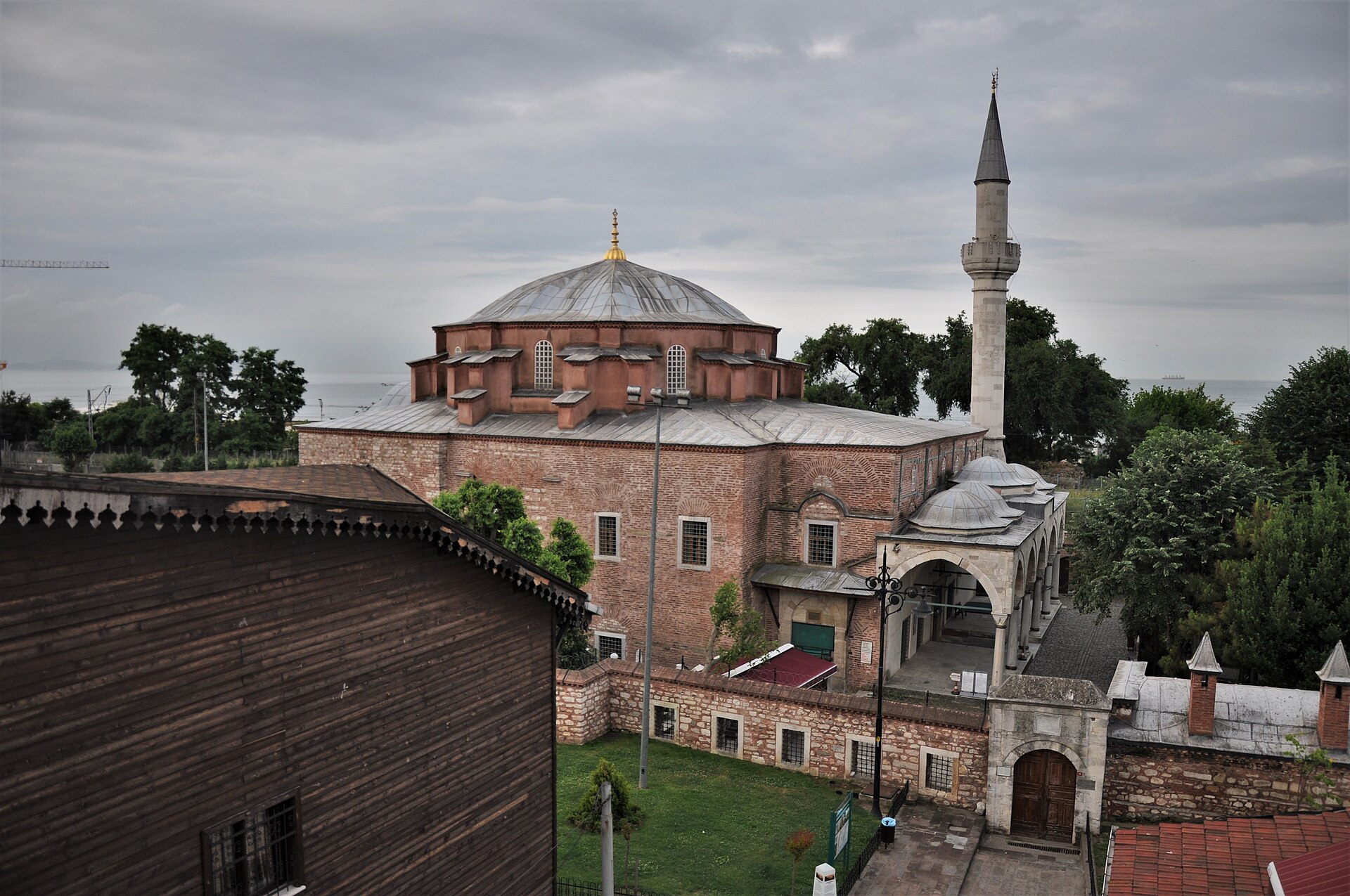
Little Hagia Sophia, originally the Church of Saints Sergius and Bacchus, is a 6th-century Byzantine structure located in Istanbul. It was commissioned by Emperor Justinian I and Empress Theodora shortly before the construction of Hagia Sophia and is considered an important precursor in the development of Byzantine domed architecture. Following the Ottoman conquest of Constantinople in 1453, the church was converted into a mosque and became known as Küçük Ayasofya Camii (Little Hagia Sophia). The building retains much of its original structural design, including its central dome and octagonal plan, while incorporating later Ottoman additions such as a minaret and interior modifications for Islamic worship.
Key Facts
- Materials
- Brick, Stone
- Civilization
- Byzantine
- Current Function
- Mosque
- Date(s)
- 527–536 CE
- Condition
- Restored and active
- Original Function
- Church dedicated to Saints Sergius and Bacchus
- Key Figures
- Emperor Justinian I, Empress Theodora
Foundation and Construction
527–536 CEThe church was commissioned by Emperor Justinian I and Empress Theodora and dedicated to Saints Sergius and Bacchus, who were venerated as military martyrs. Built during the early years of Justinian’s reign, the structure is notable for its innovative architectural design, particularly its central dome supported by an octagonal system.
Byzantine Period
6th–15th centuriesThe church functioned as a religious institution throughout the Byzantine period. Its architectural design influenced later constructions, including Hagia Sophia. The building remained relatively intact, preserving much of its original structure and decorative elements.
Ottoman Conversion
15th centuryAfter the Ottoman conquest of Constantinople, the church was converted into a mosque and renamed Küçük Ayasofya. Modifications included the addition of a mihrab, minaret, and other features necessary for Islamic worship, while much of the Byzantine structure was retained.
Modern Restoration
20th–21st centuriesThe building underwent restoration efforts to address structural issues and preserve its historical features. It remains an active mosque and is open to visitors, representing a significant example of early Byzantine architecture adapted for later use.
Cultural Significance
The Church of Saints Sergius and Bacchus reflects the close relationship between imperial authority and religious expression in early Byzantine Constantinople. Its dedication to military saints highlights the integration of religious devotion with imperial identity and protection. As Little Hagia Sophia, the building represents the continuity of sacred space through cultural transformation. Its preservation as both a Byzantine architectural model and an active mosque illustrates the layered religious and historical identity of Istanbul.
Interpretive Notes
Scholarly debates and areas of uncertainty
Scholars continue to debate the extent to which the design of Little Hagia Sophia directly influenced the construction of Hagia Sophia, particularly regarding the use of domes and transitional architectural elements. There is also discussion about the original decorative program of the interior, as much of the Byzantine ornamentation has been lost or altered during later modifications.
Visiting Information
Entry Rules
Open daily. Active mosque with free entry outside of prayer times.
Best Times to Visit
Early morning or late afternoon outside of prayer times for easier access. Weekdays are generally less crowded.
Photography
Personal photography permitted. Avoid flash and respect worshippers during prayer times.
Preservation Notes
Visitors should remain in designated areas and avoid disturbing active worship. Some areas may be restricted during maintenance or prayer.
Nearby POIs
11 shownSources & Further Reading
- [1]The Church of Saints Sergius and Bacchus in Constantinople — Richard Krautheimer. Early Christian and Byzantine Architecture (1986)
- [2]Byzantine Architecture — Cyril Mango. Yale University Press (1986)
- [3]Küçük Ayasofya Mosque — Republic of Turkey Ministry of Culture and Tourism (2020)
Key Facts
- Materials
- Brick, Stone
- Civilization
- Byzantine
- Current Function
- Mosque
- Date(s)
- 527–536 CE
- Condition
- Restored and active
- Original Function
- Church dedicated to Saints Sergius and Bacchus
- Key Figures
- Emperor Justinian I, Empress Theodora