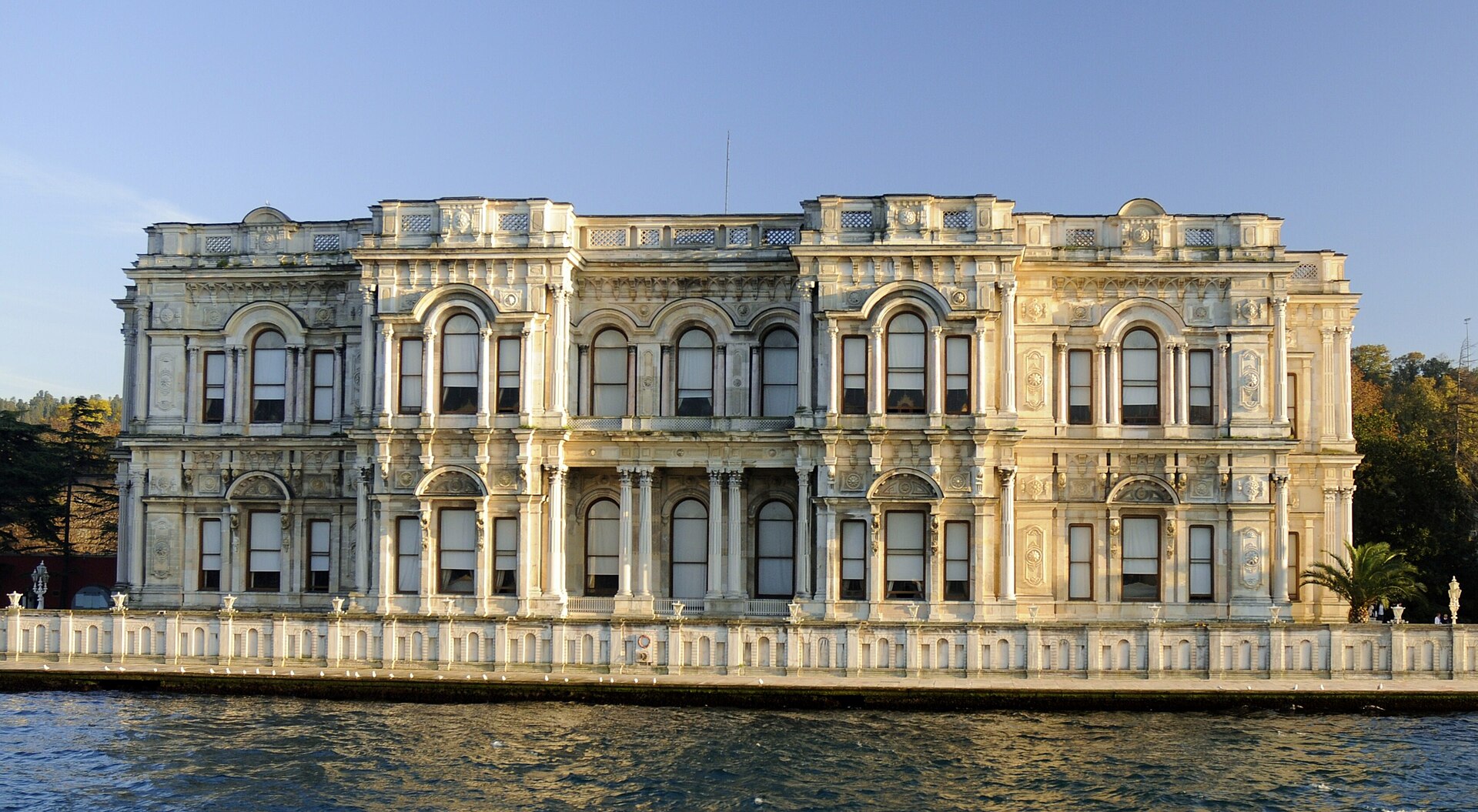
Beylerbeyi Palace, located on the Asian shore of the Bosphorus in Istanbul, Turkey, was constructed as a summer residence and guesthouse for visiting dignitaries during the reign of Sultan Abdülaziz. The palace combines traditional Ottoman architecture with Western influences, reflecting the eclectic tastes of the late Ottoman period. The palace complex includes ornate gardens, ceremonial halls, private apartments, and waterfront terraces, demonstrating both the social functions and the political symbolism of royal architecture during the 19th century.
Key Facts
- Materials
- Stone, Marble, Wood, Decorative tiles
- Civilization
- Ottoman Empire
- Accessibility
- Wheelchair accessible in main areas
- Date(s)
- 1861-1865 CE
- Condition
- Well-preserved, museum and official event venue
- Original Function
- Summer residence and guesthouse for dignitaries
- Key Figures
- Sultan Abdülaziz, Empress Eugénie of France
Commission & Construction
1861-1865 CESultan Abdülaziz commissioned Beylerbeyi Palace as a riverside summer residence and official guesthouse. The palace was designed to accommodate visiting foreign dignitaries and to host official receptions along the Bosphorus.
Architectural Style
19th centuryThe palace exhibits Ottoman design enriched with Baroque and Neoclassical European elements, visible in its elaborate ceilings, grand staircases, and decorative façades. The gardens and terraces were laid out to complement both the architecture and the Bosphorus views.
Use & Historical Significance
19th-20th centuryBeylerbeyi Palace served as a summer residence for sultans and a reception space for international guests. Notably, Empress Eugénie of France stayed here during her visit to Istanbul in 1869. The palace symbolizes the Ottoman Empire’s engagement with European powers during the late 19th century.
Modern Preservation
20th century - presentThe palace was restored in the 20th century and now functions as a museum open to the public on guided tours. Some areas are used for official state receptions and events, maintaining its ceremonial purpose.
Cultural Significance
Beylerbeyi Palace represents the integration of Ottoman and European architectural traditions, serving as both a symbol of royal authority and a center for diplomatic hospitality. It illustrates the political and social practices of the late Ottoman period through its ceremonial spaces and landscaped gardens. The site functions as an educational and cultural resource, offering visitors insight into Ottoman statecraft, architectural styles, and the lifestyles of the royal elite along the Bosphorus.
Interpretive Notes
Scholarly debates and areas of uncertainty
Scholarly discussion focuses on the palace’s architectural classification, particularly the blending of Ottoman and European elements. Debate exists on whether this represents genuine stylistic integration or merely superficial decorative borrowing.
Visiting Information
Entry Rules
Guided tours only. Open daily 9:00-17:00 except national holidays. Group visits must be arranged in advance.
Best Times to Visit
Weekdays and mornings provide the quietest experience. Spring and autumn offer the most comfortable weather for exploring the gardens and terraces.
Photography
Photography allowed in designated areas. Tripods, drones, and commercial photography require prior permission from the museum administration.
Preservation Notes
Do not touch or lean on decorative surfaces. Remain on marked pathways. Some rooms may be closed during official events or maintenance.
Nearby POIs
11 shownSources & Further Reading
- [1]Beylerbeyi Palace Official WebsiteView
- [2]Ottoman Palaces and Architecture — Doğan Kuban. Istanbul Technical University Press (2010)
Key Facts
- Materials
- Stone, Marble, Wood, Decorative tiles
- Civilization
- Ottoman Empire
- Accessibility
- Wheelchair accessible in main areas
- Date(s)
- 1861-1865 CE
- Condition
- Well-preserved, museum and official event venue
- Original Function
- Summer residence and guesthouse for dignitaries
- Key Figures
- Sultan Abdülaziz, Empress Eugénie of France