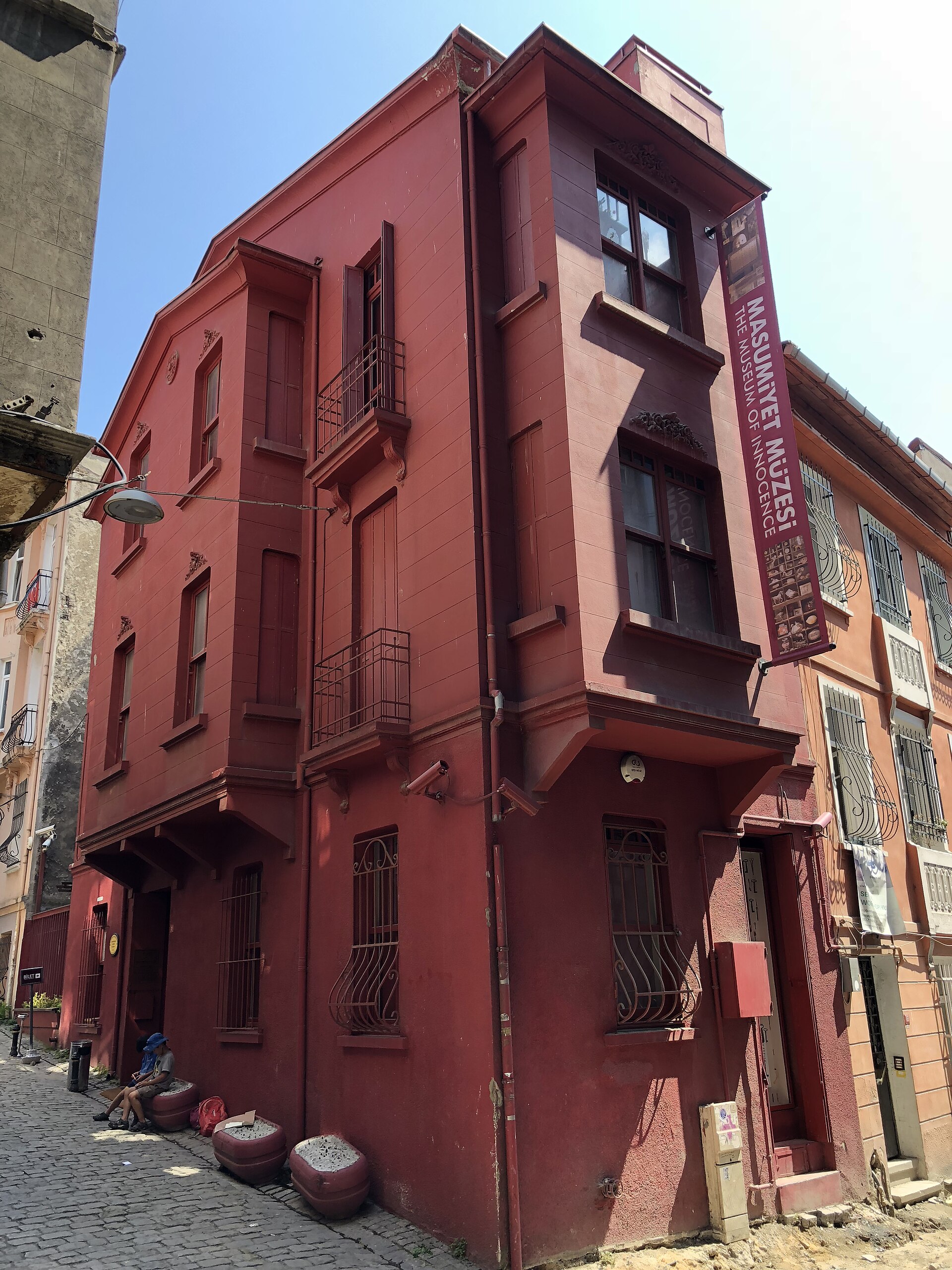
The Masumiyet Müzesi (Museum of Innocence) in Istanbul is a private museum and cultural space inspired by the novel *The Museum of Innocence* by Nobel laureate Orhan Pamuk. Established in 2012, it presents a unique narrative-driven collection of everyday objects representing the lives, emotions, and social contexts of Istanbul residents in the 1970s and 1980s. The museum functions both as a literary companion to Pamuk's novel and as an independent exploration of Istanbul’s cultural and social history. Visitors experience the collection in a sequential manner, reflecting the story's themes of memory, longing, and domestic life.
Key Facts
- Materials
- Concrete, Brick, Glass, Wood
- Civilization
- Modern Turkish
- Accessibility
- Wheelchair accessible with some assistance
- Notable Feature
- Objects arranged to narrate literary story and social history
- Date(s)
- 2012 CE
- Condition
- Active museum and exhibition space
- Original Function
- Private literary and cultural museum
- Key Figures
- Orhan Pamuk
- Architectural Style
- Modern museum building with sequential exhibition rooms
Concept and Inspiration
2012The museum was conceived by Orhan Pamuk as a physical extension of his novel, reflecting the story's themes and characters through a curated collection of objects. Each item represents moments in the narrative and Istanbul’s urban life.
Collection and Exhibition
2012–presentThe museum displays over 1,000 objects, including clothing, jewelry, photographs, and personal items arranged chronologically to mirror the novel’s chapters. Visitors move through rooms that evoke domestic and urban settings.
Cultural Reception
2012–presentThe museum has attracted international attention as an innovative blend of literature, museology, and social commentary. It has inspired similar narrative-driven exhibitions and contributed to the dialogue on modern Turkish identity.
Cultural Significance
Masumiyet Müzesi offers insight into Istanbul's social and cultural life in the late 20th century. It bridges literature and material culture, highlighting ordinary objects as vessels of memory, identity, and emotional narrative within the urban context.
Interpretive Notes
Scholarly debates and areas of uncertainty
Some scholars question the balance between literary interpretation and historical accuracy. The extent to which objects can faithfully represent broader social history versus fictional narrative is a topic of discussion in museology and literary circles.
Visiting Information
Entry Rules
Open daily 10:00–18:00. Tickets required, official tickets are sold at entry; timed entry recommended due to narrow gallery spaces.
Best Times to Visit
Weekday mornings are less crowded. Avoid weekends and public holidays for quiet visits.
Photography
Photography is allowed for personal use; flash and tripods require museum permission.
Preservation Notes
Visitors should follow the sequential exhibition route. Do not touch objects. The museum has narrow spaces; supervision is recommended for accessibility assistance.
Nearby POIs
11 shownSources & Further Reading
- [1]The Museum of Innocence — Orhan Pamuk. Random House (2008)
- [2]Masumiyet Müzesi Guide — Orhan Pamuk. Masumiyet Müzesi Publication (2012)
- [3]Narrative Museums in Contemporary Turkey — Elif Çelik. Istanbul University Press (2015)
Key Facts
- Materials
- Concrete, Brick, Glass, Wood
- Civilization
- Modern Turkish
- Accessibility
- Wheelchair accessible with some assistance
- Notable Feature
- Objects arranged to narrate literary story and social history
- Date(s)
- 2012 CE
- Condition
- Active museum and exhibition space
- Original Function
- Private literary and cultural museum
- Key Figures
- Orhan Pamuk
- Architectural Style
- Modern museum building with sequential exhibition rooms