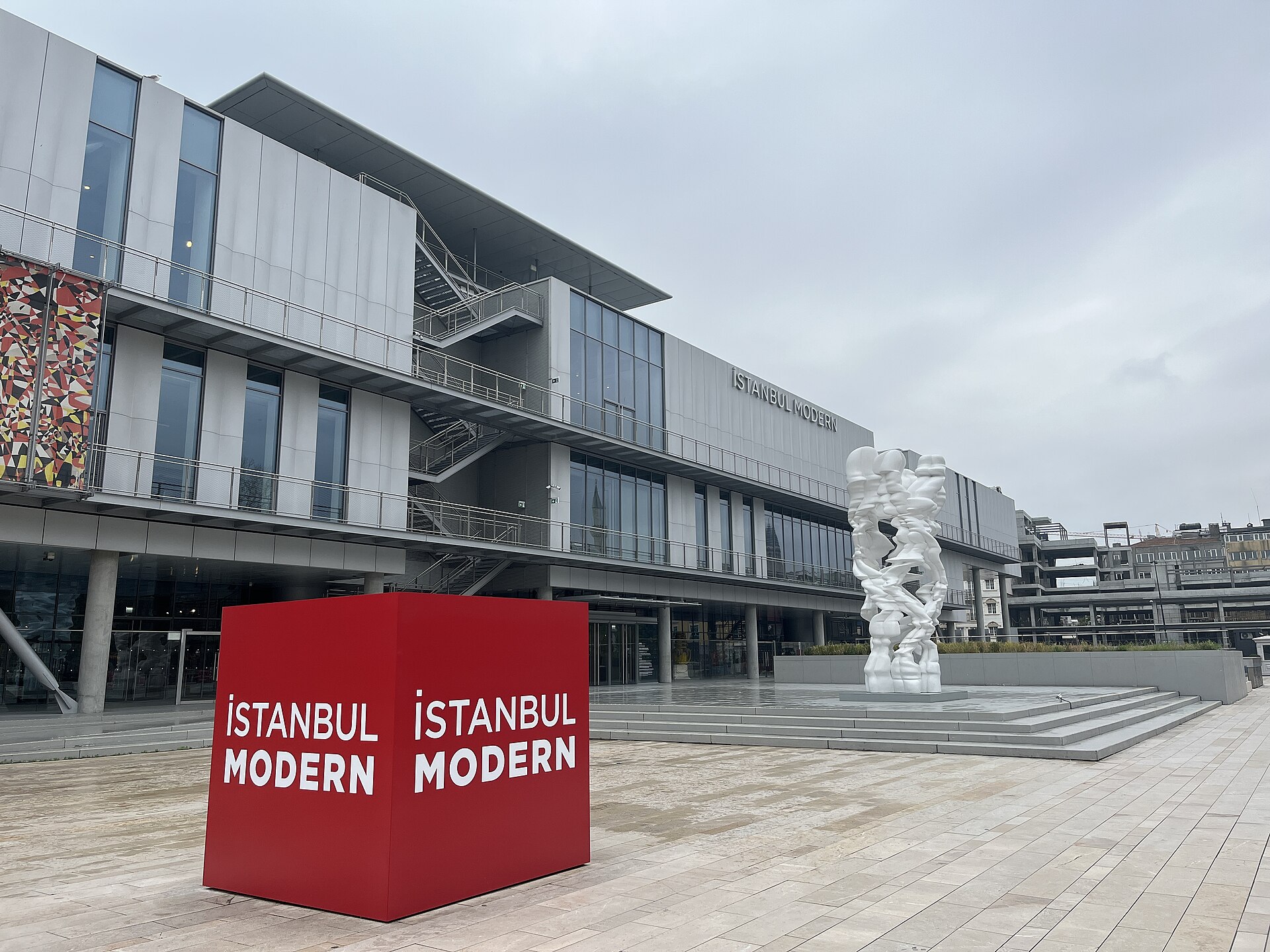
Istanbul Museum of Modern Art is Turkey’s first museum dedicated to modern and contemporary art, founded in 2004 by the Eczacıbaşı family. It was established to promote artistic production in Turkey and to situate Turkish modern and contemporary art within an international context. The museum presents rotating exhibitions from its permanent collection alongside temporary exhibitions featuring national and international artists. Originally housed in a converted warehouse in the Karaköy district, the museum relocated to a purpose-built structure on the Galataport waterfront in 2023. The new building, designed by architect Renzo Piano, integrates exhibition galleries, educational spaces, a cinema, and conservation facilities, reinforcing the institution’s role in Istanbul’s contemporary cultural landscape.
Key Facts
- Materials
- Glass, Steel, Concrete
- Civilization
- Republic of Turkey
- Accessibility
- Fully accessible with elevators and step-free circulation
- Collection Scope
- Modern and contemporary Turkish and international art
- Date(s)
- Founded 2004 CE; new building opened 2023 CE
- Condition
- Active museum in purpose-built facility
- Original Function
- Modern and contemporary art museum
- Key Figures
- Renzo Piano, Eczacıbaşı family
- Architectural Style
- Contemporary
Foundation and Early Years
2004–2018The museum opened in 2004 in a renovated dockside warehouse in Karaköy. Its founding marked a significant institutional milestone for contemporary art in Turkey, providing a permanent venue for exhibitions, film screenings, and educational programming.
Temporary Relocation
2018–2022During redevelopment of the waterfront area, the museum operated from a temporary location in Beyoğlu. This period allowed continued exhibition programming while plans for a new permanent building advanced.
New Galataport Building
2023–presentIn 2023, the museum reopened in a newly constructed building on the Galataport waterfront, designed by Renzo Piano Building Workshop. The facility includes flexible gallery spaces, a library, a cinema, and conservation laboratories.
Cultural Significance
Istanbul Museum of Modern Art has played a key role in shaping the public visibility of modern and contemporary art in Turkey. By maintaining a permanent collection and organizing international exhibitions, it contributes to dialogue between Turkish artists and global artistic movements. Its waterfront location within a redeveloped port area reflects broader urban transformation in Istanbul, linking cultural infrastructure with economic and architectural renewal projects.
Interpretive Notes
Scholarly debates and areas of uncertainty
Scholarly and critical discussions address the museum’s role in defining narratives of Turkish modernism and its relationship to private patronage. Observers examine how institutional frameworks influence which artists and movements are foregrounded within national and international contexts. Debate also surrounds the integration of large-scale cultural institutions into urban redevelopment projects, particularly in historically layered districts of Istanbul.
Visiting Information
Entry Rules
Open Tuesday–Sunday; closed Mondays. Ticketed entry required. Concessions available for students and seniors.
Best Times to Visit
Weekday mornings generally offer quieter gallery conditions. Special exhibition openings and weekends attract higher attendance.
Photography
Photography without flash is typically permitted in permanent collection galleries. Temporary exhibitions may impose restrictions. Tripods are not allowed.
Preservation Notes
Follow gallery guidelines and do not touch artworks unless explicitly interactive. Bags may be subject to security screening.
Nearby POIs
11 shownSources & Further Reading
- [1]Contemporary Art in Turkey — Ali Akay. Istanbul Bilgi University Press (2010)
- [2]Art and Architecture in Modern Turkey — Sibel Bozdoğan. Reaktion Books (2012)
- [3]Museums and the Public Sphere in Turkey — Wendy M. K. Shaw. Journal of Museum Studies (2015)
Key Facts
- Materials
- Glass, Steel, Concrete
- Civilization
- Republic of Turkey
- Accessibility
- Fully accessible with elevators and step-free circulation
- Collection Scope
- Modern and contemporary Turkish and international art
- Date(s)
- Founded 2004 CE; new building opened 2023 CE
- Condition
- Active museum in purpose-built facility
- Original Function
- Modern and contemporary art museum
- Key Figures
- Renzo Piano, Eczacıbaşı family
- Architectural Style
- Contemporary