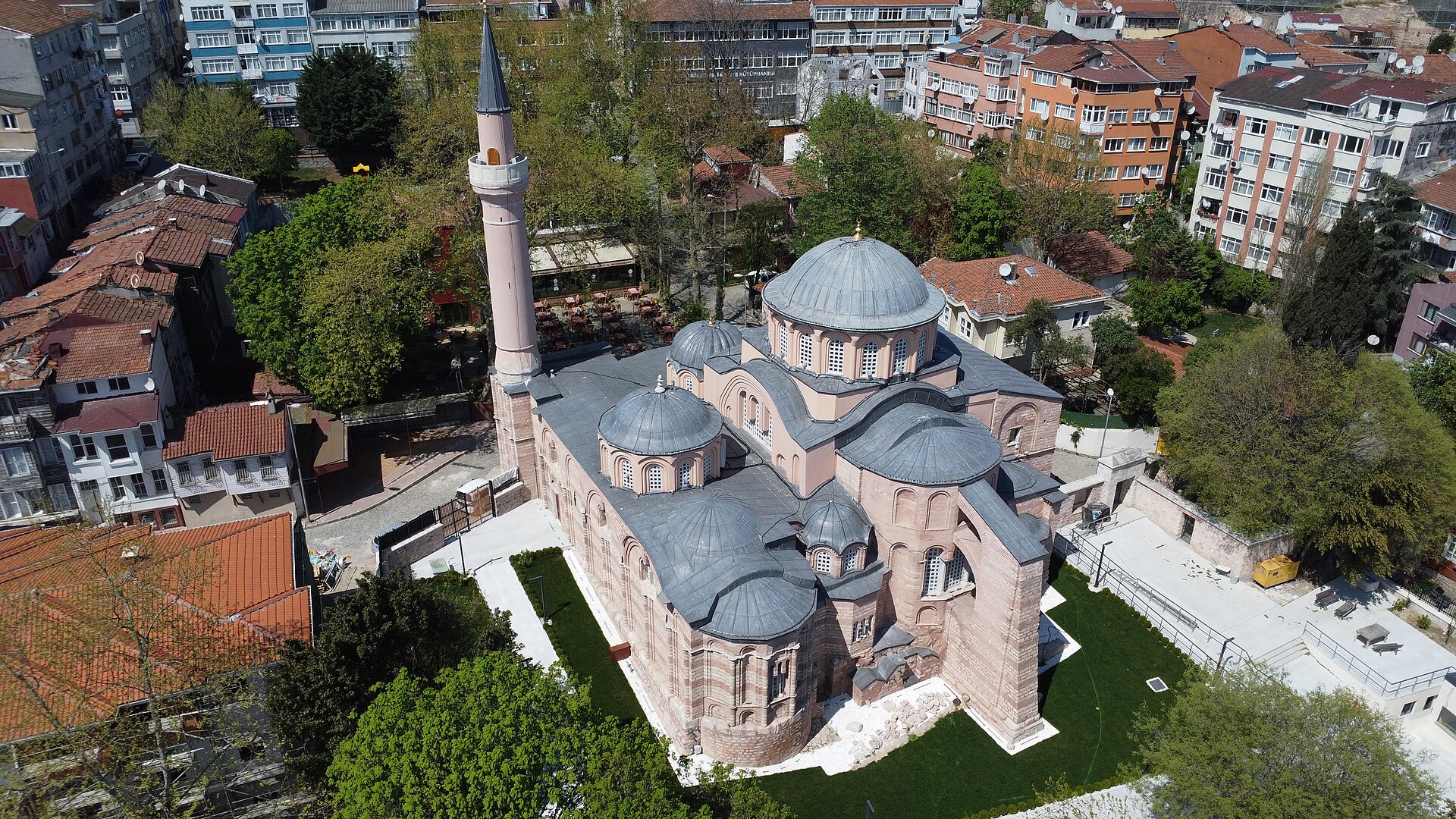
Kariye Camii, historically known as the Church of the Holy Savior in Chora, originated as a Byzantine monastery church outside the early walls of Constantinople. The present structure largely dates to the 11th century, built during the Middle Byzantine period, with extensive decoration added in the early 14th century under the patronage of the statesman Theodore Metochites. Following the Ottoman conquest of Constantinople in 1453, the church was converted into a mosque and became known as Kariye Camii. In the 16th century, Christian mosaics and frescoes were covered with plaster in accordance with Islamic aniconic practice. In 1945, the building was secularized and converted into a museum, and its mosaics were restored and uncovered. In 2020, it was reconverted into a mosque and reopened for Muslim worship, while remaining accessible to visitors.
Key Facts
- Materials
- Brick, Stone, Marble, Plaster
- Civilization
- Byzantine
- Accessibility
- Ground-level access; interior galleries include steps; modest dress required during prayer hours
- Notable Feature
- Extensive 14th-century mosaics and fresco cycles
- Date(s)
- 11th century CE; major decoration early 14th century
- Condition
- Active mosque and historic monument
- Original Function
- Monastery church
- Key Figures
- Theodore Metochites
- Architectural Style
- Middle Byzantine cross-in-square plan with later Palaiologan decoration
Middle Byzantine Construction
11th centuryThe core structure of the church was erected during the Middle Byzantine period, following the cross-in-square architectural type common in Constantinople. It formed part of a monastic complex situated near the city walls.
Palaiologan Artistic Flourishing
Early 14th centuryUnder the patronage of Theodore Metochites, the church received extensive decorative programs, including mosaics in the narthexes and frescoes in the parecclesion. These works are considered masterpieces of late Byzantine (Palaiologan) art, depicting scenes from the lives of Christ and the Virgin Mary.
Ottoman Conversion
16th centuryAfter the Ottoman conquest, the building was converted into a mosque. Figurative mosaics and frescoes were plastered over, and Islamic architectural elements such as a mihrab and minaret were added.
Modern Restoration and Reversion
20th–21st centuriesIn 1945, the structure was designated a museum, and restoration campaigns uncovered and conserved the Byzantine artworks. In 2020, it was reconverted into a mosque, with conservation measures allowing partial visibility of mosaics outside prayer times.
Cultural Significance
Kariye Camii is widely regarded as one of the most significant surviving examples of late Byzantine art in Istanbul. Its mosaics and frescoes illustrate theological themes, narrative cycles, and refined stylistic developments of the Palaiologan Renaissance. The building embodies the layered religious history of Istanbul, reflecting Byzantine Christian origins, Ottoman Islamic adaptation, secular museum status in the 20th century, and renewed mosque function in the 21st century.
Interpretive Notes
Scholarly debates and areas of uncertainty
Scholarly debate surrounds the conservation and display of its mosaics following its reconversion into a mosque. Discussions focus on balancing active religious use with preservation of fragile artworks and ensuring continued public access. Art historians also analyze the theological symbolism and patronage context of the 14th-century decoration, particularly the role of Theodore Metochites in shaping the iconographic program.
Visiting Information
Entry Rules
Open daily for worship and visitation. Access may be limited during prayer times. Entry is free; visitors should verify current visiting hours.
Best Times to Visit
Non-prayer hours provide the best opportunity to view mosaics with minimal coverings. Early mornings outside prayer periods tend to be quieter.
Photography
Photography without flash is generally permitted outside prayer times. Restrictions may apply during worship. Tripods are not allowed.
Preservation Notes
Modest dress is required. Shoes must be removed before entering prayer areas. Visitors should remain quiet and avoid walking in front of worshippers during prayer.
Nearby POIs
11 shownSources & Further Reading
- [1]The Art of the Byzantine Empire 312–1453 — Cyril Mango. University of Toronto Press (1986)
- [2]Byzantine Architecture — Robert Ousterhout. Yale University Press (2019)
- [3]Chora: The Kariye Camii in Istanbul — Holger A. Klein. Dumbarton Oaks (2007)
Key Facts
- Materials
- Brick, Stone, Marble, Plaster
- Civilization
- Byzantine
- Accessibility
- Ground-level access; interior galleries include steps; modest dress required during prayer hours
- Notable Feature
- Extensive 14th-century mosaics and fresco cycles
- Date(s)
- 11th century CE; major decoration early 14th century
- Condition
- Active mosque and historic monument
- Original Function
- Monastery church
- Key Figures
- Theodore Metochites
- Architectural Style
- Middle Byzantine cross-in-square plan with later Palaiologan decoration