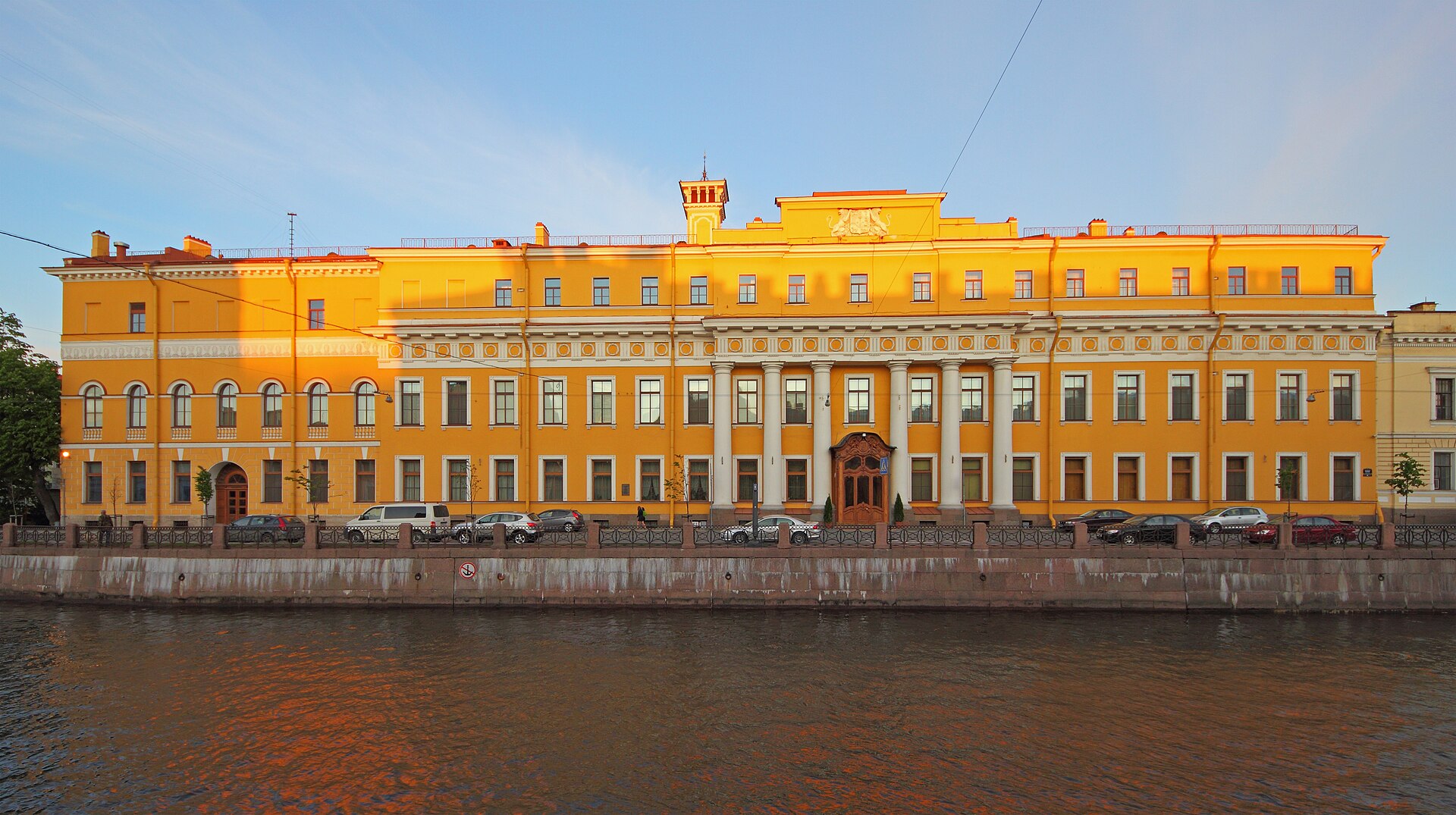
The Yusupov Palace on the Moika River is a historic residence in Saint Petersburg, Russia, that served as the primary home of the wealthy and influential Yusupov family. Originally designed by Jean-Baptiste Vallin de la Mothe in the 1770s, the structure underwent numerous expansions and renovations by various architects, resulting in a complex interior featuring a blend of Neoclassical, Rococo, and Empire styles.
The palace is globally recognized as the site of the 1916 assassination of Grigori Rasputin, the controversial mystic and advisor to the Romanov family. Following the Russian Revolution, the building was nationalized and eventually converted into a museum, preserving its opulent state rooms, private theater, and the basement chambers where the historical event occurred.
Key Facts
- Materials
- Stone, Brick, Stucco, Marble, Gilded wood
- Civilization
- Russian Empire
- Accessibility
- Limited accessibility in historic basement areas
- Date(s)
- 1770s - 1910s
- Condition
- Well-preserved, operating as a museum
- Original Function
- Aristocratic residence
- Key Figures
- Prince Felix Yusupov, Grigori Rasputin, Grand Duke Dmitri Pavlovich
Origins and Early Ownership
1770sThe site was originally developed by Jean-Baptiste Vallin de la Mothe. It passed through several aristocratic hands, including the Shuvalov and Branicki families, before being acquired by Prince Nikolai Yusupov in 1830.
The Yusupov Era
1830-1917For five generations, the Yusupovs transformed the palace into one of the most luxurious private residences in Russia. They amassed a vast collection of art and hosted lavish social events that defined the upper echelons of Saint Petersburg society.
The Assassination of Rasputin
1916In December 1916, Prince Felix Yusupov and a group of co-conspirators lured Grigori Rasputin to the palace basement. The event, intended to remove Rasputin's influence from the Tsar, became a pivotal moment in the lead-up to the Russian Revolution.
Soviet Era and Museum Transformation
1917-1991Following the 1917 Revolution, the palace was seized by the Bolsheviks. It was designated as a cultural monument and served various functions, including housing for the Union of Education Workers, before being restored as a museum.
Cultural Significance
The palace stands as a primary example of the extreme wealth and cultural patronage of the Russian nobility prior to the 1917 Revolution. It serves as a tangible link to the final days of the Romanov dynasty and the dramatic political shifts that ended the imperial era.
Beyond its architectural merit, the site holds a unique place in popular history due to the Rasputin assassination. The basement exhibit remains one of the most visited historical displays in Saint Petersburg, drawing interest from those studying the intersection of Russian mysticism, politics, and the collapse of the monarchy.
Interpretive Notes
Scholarly debates and areas of uncertainty
The exact details of the Rasputin assassination remain a subject of historical scrutiny. While Prince Felix Yusupov provided detailed accounts in his memoirs, historians often debate the accuracy of his narrative, particularly regarding the sequence of events and the involvement of other conspirators, suggesting that the Prince may have embellished his role to enhance his own legacy.
Visiting Information
Entry Rules
Open daily. Tickets can be purchased online or at the box office. Guided tours are required for the basement exhibition where the assassination occurred. Modest attire is recommended.
Best Times to Visit
Weekday mornings to avoid large tour groups. The winter months offer a distinct atmosphere consistent with the historical timing of the 1916 events.
Photography
Personal photography is permitted in most areas without flash. Tripods and professional equipment require prior authorization.
Preservation Notes
The palace is a protected cultural heritage site. Visitors must refrain from touching wall coverings, furniture, or artifacts. Use of shoe covers is mandatory in certain historic rooms.
Nearby POIs
11 shownSources & Further Reading
- [1]Lost Splendor — Felix Yusupov. Alfred A. Knopf (1953)
- [2]Rasputin: The Biography — Douglas Smith. Pan Macmillan (2016)
Key Facts
- Materials
- Stone, Brick, Stucco, Marble, Gilded wood
- Civilization
- Russian Empire
- Accessibility
- Limited accessibility in historic basement areas
- Date(s)
- 1770s - 1910s
- Condition
- Well-preserved, operating as a museum
- Original Function
- Aristocratic residence
- Key Figures
- Prince Felix Yusupov, Grigori Rasputin, Grand Duke Dmitri Pavlovich