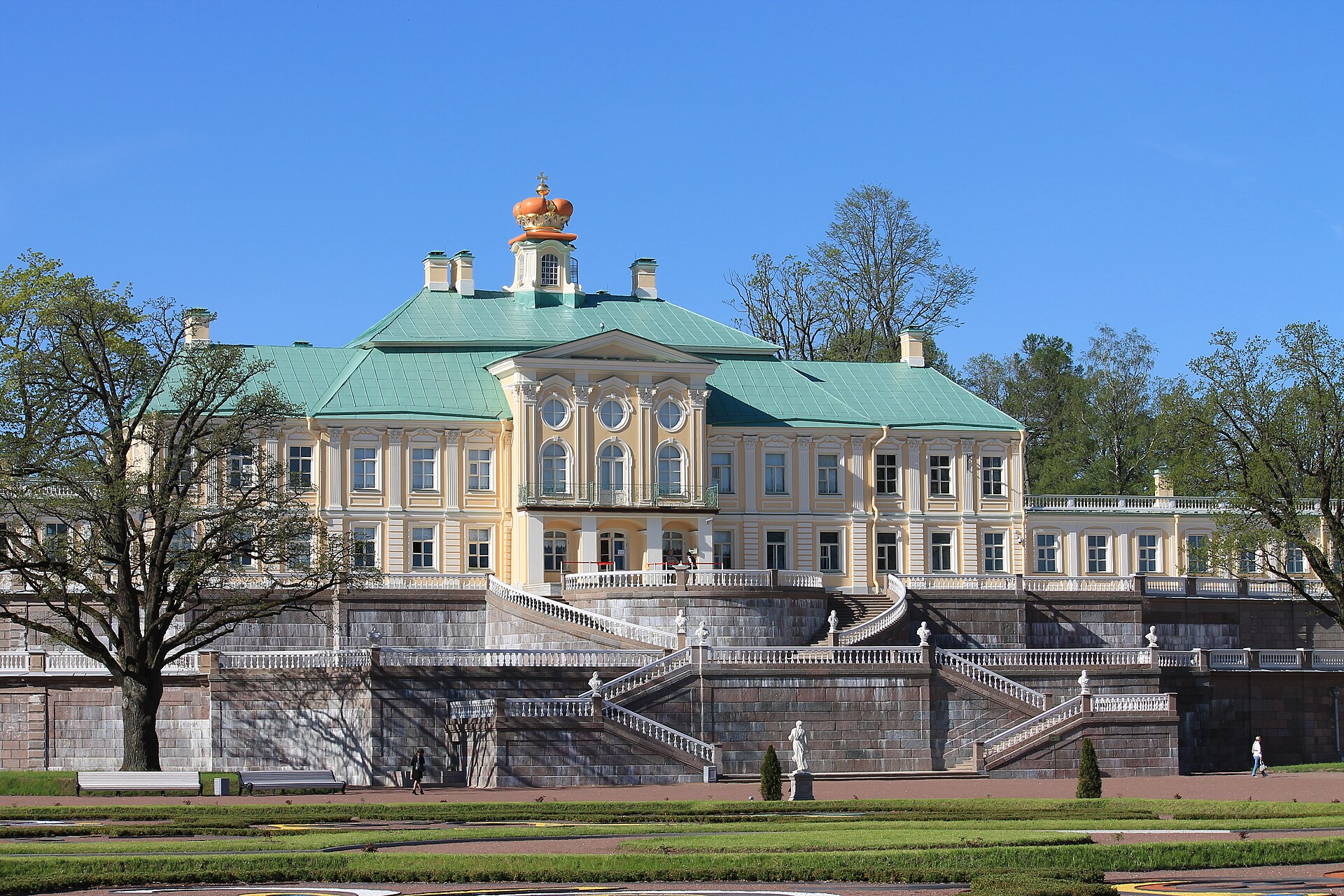
The Menshikov Palace, located on Vasilyevsky Island in Saint Petersburg, was the first stone building constructed in the city. Commissioned by Alexander Menshikov, the first Governor-General of Saint Petersburg and a close associate of Peter the Great, the palace served as a grand residence for state receptions and social gatherings during the early 18th century.
Designed by architects Giovanni Maria Fontana and Gottfried Johann Schädel, the structure represents a unique blend of Western European Baroque and traditional Russian architectural elements. Today, the palace functions as a branch of the State Hermitage Museum, housing an extensive collection of early 18th-century Russian art, furniture, and decorative objects that illustrate the lifestyle of the Russian nobility during the reign of Peter I.
Key Facts
- Materials
- Brick, Stucco, Marble, Wood
- Civilization
- Russian Empire
- Accessibility
- Limited accessibility for mobility-impaired visitors due to historical layout
- Date(s)
- 1710-1727
- Condition
- Restored and maintained as a museum
- Original Function
- Private residence and state reception palace
- Key Figures
- Alexander Menshikov, Peter the Great, Giovanni Maria Fontana
Construction and Early Years
1710-1727Construction began in 1710 under the direction of Giovanni Maria Fontana. The palace was intended to demonstrate the power and European orientation of the newly founded capital. It became the site of lavish banquets and diplomatic meetings hosted by Menshikov.
Imperial Transition
1727-1917Following Menshikov's fall from grace and exile in 1727, the palace was confiscated by the crown. It was subsequently used as the First Cadet Corps building, which necessitated significant interior modifications to accommodate classrooms and dormitories.
Restoration and Museum Status
1967-presentIn 1967, the building was transferred to the State Hermitage Museum. A multi-decade restoration project was initiated to strip away later additions and return the interiors to their original Petrine-era appearance, culminating in the opening of the museum to the public in 1981.
Cultural Significance
The Menshikov Palace is a critical monument for understanding the 'Petrine Baroque' style, which marked Russia's architectural shift toward European standards. It serves as a rare surviving example of early 18th-century interior design in Saint Petersburg, providing insight into the rapid modernization efforts of the Russian elite during the early imperial period.
Interpretive Notes
Scholarly debates and areas of uncertainty
There is ongoing academic discussion regarding the extent of the original interior decorations, as many of the wall coverings and tile work were heavily modified during the building's long tenure as a military school. Scholars continue to debate the authenticity of certain reconstructed elements versus surviving original fragments.
Visiting Information
Entry Rules
Open Tuesday through Sunday. Tickets can be purchased at the entrance or via the Hermitage website. Visitors must wear shoe covers provided at the entrance to protect the historic floors.
Best Times to Visit
Weekday mornings are recommended to avoid large tour groups. The palace is particularly quiet during the winter months.
Photography
Non-commercial photography is permitted without flash. Tripods and selfie sticks are strictly prohibited.
Preservation Notes
The palace is a fragile historic site. Visitors are required to follow marked paths and refrain from touching any surfaces or exhibits. The climate is strictly controlled to preserve the 18th-century wall tiles and woodwork.
Nearby POIs
11 shownSources & Further Reading
- [1]The Menshikov Palace: A History — Elena Kalugina. Hermitage Publishing House (2005)
- [2]St. Petersburg: Architecture of the Tsars — Dmitry Shvidkovsky. Yale University Press (2007)
Key Facts
- Materials
- Brick, Stucco, Marble, Wood
- Civilization
- Russian Empire
- Accessibility
- Limited accessibility for mobility-impaired visitors due to historical layout
- Date(s)
- 1710-1727
- Condition
- Restored and maintained as a museum
- Original Function
- Private residence and state reception palace
- Key Figures
- Alexander Menshikov, Peter the Great, Giovanni Maria Fontana