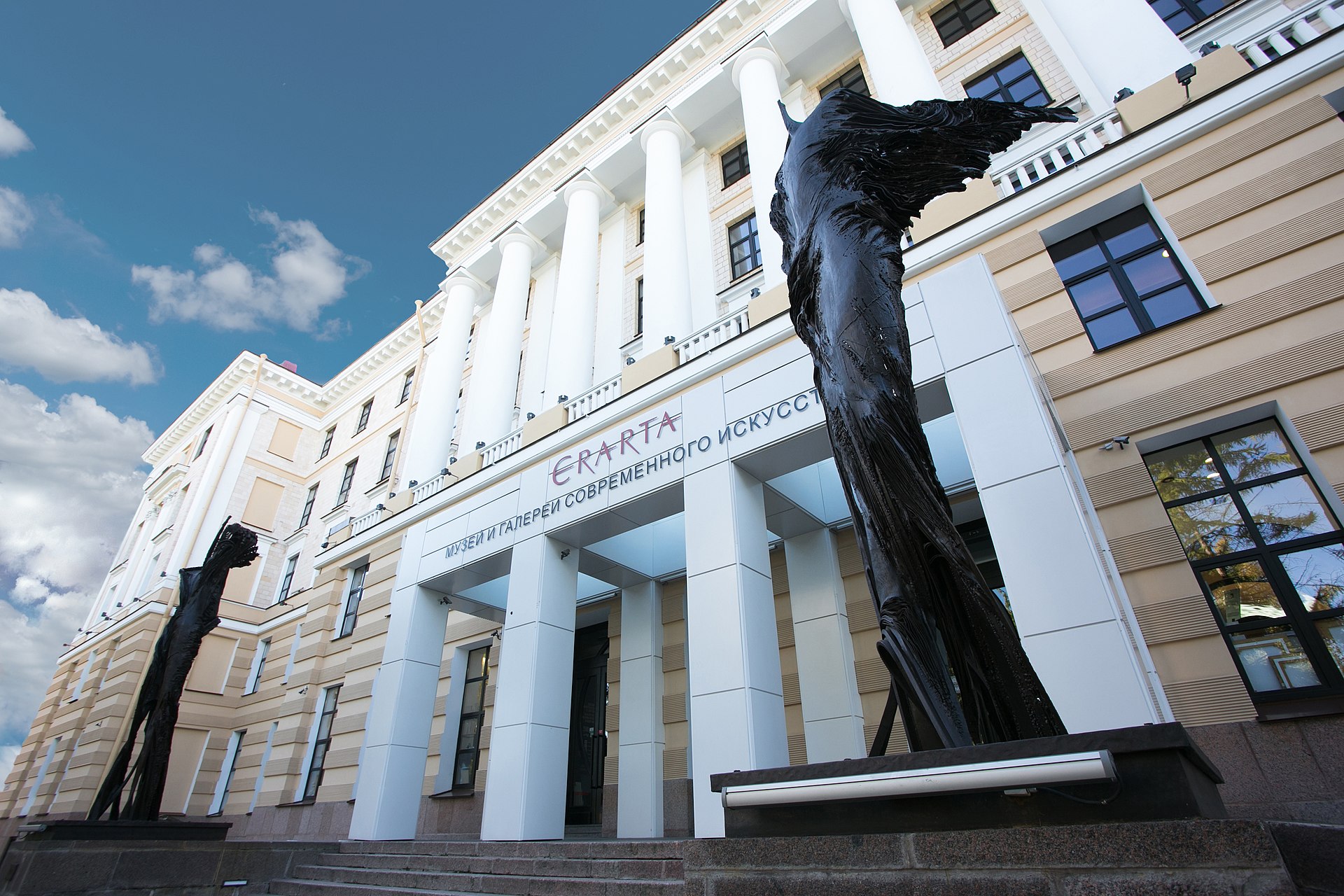
Erarta is the largest private museum of contemporary art in Russia, located in Saint Petersburg. The museum occupies a massive five-story building that was formerly a Soviet-era research institute, which has been extensively renovated to house a vast collection of modern works.
The museum's collection comprises over 2,800 works by more than 300 artists from across Russia. The collection spans from the 1950s to the present day, showcasing a diverse range of styles, mediums, and themes that reflect the evolution of Russian art during the late Soviet and post-Soviet periods.
Key Facts
- Materials
- Concrete, Glass, Steel
- Civilization
- Russian
- Accessibility
- Fully wheelchair accessible with elevators
- Date(s)
- 2010
- Condition
- Active museum
- Original Function
- Research Institute
- Key Figures
- Marina Varvarina
Establishment
2010Erarta was founded in 2010 as a private initiative to promote contemporary Russian art. The name is a portmanteau of the words 'era' and 'arta', signifying the 'era of art'.
Expansion and Recognition
2011-PresentSince its opening, the museum has expanded its exhibition space and collection significantly. It has become a major cultural hub in Saint Petersburg, frequently cited as one of the most popular museums in the city by international travel platforms.
Cultural Significance
Erarta plays a critical role in the contemporary Russian art scene by providing a permanent platform for artists who often lack representation in state-run institutions. It serves as a bridge between the public and modern artistic expression, fostering dialogue about the social and political shifts in Russia since the mid-20th century.
Interpretive Notes
Scholarly debates and areas of uncertainty
Discussions surrounding Erarta often focus on the challenges of defining 'contemporary Russian art' within a private collection framework and the balance between commercial appeal and artistic curation.
Visiting Information
Entry Rules
Open daily except Tuesdays. Tickets can be purchased online or at the entrance. Visitors are encouraged to check the official website for current exhibition schedules.
Best Times to Visit
Weekdays during the morning hours to avoid weekend crowds. The museum is particularly popular during the White Nights season in summer.
Photography
Non-commercial photography is permitted in most galleries. Flash and tripods are prohibited.
Preservation Notes
The museum maintains climate-controlled environments for its collection. Visitors are requested not to touch the artworks.
Nearby POIs
11 shownSources & Further Reading
- [1]
- [2]Contemporary Art in Russia: A Post-Soviet Perspective — Ekaterina Degot. ArtPress (2015)
Key Facts
- Materials
- Concrete, Glass, Steel
- Civilization
- Russian
- Accessibility
- Fully wheelchair accessible with elevators
- Date(s)
- 2010
- Condition
- Active museum
- Original Function
- Research Institute
- Key Figures
- Marina Varvarina