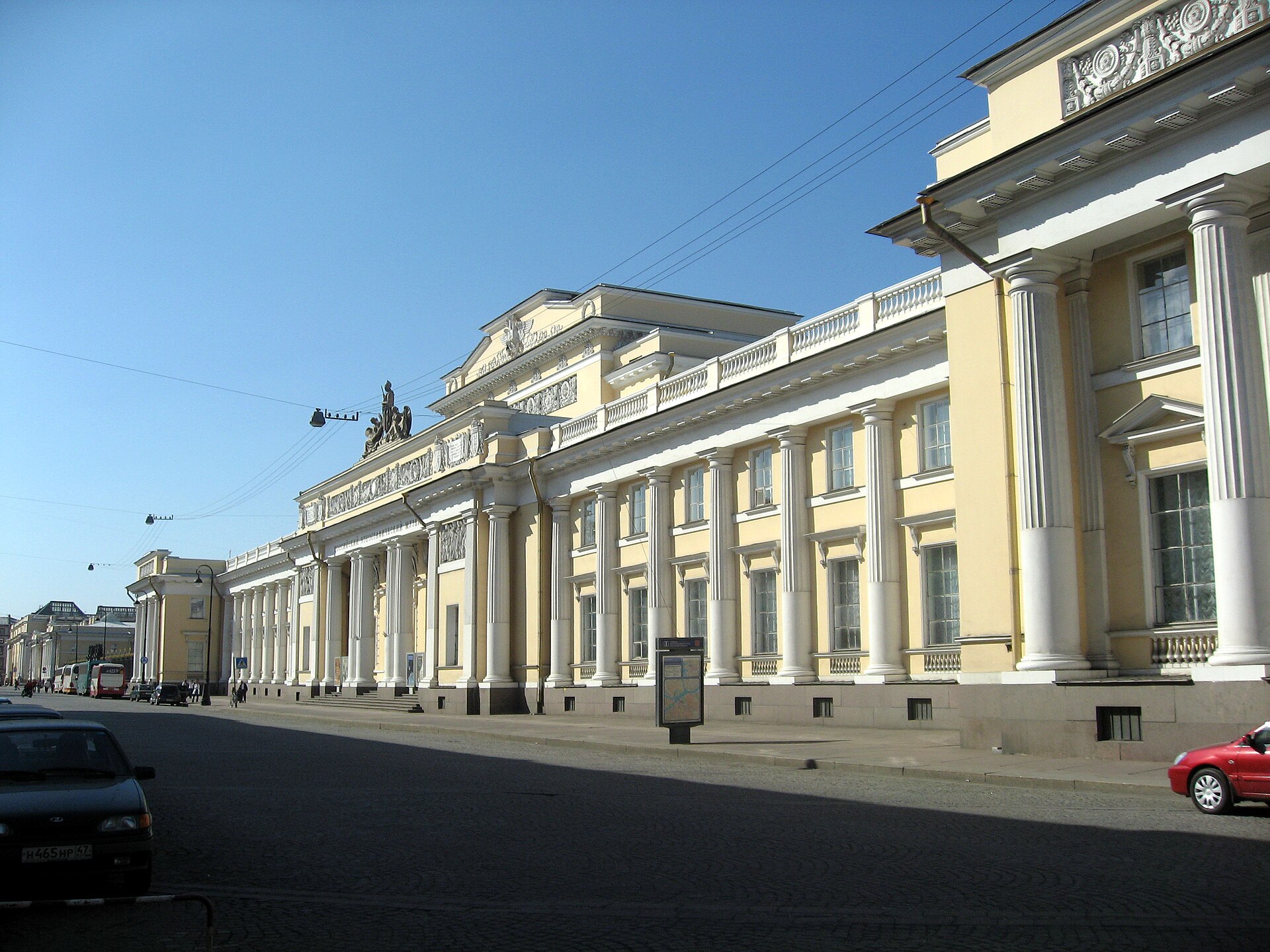
The Russian Museum of Ethnography, located in Saint Petersburg, is one of the largest ethnographic museums in the world. Originally established as part of the Russian Museum of Emperor Alexander III, it became an independent institution in 1934. The museum houses a vast collection of over 500,000 artifacts documenting the cultural traditions, daily life, and social structures of the numerous ethnic groups that inhabited the Russian Empire and the Soviet Union.
The museum building itself is a significant architectural landmark, designed by Vasily Svinyin and constructed between 1902 and 1913 specifically to house ethnographic collections. Its interior features the grand Marble Hall, a masterpiece of neoclassical design that serves as a centerpiece for the museum's exhibitions, which are organized to highlight the diversity of Eurasian cultures through textiles, tools, religious objects, and traditional clothing.
Key Facts
- Materials
- Marble, Granite, Brick
- Civilization
- Russian
- Accessibility
- Wheelchair accessible with elevator access to main galleries
- Date(s)
- 1902-1913
- Condition
- Well-preserved, active museum
- Original Function
- Ethnographic museum
- Key Figures
- Vasily Svinyin, Nicholas II
Founding and Construction
1902-1913The museum was commissioned by Emperor Nicholas II as the Ethnographic Department of the Russian Museum. Architect Vasily Svinyin designed the purpose-built structure, which was completed in 1913, featuring the iconic Marble Hall.
Independence and Soviet Era
1934-1991In 1934, the department became an independent institution known as the State Museum of Ethnography of the Peoples of the USSR. Throughout the Soviet period, the collection expanded significantly, documenting the diverse cultures across the Soviet republics.
Modern Era
1992-PresentFollowing the dissolution of the Soviet Union, the museum was renamed the Russian Museum of Ethnography. It continues to serve as a primary research center for anthropology and ethnology, maintaining its extensive archives and public exhibition programs.
Cultural Significance
The museum serves as a vital repository for the intangible and material heritage of over 150 ethnic groups. It plays a crucial role in preserving the history of cultures that have undergone significant transformation or assimilation over the last two centuries.
Beyond its academic value, the museum is a symbol of the multi-ethnic history of the Russian state. Its exhibitions foster cross-cultural understanding by showcasing the commonalities and unique traditions of peoples ranging from the Baltic regions to the Caucasus and Central Asia.
Interpretive Notes
Scholarly debates and areas of uncertainty
There is ongoing academic discussion regarding the classification and representation of ethnic groups within the museum's historical Soviet-era framework. Scholars debate how to best update exhibition narratives to reflect contemporary post-colonial and post-Soviet anthropological perspectives while maintaining the integrity of the original collection.
Visiting Information
Entry Rules
Open Tuesday through Sunday. Tickets can be purchased at the entrance or via the official website. Visitors are required to check large bags in the cloakroom.
Best Times to Visit
Weekday mornings are generally quieter. The museum is particularly popular during the White Nights season in June.
Photography
Non-commercial photography is permitted without flash. Tripods and professional lighting equipment require prior authorization.
Preservation Notes
Maintain a respectful distance from artifacts. Flash photography is strictly prohibited to prevent light damage to sensitive textiles and organic materials.
Nearby POIs
11 shownSources & Further Reading
- [1]The Russian Museum of Ethnography: A Guide — Vladimir Grusman. Slavica Publishers (2005)
- [2]Ethnographic Museums in Russia — Elena Filippova. Journal of Museum Ethnography (2012)
Key Facts
- Materials
- Marble, Granite, Brick
- Civilization
- Russian
- Accessibility
- Wheelchair accessible with elevator access to main galleries
- Date(s)
- 1902-1913
- Condition
- Well-preserved, active museum
- Original Function
- Ethnographic museum
- Key Figures
- Vasily Svinyin, Nicholas II