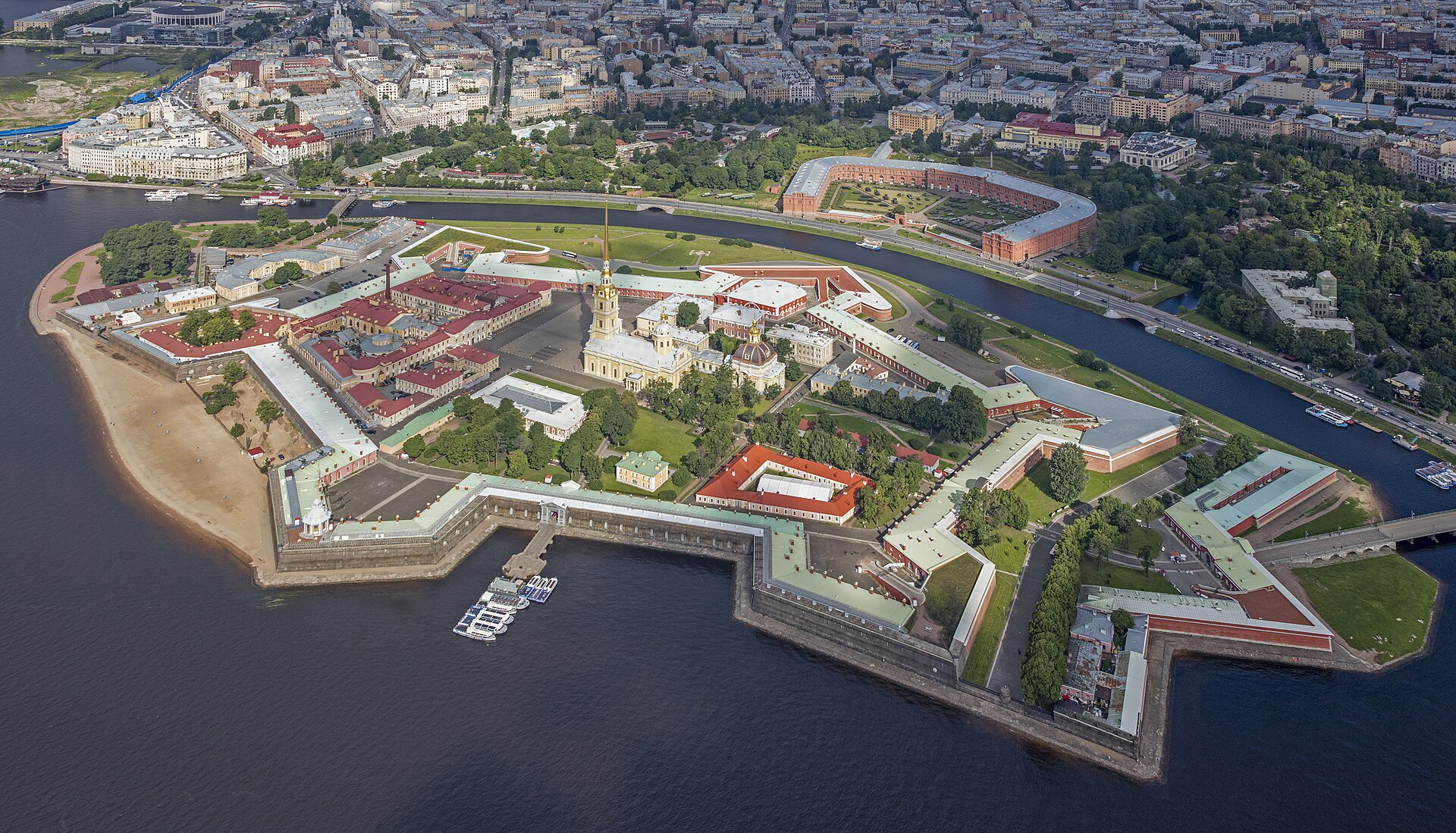
Peter and Paul Fortress
The Peter and Paul Fortress is the original citadel of Saint Petersburg, founded by Peter the Great in 1703 on Zayachy Island. It was designed to protect the newly acquired territory during the Great Northern War, though it never saw direct military combat. The fortress complex serves as the historical core of the city and houses the Peter and Paul Cathedral, which serves as the burial place for the Russian tsars from Peter I to Nicholas II.
Beyond its military and religious functions, the fortress gained notoriety as a high-security political prison during the 18th and 19th centuries. Notable inmates included Tsarevich Alexei, Fyodor Dostoevsky, and Maxim Gorky. Today, the site functions as a major museum complex, offering insights into the city's military history, architectural evolution, and the turbulent political history of the Russian Empire.
Key Facts
- Materials
- Earth, Wood, Brick, Stone
- Civilization
- Russian Empire
- Accessibility
- Grounds are accessible; some museum interiors have limited access
- Date(s)
- 1703-1733
- Condition
- Well-preserved, museum complex
- Original Function
- Military fortification and administrative center
- Key Figures
- Peter the Great, Domenico Trezzini, Catherine the Great
Foundation and Construction
1703-1706Founded on May 27, 1703, the fortress was initially constructed of earth and wood. Under the direction of Peter the Great and his engineer Joseph Gaspard Lambert de Guerin, it was designed to secure the Neva River delta. By 1706, the fortifications were rebuilt in stone under the supervision of Domenico Trezzini.
The Imperial Prison
18th-19th centuryThe Trubetskoy Bastion prison became the most feared political detention center in the Russian Empire. It held high-profile dissidents, revolutionaries, and members of the imperial family who fell out of favor, serving as a symbol of autocratic repression.
Revolutionary Era
1917During the February and October Revolutions, the fortress played a pivotal role. The garrison sided with the Bolsheviks, and the fortress was used to hold ministers of the Provisional Government before it was eventually decommissioned as a military site.
Modern Preservation
1924-presentIn 1924, the fortress was converted into a state museum. Despite significant damage during the Siege of Leningrad in World War II, the structures were meticulously restored. It is now a central component of the Saint Petersburg UNESCO World Heritage site.
Cultural Significance
The Peter and Paul Fortress is the symbolic birthplace of Saint Petersburg. It represents the transition of Russia into a European-facing power under Peter the Great. The cathedral's golden spire, topped by an angel, remains one of the most recognizable landmarks of the city skyline and a symbol of the Russian imperial legacy.
Interpretive Notes
Scholarly debates and areas of uncertainty
There is ongoing academic discussion regarding the extent to which the fortress was intended as a purely defensive military structure versus a symbolic statement of Russian dominance over the Baltic region. Additionally, the architectural attribution of certain bastions remains a subject of study due to the rapid evolution of the site's design during the early 18th century.
Visiting Information
Entry Rules
The fortress grounds are open to the public daily. Individual museums within the complex, including the Cathedral and the prison, require separate tickets. Security checks are mandatory at the main gates.
Best Times to Visit
Late spring and summer for the White Nights, though the site is historically significant year-round. Mid-week mornings are recommended to avoid heavy tourist crowds.
Photography
Photography is permitted in outdoor areas. Flash photography is prohibited inside the Cathedral and museum exhibitions.
Preservation Notes
The site is subject to strict conservation regulations. Visitors are required to stay on designated paths and refrain from climbing on the defensive walls.
Nearby POIs
11 shownSources & Further Reading
- [1]St. Petersburg: A Cultural History — Solomon Volkov. Free Press (1997)
- [2]The Peter and Paul Fortress: A History — Dmitry Shvidkovsky. Yale University Press (2007)
Key Facts
- Materials
- Earth, Wood, Brick, Stone
- Civilization
- Russian Empire
- Accessibility
- Grounds are accessible; some museum interiors have limited access
- Date(s)
- 1703-1733
- Condition
- Well-preserved, museum complex
- Original Function
- Military fortification and administrative center
- Key Figures
- Peter the Great, Domenico Trezzini, Catherine the Great