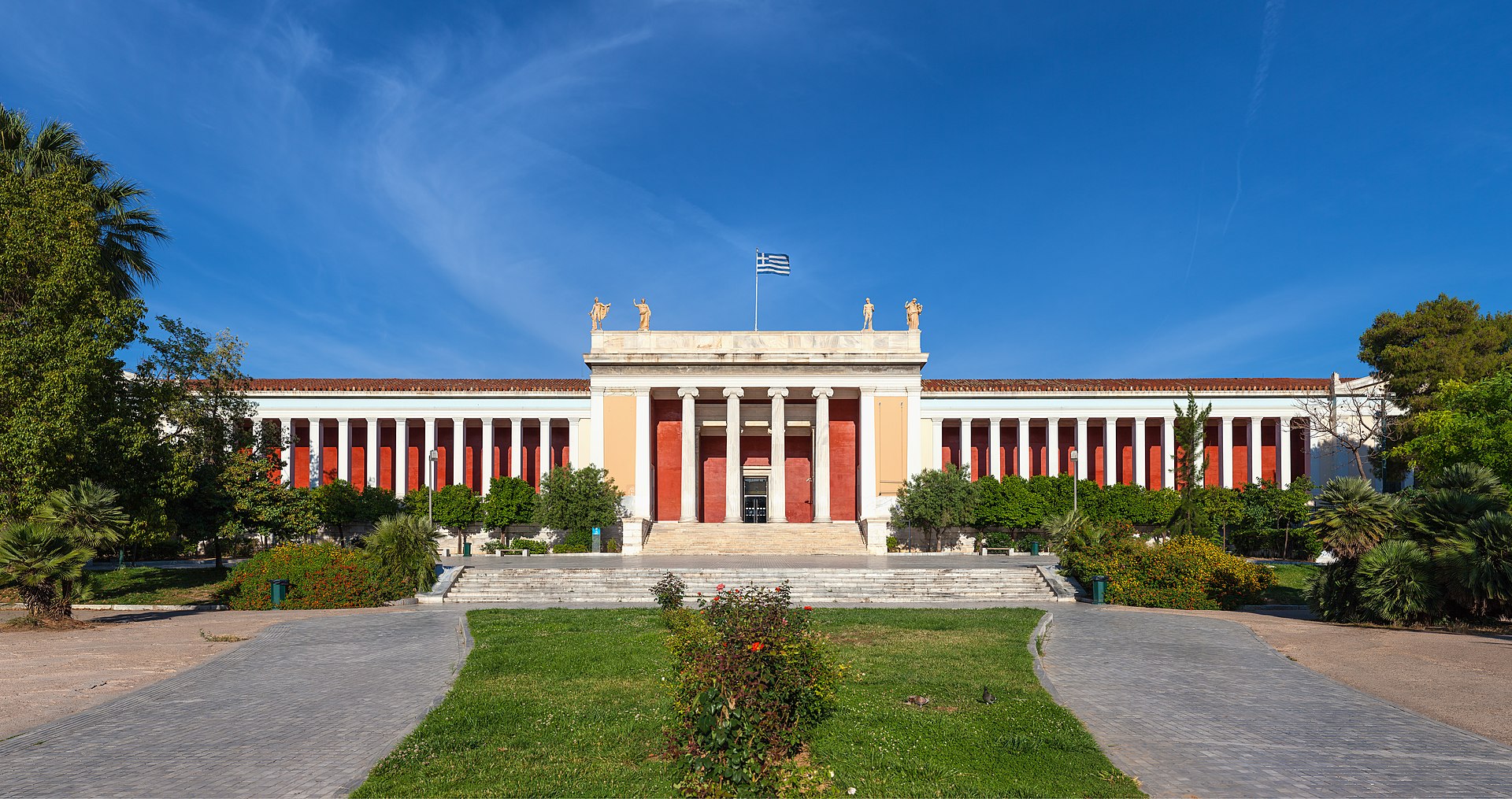
The National Archaeological Museum in Athens is the largest archaeological museum in Greece and houses one of the most extensive collections of ancient Greek art in the world. Established in the 19th century, it was designed to centralize artifacts uncovered across the newly independent Greek state and to support systematic archaeological research. The museum’s collections span from the Neolithic period to Late Antiquity, including sculpture, pottery, metalwork, frescoes, and funerary monuments. Notable holdings include Mycenaean gold from Grave Circle A, large-scale Archaic and Classical sculpture, and the Antikythera Mechanism. The institution functions as both a public exhibition space and a research center.
Key Facts
- Architects
- Ludwig Lange, Panagis Kalkos, Ernst Ziller
- Civilization
- Hellenic Republic
- Notable Objects
- Mask of Agamemnon, Antikythera Mechanism, Artemision Bronze
- Collection Scope
- Prehistoric to Roman-era Greek artifacts
- Date(s)
- Founded 1829; current building constructed 1866–1889
- Condition
- Active national museum
- Original Function
- National archaeological museum
- Architectural Style
- Neoclassical
Foundation of a National Collection
1829–1860sFollowing Greek independence, the state began assembling antiquities from across the country to prevent illicit export and to establish a centralized national collection. Early displays were housed in temporary facilities before plans for a permanent museum were developed.
Construction of the Neoclassical Building
1866–1889The present building was constructed in neoclassical style, reflecting the 19th-century association between modern Greece and its ancient heritage. Architects Ludwig Lange and later Panagis Kalkos oversaw the design, with Ernst Ziller contributing modifications.
Expansion of Collections
Late 19th–20th centuryMajor excavations at Mycenae, Olympia, Delphi, and other sites significantly expanded the museum’s holdings. The discovery of the Antikythera Mechanism in 1901 added one of the most significant ancient technological artifacts to the collection.
War, Restoration, and Modernization
20th century – presentDuring World War II, artifacts were buried for protection against bombing and occupation. Postwar restoration and reinstallation reshaped the galleries. Renovations in the early 21st century modernized exhibition design while maintaining the historic façade.
Cultural Significance
The National Archaeological Museum consolidates material evidence of Greek civilization from prehistory through the Roman period. By centralizing artifacts discovered across the country, it played a critical role in shaping modern Greek national identity during the 19th century. The museum also serves as a research institution, supporting archaeological scholarship and conservation science. Its collections have significantly influenced international understanding of ancient Mediterranean art, technology, and political culture.
Interpretive Notes
Scholarly debates and areas of uncertainty
The attribution and dating of certain key artifacts, particularly the so-called Mask of Agamemnon, remain debated. While Heinrich Schliemann associated the mask with Homeric figures, modern scholarship places it several centuries earlier than the traditionally dated Trojan War. The Antikythera Mechanism continues to generate scholarly discussion regarding the sophistication of ancient Greek mechanical engineering and the extent of similar lost technologies in antiquity.
Visiting Information
Entry Rules
Separate ticket required. Open daily with seasonal hour variations. Reduced admission policies apply for students and EU citizens under specified age limits.
Best Times to Visit
Morning hours for smaller tour groups. Visiting outside peak summer months allows more extended viewing time in major galleries. Combine with a visit to nearby archaeological sites for broader historical context.
Photography
Photography permitted without flash in most permanent galleries. Tripods and commercial photography require permission. Temporary exhibitions may have additional restrictions.
Preservation Notes
Do not touch artifacts or lean on display cases. Maintain appropriate distance from sculptures and fragile objects. Follow posted signage regarding restricted areas.
Nearby POIs
11 shownSources & Further Reading
- [1]A Guide to the National Archaeological Museum — National Archaeological Museum. Hellenic Ministry of Culture (2018)
- [2]The Greeks: Art and Civilization — Dimitris Plantzos. Getty Publications (2016)
- [3]The Antikythera Mechanism: A New Gear from Greece — Jo Marchant. The New Scientist (2006)
Key Facts
- Architects
- Ludwig Lange, Panagis Kalkos, Ernst Ziller
- Civilization
- Hellenic Republic
- Notable Objects
- Mask of Agamemnon, Antikythera Mechanism, Artemision Bronze
- Collection Scope
- Prehistoric to Roman-era Greek artifacts
- Date(s)
- Founded 1829; current building constructed 1866–1889
- Condition
- Active national museum
- Original Function
- National archaeological museum
- Architectural Style
- Neoclassical