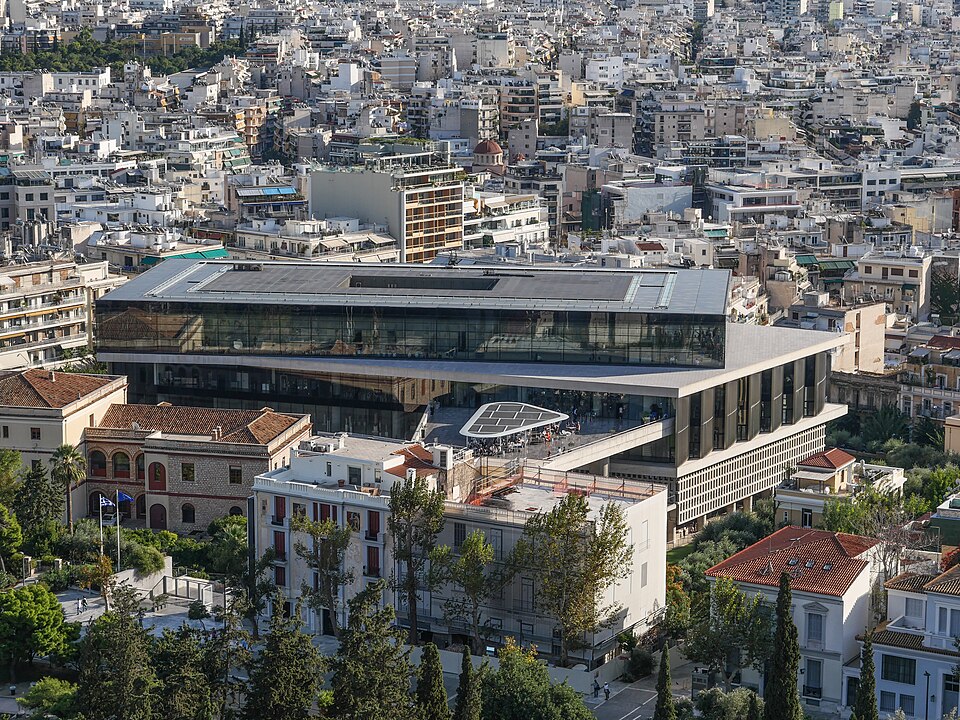
The Acropolis Museum is a purpose-built archaeological museum in Athens dedicated to the finds from the Acropolis and its surrounding slopes. Established in its current building in 2009, the museum was designed to house sculptures, architectural fragments, and artifacts spanning from the Archaic period through Late Antiquity. The building, designed by architect Bernard Tschumi in collaboration with Michael Photiadis, incorporates extensive glass surfaces and elevated galleries to maintain visual alignment with the Acropolis hill. The top-floor Parthenon Gallery is oriented to mirror the dimensions and orientation of the Parthenon itself, displaying surviving sculptural elements in their original sequence.
Key Facts
- Architect
- Bernard Tschumi with Michael Photiadis
- Civilization
- Hellenic Republic
- Collection Focus
- Artifacts from the Acropolis of Athens (Archaic–Roman periods)
- Date(s)
- Opened 2009
- Condition
- Active national museum
- Original Function
- Archaeological museum dedicated to Acropolis finds
- Key Figures
- Bernard Tschumi, Dimitrios Pandermalis
- Architectural Style
- Contemporary modernist
Need for a New Museum
19th–20th centuryEarlier museums on the Acropolis hill and nearby sites proved insufficient for the growing number of excavated artifacts. Increasing international attention to the Parthenon sculptures intensified calls for a modern facility capable of housing and displaying the full sculptural program.
Design Competition and Construction
2001–2009An international architectural competition selected Bernard Tschumi's design. Construction required complex engineering solutions due to the presence of archaeological remains beneath the site, which were preserved and integrated into the building through suspended structural supports and transparent flooring.
Opening and Institutional Role
2009 – presentThe museum opened to the public in June 2009. It functions both as an exhibition space and as a research institution. Its Parthenon Gallery presents the surviving sculptures in their original order, leaving visible gaps where pieces remain abroad, reinforcing the ongoing repatriation debate.
Cultural Significance
The Acropolis Museum centralizes and contextualizes artifacts from the Acropolis, allowing architectural sculpture to be interpreted within its original topographical setting. Its design physically aligns the Parthenon Gallery with the monument itself, reinforcing the relationship between site and collection. The museum also plays a central role in international discussions regarding the return of the Parthenon Sculptures. By displaying original fragments alongside plaster casts of pieces held abroad, the institution frames the debate within a museological and cultural heritage context.
Interpretive Notes
Scholarly debates and areas of uncertainty
Debate continues regarding the ethics and feasibility of repatriating the Parthenon Sculptures currently housed in foreign institutions. The museum’s design intentionally accommodates their potential return, a decision that has both supporters and critics. Architectural critics have also debated the visual impact of the modern structure within the historic urban landscape of Athens. Supporters emphasize its contextual alignment and transparency, while detractors question the contrast between contemporary materials and the surrounding neoclassical fabric.
Visiting Information
Entry Rules
Separate ticket required. Open daily except certain public holidays; seasonal hours apply. Security screening required upon entry.
Best Times to Visit
Early morning or late afternoon to avoid peak group tours. Visiting in combination with the Acropolis site allows for direct comparison between in-situ remains and museum-held sculptures.
Photography
Early morning or late afternoon to avoid peak group tours. Visiting in combination with the Acropolis site allows for direct comparison between in-situ remains and museum-held sculptures.
Preservation Notes
Do not touch sculptures or lean on display cases. Maintain appropriate distance from artifacts. Follow staff guidance in areas with glass flooring above archaeological remains.
Nearby POIs
11 shownSources & Further Reading
- [1]The New Acropolis Museum — Bernard Tschumi. Skira (2009)
- [2]The Acropolis Museum Guide — Dimitrios Pandermalis. Acropolis Museum Editions (2010)
- [3]Cultural Heritage and the Parthenon Marbles Debate — Christopher Hitchens. Verso (2008)
Key Facts
- Architect
- Bernard Tschumi with Michael Photiadis
- Civilization
- Hellenic Republic
- Collection Focus
- Artifacts from the Acropolis of Athens (Archaic–Roman periods)
- Date(s)
- Opened 2009
- Condition
- Active national museum
- Original Function
- Archaeological museum dedicated to Acropolis finds
- Key Figures
- Bernard Tschumi, Dimitrios Pandermalis
- Architectural Style
- Contemporary modernist