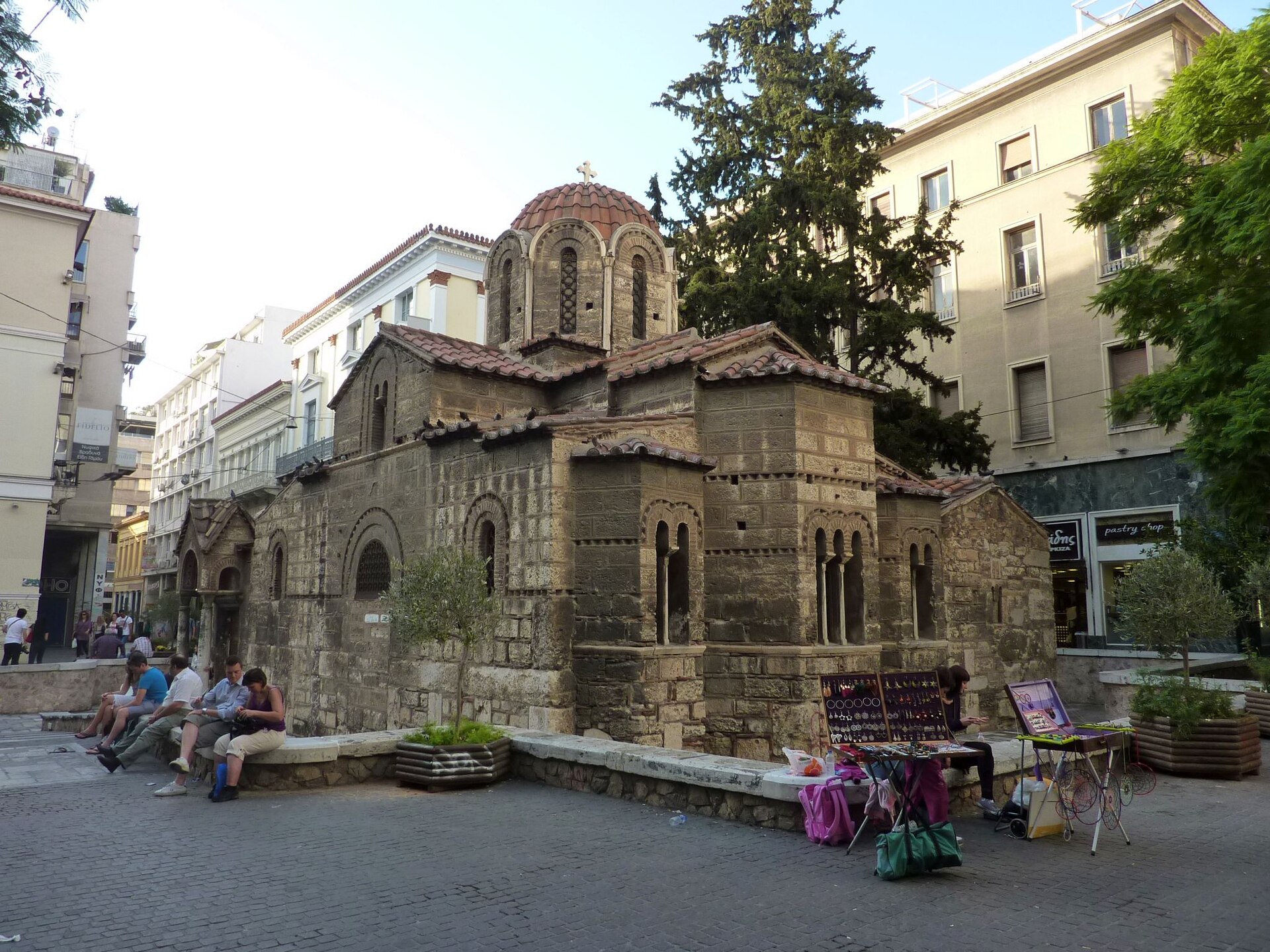
The Church of Panagia Kapnikarea is a small Byzantine church located on Ermou Street in central Athens. Dating to the 11th century CE, it is one of the oldest churches in the city and exemplifies early Byzantine ecclesiastical architecture with a cross-in-square plan and domed roof. The church houses frescoes, icons, and marble decorations from the Byzantine period. Despite its location in a busy commercial district, it has remained an active place of worship and a significant symbol of Athens’ medieval heritage.
Key Facts
- Materials
- Stone, Brick, Marble
- Civilization
- Byzantine Greek
- Accessibility
- Partially wheelchair accessible
- Date(s)
- 11th century CE
- Condition
- Well-preserved, active church
- Original Function
- Greek Orthodox church
- Key Figures
- Unknown Byzantine patrons
Construction and Early History
11th century CEBuilt during the Middle Byzantine period, Panagia Kapnikarea served as a local parish church. Its cross-in-square plan and domed roof typify the architectural style of the time, reflecting Byzantine liturgical requirements.
Ottoman Period
15th-19th century CEDuring Ottoman rule, the church continued functioning as a Greek Orthodox place of worship, preserving its religious and cultural identity amidst foreign domination.
Modern Preservation
19th century - presentArchaeological studies and restorations in the 19th and 20th centuries stabilized the structure. The church is now protected as a historical monument and remains open to worshippers and visitors, with ongoing conservation of frescoes and architectural elements.
Cultural Significance
Panagia Kapnikarea represents the continuity of Byzantine religious architecture and urban worship in Athens. It has served as a focal point for Orthodox Christian practice for nearly a millennium and illustrates the resilience of local religious traditions. For contemporary Athenians and visitors, the church provides a tangible connection to the city's medieval past, offering insight into liturgical life, iconography, and early Byzantine architectural design.
Interpretive Notes
Scholarly debates and areas of uncertainty
Scholarly debates focus on the precise dating of the church and the origins of some frescoes and decorative elements. Some researchers suggest that earlier structures may have existed on the site, influencing the current layout.
Visiting Information
Entry Rules
Open daily 8:00-17:00. Visitors are welcome to observe services respectfully. No tickets required.
Best Times to Visit
Weekday mornings (9:00-11:00) are recommended to avoid crowds. Special religious holidays may restrict general visitor access.
Photography
Personal photography is allowed without flash. Tripods or commercial photography require permission from the Greek Orthodox Church authorities.
Preservation Notes
Do not touch frescoes, icons, or marble surfaces. Remain on designated walkways. Follow church guidelines and respect ongoing religious services.
Nearby POIs
11 shownSources & Further Reading
- [1]Byzantine Athens: Architecture and History — Jeffrey M. Hurwit. Princeton University Press (2004)
- [2]The Churches of Athens — Maria Vassilaki. Athens University Press (2010)
- [3]
Key Facts
- Materials
- Stone, Brick, Marble
- Civilization
- Byzantine Greek
- Accessibility
- Partially wheelchair accessible
- Date(s)
- 11th century CE
- Condition
- Well-preserved, active church
- Original Function
- Greek Orthodox church
- Key Figures
- Unknown Byzantine patrons