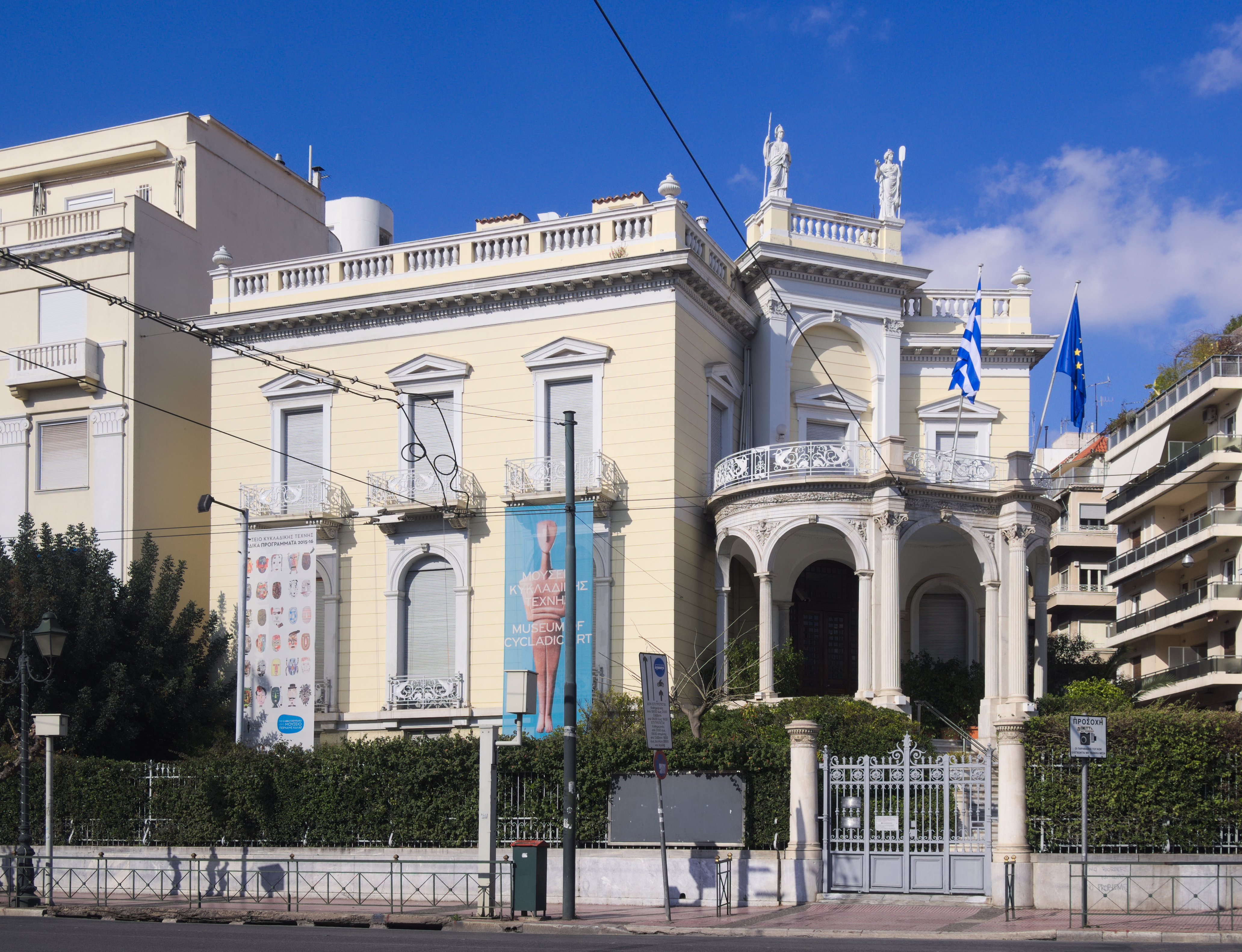
The Goulandris Museum of Cycladic Art is a major cultural institution in Athens dedicated primarily to the study and display of Cycladic civilization of the 3rd millennium BCE. Founded in 1986 by the Goulandris Foundation, the museum houses the private collection of Nicholas and Dolly Goulandris. The museum is especially renowned for its collection of Cycladic marble figurines, known for their abstract, minimalist forms that have influenced modern artists. In addition to Cycladic art, the museum presents significant collections of Ancient Greek art and Cypriot antiquities. The main building is located in the Kolonaki district, with additional exhibition space in the adjacent Stathatos Mansion.
Key Facts
- Founded
- 1986
- Founders
- Nicholas and Dolly Goulandris
- Location
- Kolonaki, Athens
- Primary Focus
- Cycladic civilization (3rd millennium BCE)
- Institution Type
- Private foundation museum
- Notable Collection
- Cycladic marble figurines
- Additional Collections
- Ancient Greek art, Cypriot antiquities
Formation of the Goulandris Collection
Mid-20th centuryNicholas and Dolly Goulandris assembled a significant collection of Cycladic artifacts during a period of growing international interest in Aegean prehistory. Their holdings became one of the most important private collections of Cycladic art.
Establishment of the Museum
1986The Goulandris Foundation established the museum in Athens to ensure public access to the collection and to support research into Cycladic and ancient Greek civilizations.
Expansion and Educational Role
Late 20th century–presentThe museum expanded its facilities and educational programming, becoming an active center for archaeological research, lectures, and temporary exhibitions exploring both ancient and contemporary art.
Cultural Significance
The Goulandris Museum of Cycladic Art plays a central role in advancing scholarly and public understanding of Cycladic civilization, whose abstract sculptural forms have drawn comparisons with modern art movements such as Cubism and Minimalism. By presenting Cycladic art alongside later Greek and Cypriot works, the institution situates the Early Bronze Age within a broader narrative of Aegean cultural development.
Interpretive Notes
Scholarly debates and areas of uncertainty
Cycladic figurines have generated debate regarding their function, with interpretations ranging from religious idols to funerary objects or symbolic representations of social identity. Questions of provenance and the history of Cycladic artifact collecting have also been central to academic and ethical discussions surrounding private collections and repatriation.
Visiting Information
Entry Rules
Separate ticket required. Reduced admission available for students and seniors. Special exhibitions may require additional fees.
Best Times to Visit
Weekday mornings offer quieter viewing conditions. Temporary exhibitions can significantly increase visitor numbers during peak cultural seasons.
Photography
Photography permitted without flash in permanent collections. Restrictions may apply to temporary exhibitions.
Preservation Notes
Visitors must not touch marble figurines or artifacts. Bags may need to be stored in designated areas. Food and drink prohibited in galleries. \
Nearby POIs
11 shownSources & Further Reading
- [1]Cycladic Art — Pat Getz-Preziosi. University of Michigan Press (1987)
- [2]The Goulandris Collection of Cycladic Art — Museum of Cycladic Art. Museum Publications (2010)
Key Facts
- Founded
- 1986
- Founders
- Nicholas and Dolly Goulandris
- Location
- Kolonaki, Athens
- Primary Focus
- Cycladic civilization (3rd millennium BCE)
- Institution Type
- Private foundation museum
- Notable Collection
- Cycladic marble figurines
- Additional Collections
- Ancient Greek art, Cypriot antiquities