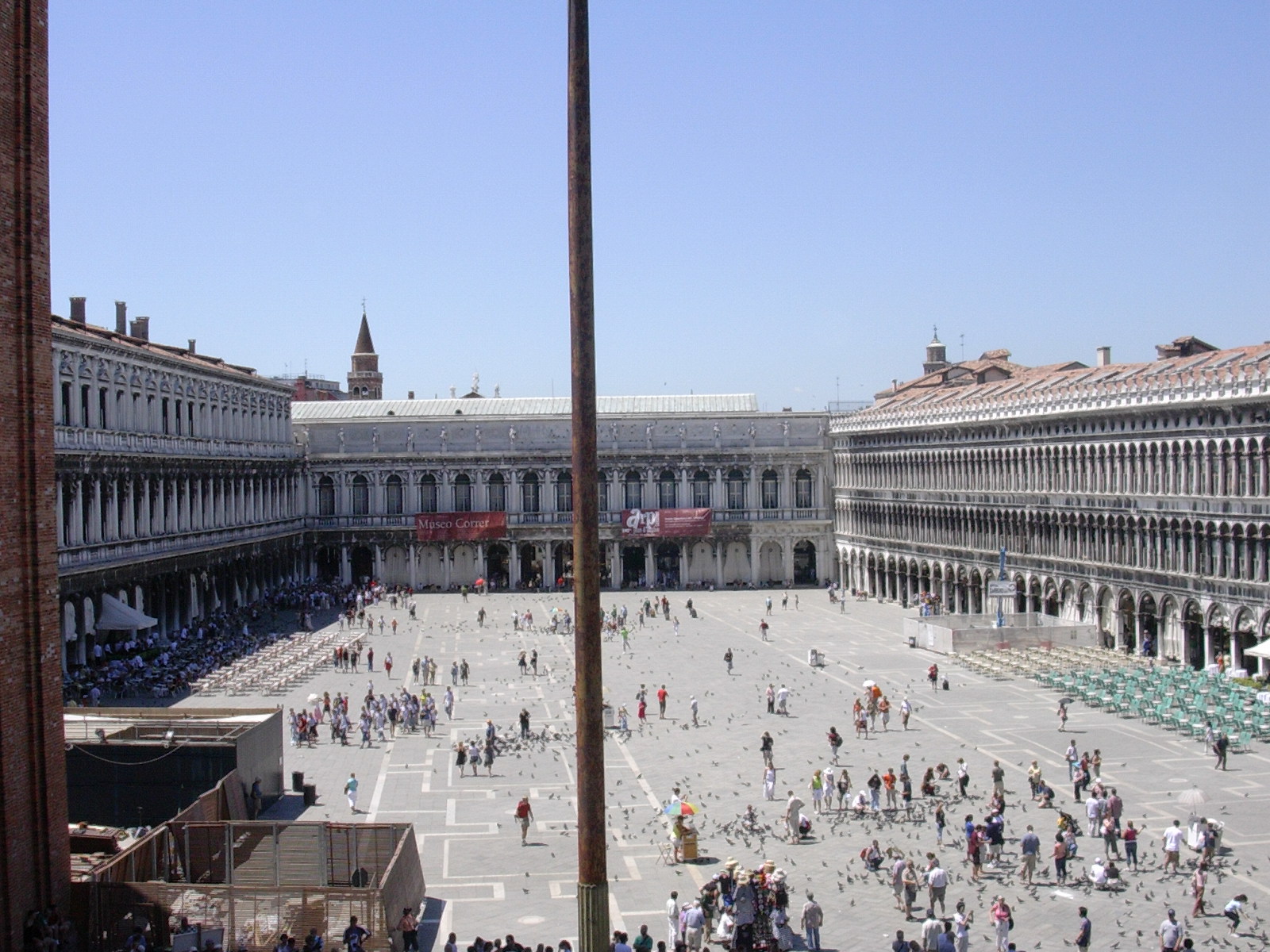
The Museo Correr is a civic museum in Venice located along the Napoleonic Wing of Piazza San Marco. It preserves collections related to the political institutions, art, and daily life of the Venetian Republic. Established through the bequest of Teodoro Correr in 1830, the museum documents Venice’s transformation from an independent maritime republic to a city integrated into broader European political systems. Its galleries include historical artifacts, paintings, decorative arts, and archival materials.
Key Facts
- Materials
- Stone, Brick, Stucco
- Civilization
- Napoleonic Kingdom of Italy / Venetian Republic collections
- Date(s)
- 1810 (Napoleonic Wing)
- Condition
- Preserved museum within historic palace complex
- Original Function
- Royal and administrative wing of Piazza San Marco complex
- Key Figures
- Teodoro Correr, Napoleon Bonaparte
Foundation Through Bequest
19th centuryThe museum originated from the private collection of Teodoro Correr, a Venetian aristocrat who donated artworks, manuscripts, and historical objects to the city upon his death in 1830. His collection formed the nucleus of a civic museum dedicated to preserving Venetian heritage.
Relocation to Piazza San Marco
Early 20th centuryInitially housed in the Correr family residence, the collections were later transferred to the Napoleonic Wing of Piazza San Marco. The building itself reflects Venice’s political transformation under Napoleonic and Austrian rule.
Expansion of Collections
20th century - presentThe museum expanded to include materials documenting the administration of the Venetian Republic, maritime trade, military organization, and artistic production. Galleries present the evolution of Venetian governance alongside cultural and artistic achievements.
Cultural Significance
The Museo Correr serves as a documentary archive of Venice’s republican institutions and civic identity. Through its collections, it provides insight into the administrative systems, economic networks, and artistic traditions that shaped the Venetian Republic. By situating these materials within Piazza San Marco, the museum connects the historical record directly to the former political center of the state.
Interpretive Notes
Scholarly debates and areas of uncertainty
Scholars examine how civic museums like the Correr shaped modern narratives of Venetian identity, particularly during the 19th century when Venice was incorporated into larger nation-states. Debate also surrounds the interpretation of Venetian republican governance, especially regarding oligarchic structures versus broader civic participation.
Visiting Information
Entry Rules
Paid admission required. Combined ticket available with Palazzo Ducale and other civic museums. Security screening may apply.
Best Times to Visit
Morning visits reduce congestion in Piazza San Marco. High tourist seasons significantly increase visitor volume.
Photography
Photography generally permitted without flash. Tripods and professional equipment require authorization.
Preservation Notes
Do not touch artifacts or display cases. Some archival materials may be rotated to protect against light exposure.
Nearby POIs
11 shown- Biblioteca Nazionale Marciana0.2 km
- Basilica di San Marco0.2 km
- Palazzo Ducale0.3 km
- Basilica di Santa Maria della Salute0.4 km
- Peggy Guggenheim Collection0.5 km
- Museo di Palazzo Grimani0.6 km
- Palazzo Grassi0.7 km
- Basilica dei Santi Giovanni e Paolo0.7 km
- Gallerie dell'Accademia0.8 km
- Ca' Rezzonico0.8 km
- Ca' Pesaro International Gallery of Modern Art0.9 km
Sources & Further Reading
- [1]Venice: A Maritime Republic — Frederic C. Lane. Johns Hopkins University Press (1973)
- [2]Venice: A New History — Thomas F. Madden. Viking (2012)
- [3]Fondazione Musei Civici di Venezia Publications — Various. MUVE
Key Facts
- Materials
- Stone, Brick, Stucco
- Civilization
- Napoleonic Kingdom of Italy / Venetian Republic collections
- Date(s)
- 1810 (Napoleonic Wing)
- Condition
- Preserved museum within historic palace complex
- Original Function
- Royal and administrative wing of Piazza San Marco complex
- Key Figures
- Teodoro Correr, Napoleon Bonaparte
Nearby POIs
11 shown- Biblioteca Nazionale Marciana0.2 km
- Basilica di San Marco0.2 km
- Palazzo Ducale0.3 km
- Basilica di Santa Maria della Salute0.4 km
- Peggy Guggenheim Collection0.5 km
- Museo di Palazzo Grimani0.6 km
- Palazzo Grassi0.7 km
- Basilica dei Santi Giovanni e Paolo0.7 km
- Gallerie dell'Accademia0.8 km
- Ca' Rezzonico0.8 km
- Ca' Pesaro International Gallery of Modern Art0.9 km