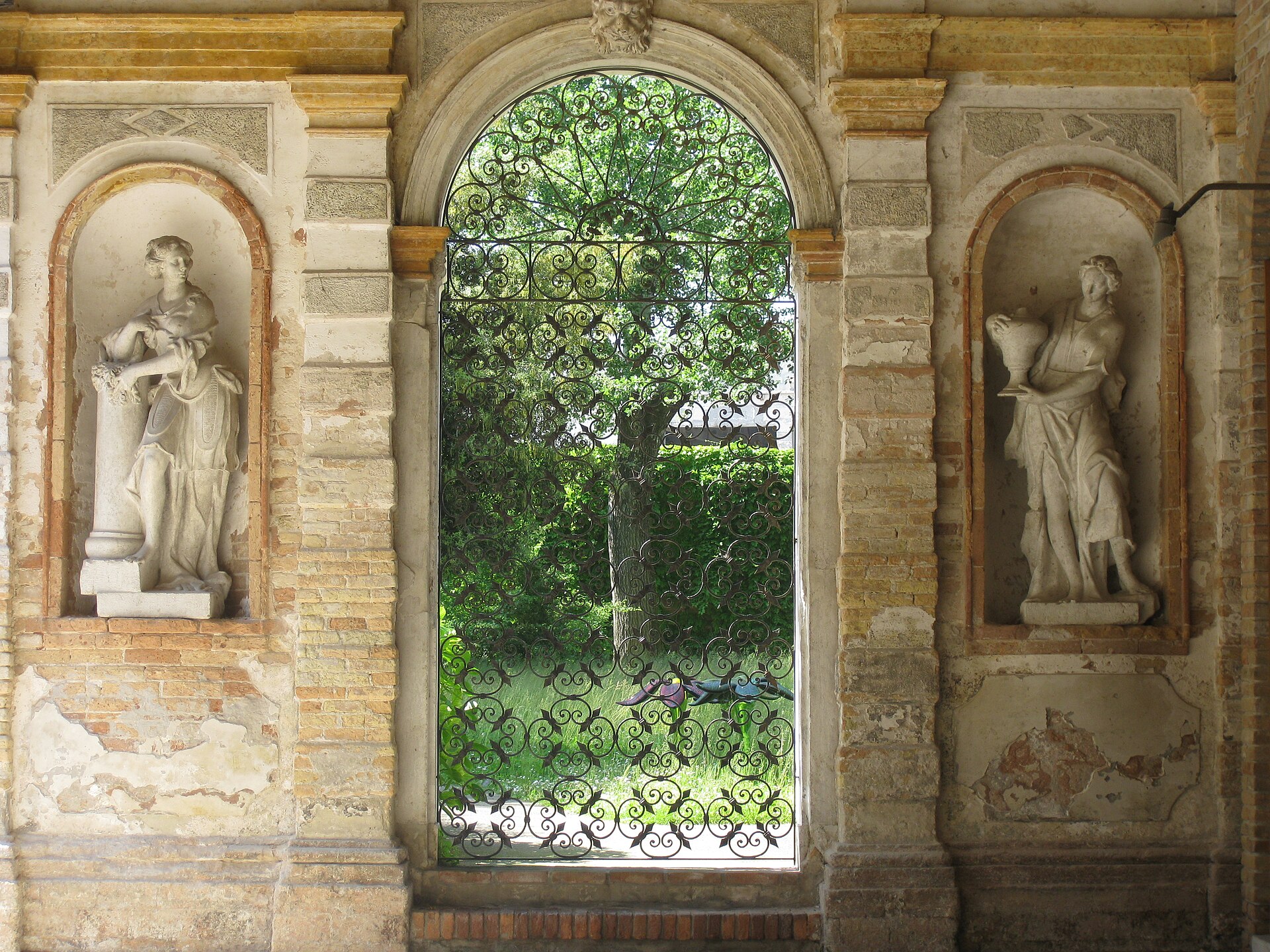
The Museo del Vetro, located on the island of Murano in Venice, is housed in the Palazzo Giustinian, a former residence of the Bishops of Torcello. The building itself is a significant example of Venetian Gothic architecture, originally acquired by the municipality in the 19th century to serve as a repository for the island's glassmaking heritage.
The museum's collection spans centuries of glass production, from Roman-era artifacts to contemporary artistic creations. It serves as the primary institution for documenting the evolution of Murano glassmaking techniques, including the development of cristallo, filigree, and millefiori, while preserving the historical records of the local glass guilds.
Key Facts
- Materials
- Brick, Istrian stone, Glass
- Civilization
- Venetian
- Accessibility
- Wheelchair accessible with elevator
- Date(s)
- 17th century (Palace origins)
- Condition
- Well-preserved, active museum
- Original Function
- Patrician residence and episcopal palace
- Key Figures
- Vincenzo Zanetti, Antonio Colleoni
Palatial Origins
17th centuryThe Palazzo Giustinian was built as a grand residence for the Bishops of Torcello. Its architecture reflects the transition of Venetian styles, featuring elegant Gothic windows and a central location on the Grand Canal of Murano.
Establishment of the Museum
1861The museum was founded by the abbot Vincenzo Zanetti, who sought to preserve the history of Murano's glass industry. It was initially established as an archive for the glassmakers' guild before expanding into a comprehensive museum.
Integration and Expansion
1923-presentThe museum was incorporated into the Venetian Civic Museums network in 1923. Subsequent renovations have modernized the exhibition spaces while maintaining the historical integrity of the palace structure.
Cultural Significance
The museum is central to the identity of Murano, an island synonymous with glassmaking since the 13th century. It documents the transition of glass from a functional craft to a high-art form, reflecting the economic and artistic power of the Venetian Republic.
It remains a vital site for researchers and artisans, preserving the technical knowledge of the 'maestri' (master glassmakers) and ensuring that the historical techniques of the Murano guilds are documented for future generations.
Interpretive Notes
Scholarly debates and areas of uncertainty
There is ongoing academic discussion regarding the attribution of specific 15th-century glass pieces, as many early works were unsigned and produced within collaborative guild environments. Scholars also debate the extent to which Venetian glassmaking techniques were influenced by contemporary Islamic glass traditions during the early Renaissance.
Visiting Information
Entry Rules
Open daily. Tickets can be purchased online or at the entrance. The museum is part of the MUVE (Fondazione Musei Civici di Venezia) network.
Best Times to Visit
Weekday mornings are generally quieter. The museum is less crowded during the winter months compared to the peak summer tourist season.
Photography
Personal photography is permitted without flash or tripods. Professional photography requires prior authorization.
Preservation Notes
Do not touch the glass exhibits. Maintain a respectful distance from display cases to avoid condensation and vibration. The building is a historic site; please follow all posted safety signage.
Nearby POIs
11 shown- Madonna dell'Orto2.2 km
- Basilica dei Santi Giovanni e Paolo2.2 km
- Museo di Palazzo Grimani2.4 km
- Ca' Pesaro International Gallery of Modern Art2.6 km
- Ghetto di Venezia2.7 km
- Basilica di San Marco2.8 km
- Palazzo Ducale2.8 km
- Biblioteca Nazionale Marciana2.9 km
- Museo di Correr3 km
- Basilica di Santa Maria Gloriosa dei Frari3.2 km
- Chiesa di San Rocco3.3 km
Sources & Further Reading
- [1]Murano: Island of Glass — Attilia Dorigato. Marsilio Editori (2003)
- [2]
Key Facts
- Materials
- Brick, Istrian stone, Glass
- Civilization
- Venetian
- Accessibility
- Wheelchair accessible with elevator
- Date(s)
- 17th century (Palace origins)
- Condition
- Well-preserved, active museum
- Original Function
- Patrician residence and episcopal palace
- Key Figures
- Vincenzo Zanetti, Antonio Colleoni
Nearby POIs
11 shown- Madonna dell'Orto2.2 km
- Basilica dei Santi Giovanni e Paolo2.2 km
- Museo di Palazzo Grimani2.4 km
- Ca' Pesaro International Gallery of Modern Art2.6 km
- Ghetto di Venezia2.7 km
- Basilica di San Marco2.8 km
- Palazzo Ducale2.8 km
- Biblioteca Nazionale Marciana2.9 km
- Museo di Correr3 km
- Basilica di Santa Maria Gloriosa dei Frari3.2 km
- Chiesa di San Rocco3.3 km