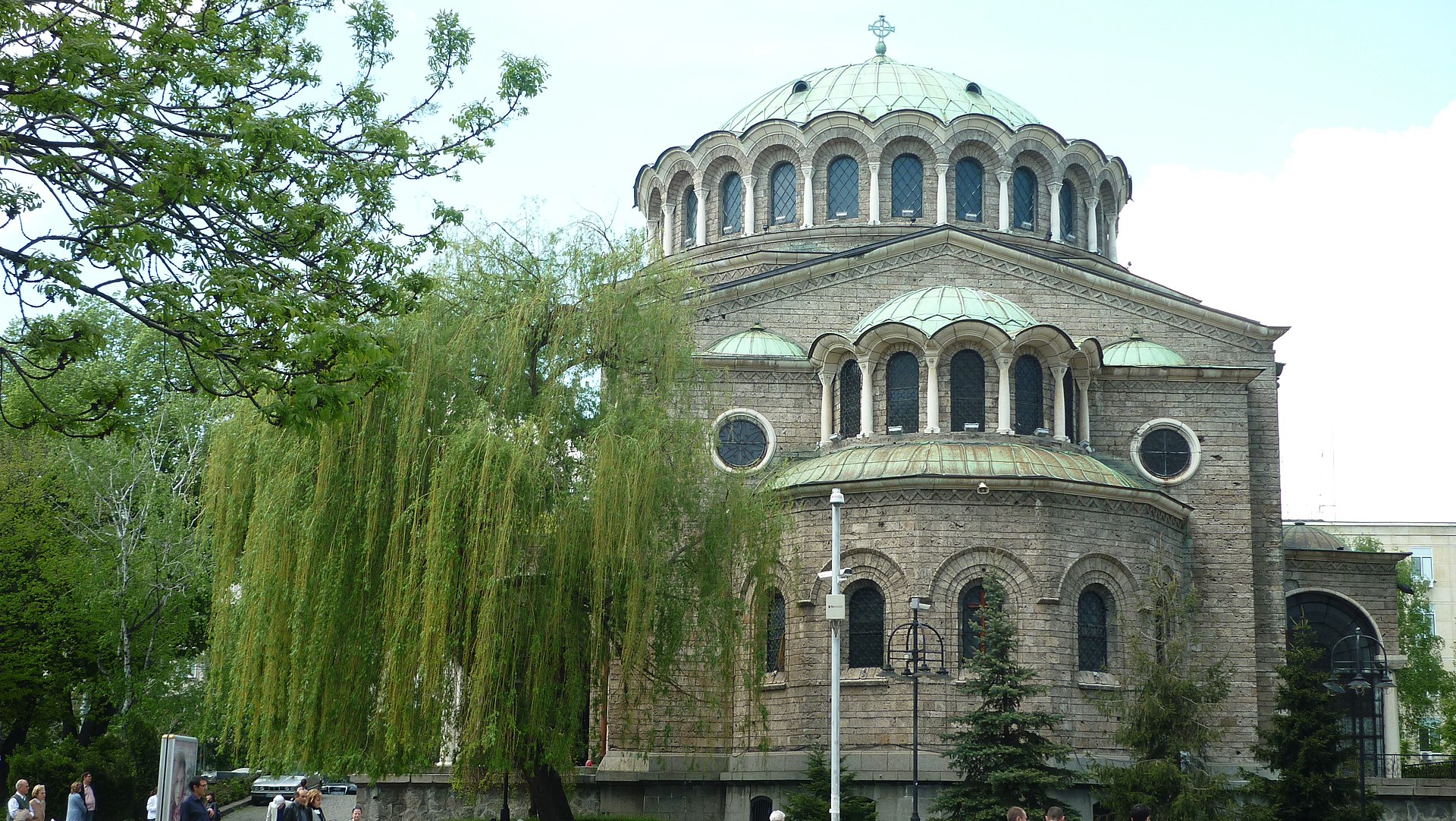
Saint Nedelya Cathedral is a Bulgarian Orthodox cathedral located in central Sofia, Bulgaria. The church stands on the site of an earlier medieval religious structure and has long served as one of the city’s principal ecclesiastical centers. Dedicated to Saint Kyriake (known locally as Saint Nedelya), the church has undergone several reconstructions following periods of destruction and rebuilding. The present building dates largely to the early 20th century after the cathedral was severely damaged during the 1925 bombing attack that targeted a funeral ceremony held inside the church. Rebuilt and consecrated in 1933, the cathedral remains an active place of worship and an important landmark in Sofia’s historical and religious landscape.
Key Facts
- Materials
- Stone, Brick, Plaster
- Civilization
- Bulgarian
- Date(s)
- Medieval origins; current structure completed 1933
- Condition
- Active cathedral reconstructed in the 20th century
- Original Function
- Orthodox Christian cathedral
- Key Figures
- Saint Kyriake (Saint Nedelya)
- Architectural Style
- Neo-Byzantine
Medieval Origins
10th centuryThe earliest church on the site dates to the medieval period when Sofia, then known as Serdica or Sredets, was an important regional center. The original structure was likely a modest wooden church that served the Orthodox Christian community.
Ottoman Period Reconstructions
15th–19th centuriesDuring the centuries of Ottoman rule in Bulgaria, the church was rebuilt several times after fires and structural damage. In the 19th century it was expanded into a larger stone basilica reflecting the growth of Sofia and the strengthening of Bulgarian religious institutions during the National Revival period.
The 1925 Bombing
1925On 16 April 1925 the cathedral became the site of one of the most significant terrorist attacks in Bulgarian history. During the funeral of a Bulgarian general, members of the Bulgarian Communist Party detonated explosives in the roof of the church, killing more than 150 people and injuring many others. The attack targeted political and military leaders gathered for the ceremony.
Reconstruction
1927–1933After the destruction caused by the bombing, the cathedral was rebuilt according to new architectural plans. The reconstruction created the present structure with a large central dome and a design influenced by Neo-Byzantine church architecture. The rebuilt cathedral was consecrated in 1933.
Modern Role
20th century – presentToday Saint Nedelya Cathedral functions as an active Bulgarian Orthodox church and a central landmark in Sofia. It continues to host religious services and commemorations, including memorial events marking the victims of the 1925 bombing.
Cultural Significance
Saint Nedelya Cathedral has long served as a central religious institution for the Orthodox Christian community in Sofia. Its location in the historic core of the city reflects the long-standing presence of Christian worship in the region dating back to the medieval Bulgarian states. The cathedral is also remembered for the events of 1925, which left a lasting imprint on Bulgarian political and social history. Memorials and historical discussions surrounding the attack continue to shape the cathedral’s place in Bulgaria’s collective memory.
Interpretive Notes
Scholarly debates and areas of uncertainty
Historians continue to examine the political context surrounding the 1925 bombing, particularly the motivations and internal dynamics of the Bulgarian Communist Party during the interwar period. While the event is widely recognized as a major act of political violence, debates persist about the broader strategy and leadership decisions that led to the attack. Scholars have also analyzed how the memory of the bombing has been interpreted across different political periods in Bulgaria, including the socialist era and the post-1989 democratic transition.
Visiting Information
Entry Rules
Open daily. Entry is free as the cathedral functions as an active place of worship. Visitors may encounter restricted access during religious services or special ceremonies.
Best Times to Visit
Early morning or late afternoon generally offers quieter conditions. Major Orthodox holidays and commemorative events can bring large gatherings to the cathedral and surrounding square.
Photography
Personal photography is generally permitted inside the cathedral without flash. Tripods, drones, and commercial photography require permission.
Preservation Notes
Visitors should remain respectful and quiet inside the church. Avoid touching icons or frescoes and follow any posted guidelines during services.
Nearby POIs
11 shown- Church of Saint George0.1 km
- Church of St. Petka of the Saddlers0.1 km
- Church of St. Nicholas of Myra0.1 km
- Serdica Archaeological Complex0.2 km
- National Archaeological Institute0.3 km
- Banya Bashi Mosque0.3 km
- Sofia Central Mineral Baths0.3 km
- Sofia Synagogue0.4 km
- National Art Gallery of Bulgaria0.4 km
- Amphitheatre of Serdica0.5 km
- Church of St Nicholas the Miracle-Maker0.6 km
Sources & Further Reading
- [1]
- [2]The St. Nedelya Church Bombing, 1925 — Nadya Danova. Bulgarian Historical Review
- [3]A Concise History of Bulgaria — R. J. Crampton. Cambridge University Press (2005)
Key Facts
- Materials
- Stone, Brick, Plaster
- Civilization
- Bulgarian
- Date(s)
- Medieval origins; current structure completed 1933
- Condition
- Active cathedral reconstructed in the 20th century
- Original Function
- Orthodox Christian cathedral
- Key Figures
- Saint Kyriake (Saint Nedelya)
- Architectural Style
- Neo-Byzantine
Nearby POIs
11 shown- Church of Saint George0.1 km
- Church of St. Petka of the Saddlers0.1 km
- Church of St. Nicholas of Myra0.1 km
- Serdica Archaeological Complex0.2 km
- National Archaeological Institute0.3 km
- Banya Bashi Mosque0.3 km
- Sofia Central Mineral Baths0.3 km
- Sofia Synagogue0.4 km
- National Art Gallery of Bulgaria0.4 km
- Amphitheatre of Serdica0.5 km
- Church of St Nicholas the Miracle-Maker0.6 km