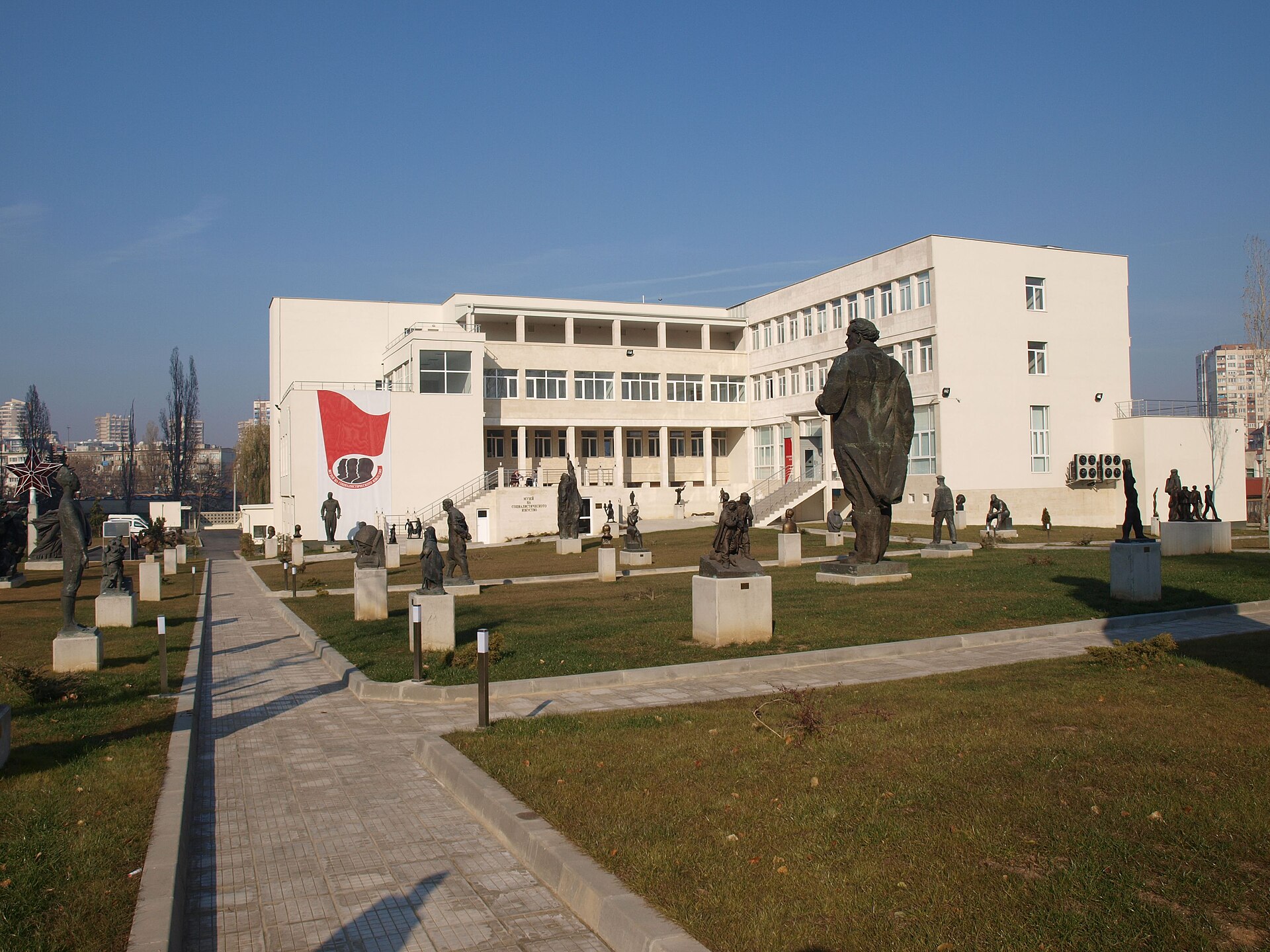
The Museum of Socialist Art in Sofia is a cultural institution dedicated to preserving and interpreting artistic works produced during Bulgaria’s socialist period between 1944 and 1989. Established in 2011, the museum was created to document the visual culture, political symbolism, and propaganda of the communist era through sculptures, paintings, and multimedia exhibits. Located in eastern Sofia, the museum combines an indoor exhibition hall with a large outdoor sculpture park displaying monumental statues that once stood in prominent public spaces across Bulgaria. These works reflect the artistic doctrine of Socialist Realism, which emphasized heroic imagery of workers, soldiers, and political leaders in service of socialist ideology.
Key Facts
- Materials
- Concrete, Stone, Bronze, Steel
- Civilization
- People's Republic of Bulgaria
- Accessibility
- Ground-level access to indoor galleries and outdoor sculpture park
- Date(s)
- Museum opened 2011
- Condition
- Operational museum and sculpture park
- Original Function
- Repository and exhibition space for socialist-era artworks
- Key Figures
- Vasil Zidarov, Lyubomir Dalchev
- Architectural Style
- Modern museum complex
Socialist Cultural Policy
1944–1950sFollowing the establishment of communist rule in Bulgaria in 1944, the state introduced Socialist Realism as the dominant artistic style. Artists were encouraged or required to produce works celebrating socialist ideals, including depictions of workers, industrial progress, military heroes, and political leaders.
Creation of Monumental Propaganda Art
1950s–1980sThroughout the socialist period, large-scale monuments and statues were erected in cities across Bulgaria. Many depicted leaders such as Vladimir Lenin or celebrated themes like collective labor, the Red Army, and revolutionary struggle. These works were installed in prominent squares, government complexes, and parks.
Post-Communist Removal of Monuments
1989–2000sAfter the fall of the communist government in 1989, many monuments associated with the previous regime were dismantled or relocated. While some were destroyed, others were preserved and stored by cultural institutions or municipal authorities.
Establishment of the Museum
2011The Bulgarian government opened the Museum of Socialist Art in 2011 to preserve surviving artworks from the socialist era. The institution aimed to present these objects in a historical context rather than as political symbols, allowing visitors to study the artistic and ideological legacy of the period.
Educational and Cultural Role
2011–presentToday the museum serves as a historical and cultural resource documenting the visual language of communist-era propaganda in Bulgaria. Its exhibitions encourage discussion about political symbolism, artistic expression under state control, and the historical memory of the socialist period.
Cultural Significance
The museum provides an institutional space for examining Bulgaria’s socialist cultural heritage, a period that shaped the country’s political identity and public imagery for more than four decades. Many of the sculptures displayed in the outdoor park once stood in prominent civic locations, functioning as symbols of state authority and ideological messaging. By relocating these monuments into a museum context, Bulgarian cultural institutions have attempted to preserve the artistic record of the socialist period while allowing contemporary audiences to critically interpret its political meanings. The site contributes to broader discussions across Eastern Europe about how post-socialist societies manage and reinterpret the physical legacy of the Cold War.
Interpretive Notes
Scholarly debates and areas of uncertainty
Debate continues within Bulgarian society about how monuments and artistic works from the socialist period should be preserved or displayed. Some scholars and cultural commentators argue that relocating statues to a museum neutralizes their ideological impact while preserving them as historical artifacts. Others contend that removing such monuments from their original urban context risks obscuring how power operated in public space during the socialist era. The museum itself has occasionally been cited in discussions about historical memory and the politics of interpreting twentieth-century authoritarian regimes in Eastern Europe.
Visiting Information
Entry Rules
Open Tuesday through Sunday. Entry requires a museum ticket. Both indoor galleries and the outdoor sculpture park are included with admission.
Best Times to Visit
Late morning or early afternoon visits provide the best lighting for viewing the outdoor sculptures. Weekdays tend to be quieter than weekends.
Photography
Personal photography is generally permitted without flash. Tripods and commercial filming require special permission from the museum administration.
Preservation Notes
Visitors should not climb on or touch the outdoor statues. Pathways in the sculpture park should be followed to protect both the artworks and landscaped areas.
Nearby POIs
11 shown- National Palace of Culture3.8 km
- Saint Alexander Nevsky Cathedral3.9 km
- Saint Sophia Church4.1 km
- Church of St Nicholas the Miracle-Maker4.1 km
- National Art Gallery of Bulgaria4.3 km
- Amphitheatre of Serdica4.3 km
- National Archaeological Institute4.4 km
- Church of St. Nicholas of Myra4.4 km
- Church of Saint George4.5 km
- Saint Nedelya Cathedral4.6 km
- Serdica Archaeological Complex4.6 km
Sources & Further Reading
- [1]
- [2]Socialist Realist Art in Bulgaria — Elka Bakalova. Bulgarian Academy of Sciences (2009)
- [3]Art and Ideology in Eastern Europe — Piotr Piotrowski. Reaktion Books (2011)
Key Facts
- Materials
- Concrete, Stone, Bronze, Steel
- Civilization
- People's Republic of Bulgaria
- Accessibility
- Ground-level access to indoor galleries and outdoor sculpture park
- Date(s)
- Museum opened 2011
- Condition
- Operational museum and sculpture park
- Original Function
- Repository and exhibition space for socialist-era artworks
- Key Figures
- Vasil Zidarov, Lyubomir Dalchev
- Architectural Style
- Modern museum complex
Nearby POIs
11 shown- National Palace of Culture3.8 km
- Saint Alexander Nevsky Cathedral3.9 km
- Saint Sophia Church4.1 km
- Church of St Nicholas the Miracle-Maker4.1 km
- National Art Gallery of Bulgaria4.3 km
- Amphitheatre of Serdica4.3 km
- National Archaeological Institute4.4 km
- Church of St. Nicholas of Myra4.4 km
- Church of Saint George4.5 km
- Saint Nedelya Cathedral4.6 km
- Serdica Archaeological Complex4.6 km