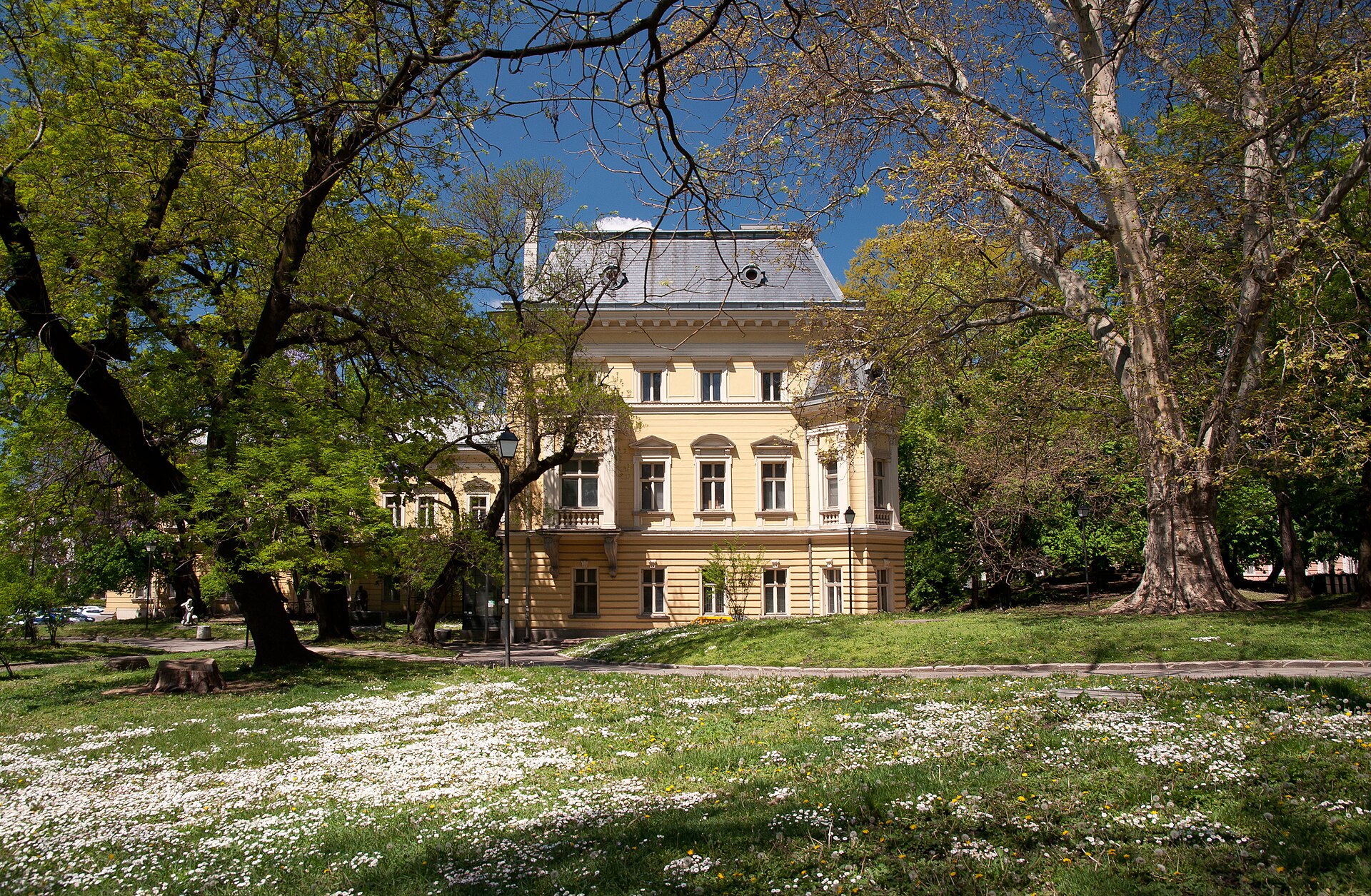
The National Art Gallery of Bulgaria is the country’s principal institution dedicated to the preservation and exhibition of Bulgarian and international visual art. The gallery’s collections span medieval religious art, Bulgarian National Revival painting, modern and contemporary works, and selected international pieces. Its holdings include thousands of paintings, sculptures, icons, and decorative arts documenting the development of visual culture in Bulgaria. The gallery’s primary historic home is the former Royal Palace in central Sofia, a 19th-century building that served as the residence of Bulgarian monarchs after the country gained independence from the Ottoman Empire. Today the National Art Gallery operates across several locations, including the palace complex and the nearby National Gallery Square 500, which houses expanded exhibition spaces and international collections.
Key Facts
- Materials
- Stone, Brick, Plaster
- Civilization
- Modern Bulgarian state
- Collections Focus
- Bulgarian icon painting, National Revival art, Modern Bulgarian painting, European art
- Date(s)
- Royal Palace built 1873–1883; museum established 1948
- Condition
- Active national art museum
- Original Function
- Royal palace
- Key Figures
- Prince Alexander I of Battenberg, King Ferdinand I
- Architectural Style
- Neo-Renaissance with later expansions
Construction of the Royal Palace
1873–1883The building that houses part of the National Art Gallery was originally constructed as the royal residence following the establishment of the Principality of Bulgaria after the Russo-Turkish War of 1877–1878. Built on the site of an earlier Ottoman administrative structure, the palace served as the official residence of Bulgarian rulers including Prince Alexander I and later King Ferdinand I.
Transformation into a Cultural Institution
1940sAfter the abolition of the Bulgarian monarchy in 1946 and the establishment of a socialist government, the palace complex was repurposed for cultural and state functions. In 1948 the National Art Gallery was formally established and installed within parts of the former royal residence, transforming the building into a central institution for visual arts in Bulgaria.
Expansion of the National Collection
1950s–1990sThroughout the second half of the 20th century the gallery expanded its holdings through acquisitions, donations, and transfers from other museums and private collections. The institution developed extensive collections of Bulgarian iconography, National Revival painting, and modern art produced during the socialist and post-socialist periods.
Modern Museum Complex
21st centuryIn the 2010s the National Gallery Square 500 complex opened near the palace, significantly expanding exhibition capacity and allowing the display of international works alongside Bulgarian collections. The National Art Gallery now functions as part of a broader national museum system presenting art from antiquity through the contemporary period.
Cultural Significance
The National Art Gallery plays a key role in preserving and presenting the visual heritage of Bulgaria. Its collections trace artistic development from medieval Orthodox iconography through the Bulgarian National Revival and into modern artistic movements shaped by political and cultural change in the 20th century. The gallery also reflects the transformation of Sofia’s urban and political landscape. The adaptation of the former royal palace into a public museum symbolizes the shift from monarchical authority to a state-centered cultural institution after World War II.
Interpretive Notes
Scholarly debates and areas of uncertainty
Scholars and curators sometimes debate how art produced during the socialist period should be interpreted within the national canon. Some emphasize its ideological role within the communist state, while others highlight stylistic innovation and the work of individual artists operating within or beyond official artistic frameworks.
Visiting Information
Entry Rules
Open most days except Monday. Entry requires a museum ticket, with reduced admission available for students and children.
Best Times to Visit
Weekday mornings tend to be the least crowded. The museum complex is busiest on weekends and during major temporary exhibitions.
Photography
Personal photography is typically permitted in exhibition halls without flash. Tripods and professional photography require advance permission.
Preservation Notes
Visitors should not touch artworks or lean on display cases. Some galleries may have additional restrictions to protect sensitive paintings and historical artifacts.
Nearby POIs
11 shown- Amphitheatre of Serdica0.1 km
- National Archaeological Institute0.2 km
- Church of St Nicholas the Miracle-Maker0.2 km
- Church of Saint George0.3 km
- Church of St. Nicholas of Myra0.3 km
- Serdica Archaeological Complex0.3 km
- Saint Sophia Church0.4 km
- Sofia Central Mineral Baths0.4 km
- Church of St. Petka of the Saddlers0.4 km
- Saint Nedelya Cathedral0.4 km
- Banya Bashi Mosque0.5 km
Sources & Further Reading
- [1]
- [2]Bulgarian Art Through the Ages — Raina Gavrilova. Bulgarian Academy of Sciences (2012)
- [3]A Concise History of Bulgaria — R. J. Crampton. Cambridge University Press (2005)
Key Facts
- Materials
- Stone, Brick, Plaster
- Civilization
- Modern Bulgarian state
- Collections Focus
- Bulgarian icon painting, National Revival art, Modern Bulgarian painting, European art
- Date(s)
- Royal Palace built 1873–1883; museum established 1948
- Condition
- Active national art museum
- Original Function
- Royal palace
- Key Figures
- Prince Alexander I of Battenberg, King Ferdinand I
- Architectural Style
- Neo-Renaissance with later expansions
Nearby POIs
11 shown- Amphitheatre of Serdica0.1 km
- National Archaeological Institute0.2 km
- Church of St Nicholas the Miracle-Maker0.2 km
- Church of Saint George0.3 km
- Church of St. Nicholas of Myra0.3 km
- Serdica Archaeological Complex0.3 km
- Saint Sophia Church0.4 km
- Sofia Central Mineral Baths0.4 km
- Church of St. Petka of the Saddlers0.4 km
- Saint Nedelya Cathedral0.4 km
- Banya Bashi Mosque0.5 km