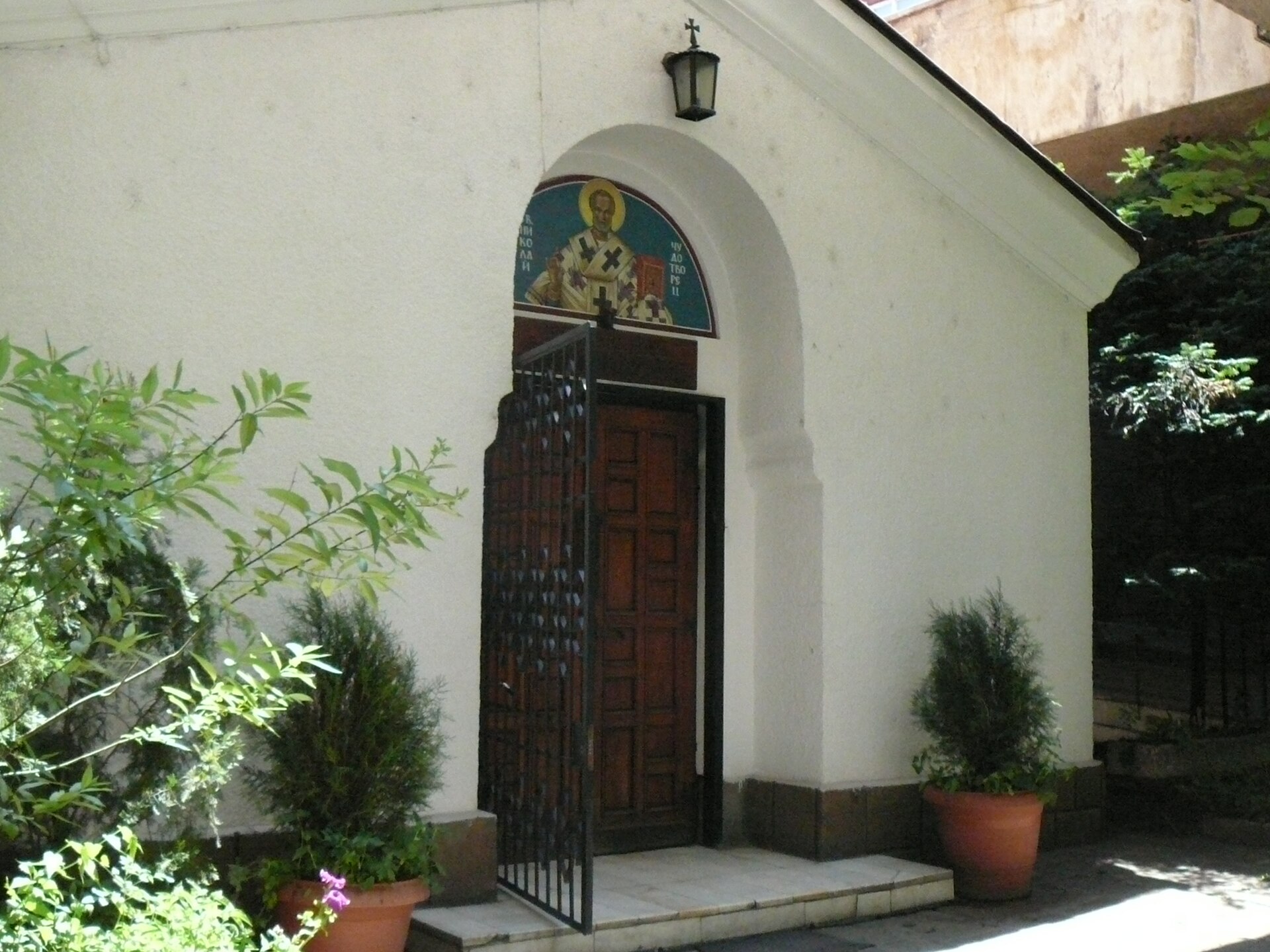
The Church of St. Nicholas of Myra is a small Bulgarian Orthodox church located in central Sofia on Kaloyan Street. The building dates to the 13th century and is traditionally attributed to sebastocrator Kaloyan, a high-ranking noble during the period of the Second Bulgarian Empire. It was constructed as a private or family church and forms part of the medieval religious landscape that once surrounded the administrative and residential complexes of the city. Archaeological remains incorporated into the structure indicate that the church stands on the site of an earlier Roman complex associated with ancient Serdica. Portions of these earlier walls survive in the lower levels of the building and can be seen inside the structure. Today the church functions as an active parish of the Bulgarian Orthodox Church and is visited by locals who come to light candles and offer prayers to Saint Nicholas.
Key Facts
- Materials
- Stone, Brick
- Civilization
- Bulgarian (Second Bulgarian Empire)
- Date(s)
- 13th century CE
- Condition
- Preserved historic church in active religious use
- Original Function
- Family church associated with a noble residence
- Key Figures
- Sebastocrator Kaloyan
Origins in Medieval Sofia
13th centuryThe church was constructed during the period of the Second Bulgarian Empire, traditionally attributed to the noble sebastocrator Kaloyan. It likely served as a private or family church connected to a nearby residence or palace complex. Its dedication to Saint Nicholas reflects the widespread veneration of the saint among Orthodox communities throughout the Balkans.
Earlier Roman Context
Roman era – Late AntiquityArchaeological remains incorporated into the structure indicate that the church occupies part of a Roman complex in ancient Serdica. Historical accounts associate the location with the remains of a palace structure that may have been connected with the administrative center of the Roman city. Portions of these earlier walls survive in the underground masonry visible within the church.
Ottoman Period Survival
15th–19th centuriesFollowing the Ottoman conquest of Sofia in the late 14th century, many medieval churches in the city disappeared or were converted. The Church of St. Nicholas appears to have survived in reduced form, continuing to serve the local Christian population. Its small scale and relatively hidden location may have contributed to its preservation during this period.
Modern Religious Use
20th century – presentThe church continues to function as a place of worship for the Bulgarian Orthodox community in Sofia. Although modest in scale compared with major churches in the capital, it remains a site of local devotion where visitors light candles and pray before icons of Saint Nicholas and other Orthodox saints.
Cultural Significance
The church represents a surviving fragment of medieval Sofia’s religious landscape from the period of the Second Bulgarian Empire. Although much of the city’s medieval architecture disappeared during centuries of Ottoman rule and later urban redevelopment, small churches like this one preserve continuity with the Orthodox traditions of the medieval Bulgarian state. Its dedication to Saint Nicholas reflects the saint’s importance in Orthodox devotional life. Known as a protector of travelers and the poor, Saint Nicholas is among the most widely venerated saints in Eastern Christianity, and churches dedicated to him appear throughout Bulgaria and the broader Balkan region.
Visiting Information
Entry Rules
Open daily. Active Bulgarian Orthodox parish church; visitors typically enter briefly to light candles and pray. Services follow the Orthodox liturgical calendar.
Best Times to Visit
Weekday mornings and early afternoon tend to be quieter, as the church is small and primarily visited by local worshippers rather than large tour groups.
Photography
Personal photography is generally permitted, but flash photography during services should be avoided. Visitors should be respectful of worshippers.
Preservation Notes
Visitors should maintain a quiet atmosphere inside the church and avoid disturbing liturgical services. Candles may be lit only in designated areas.
Nearby POIs
11 shown- Church of Saint George0.1 km
- Saint Nedelya Cathedral0.1 km
- National Archaeological Institute0.1 km
- Serdica Archaeological Complex0.2 km
- Church of St. Petka of the Saddlers0.2 km
- National Art Gallery of Bulgaria0.3 km
- Sofia Central Mineral Baths0.4 km
- Banya Bashi Mosque0.4 km
- Amphitheatre of Serdica0.4 km
- Sofia Synagogue0.5 km
- Church of St Nicholas the Miracle-Maker0.5 km
Sources & Further Reading
- [1]
- [2]History of Sofia. Sofia Municipality Historical Resources
Key Facts
- Materials
- Stone, Brick
- Civilization
- Bulgarian (Second Bulgarian Empire)
- Date(s)
- 13th century CE
- Condition
- Preserved historic church in active religious use
- Original Function
- Family church associated with a noble residence
- Key Figures
- Sebastocrator Kaloyan
Nearby POIs
11 shown- Church of Saint George0.1 km
- Saint Nedelya Cathedral0.1 km
- National Archaeological Institute0.1 km
- Serdica Archaeological Complex0.2 km
- Church of St. Petka of the Saddlers0.2 km
- National Art Gallery of Bulgaria0.3 km
- Sofia Central Mineral Baths0.4 km
- Banya Bashi Mosque0.4 km
- Amphitheatre of Serdica0.4 km
- Sofia Synagogue0.5 km
- Church of St Nicholas the Miracle-Maker0.5 km