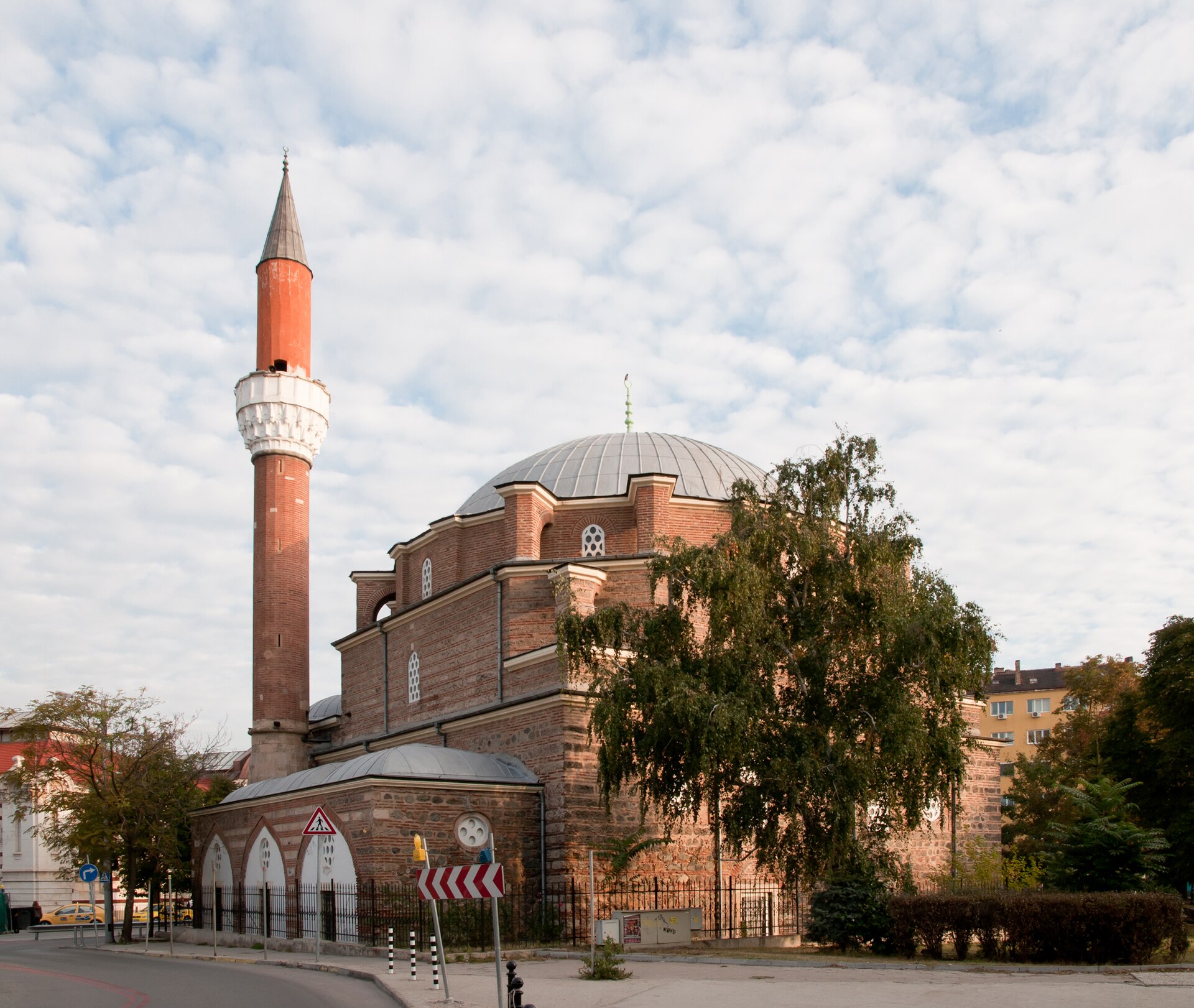
Banya Bashi Mosque is an Ottoman-era mosque located in central Sofia, Bulgaria, near the site of the city's historic mineral springs and the former Central Baths. Built in 1566 during the period of Ottoman rule in the Balkans, it is the only functioning mosque remaining in the city and one of the few surviving Ottoman religious structures in Sofia. The mosque was designed by the imperial architect Mimar Sinan, one of the most prominent architects of the Ottoman Empire. Its name derives from the Turkish phrase meaning “many baths,” referring to the nearby thermal springs that have been used since Roman times. The structure remains an active place of worship for Sofia’s Muslim community and stands within an archaeological zone that includes remains of the Roman city of Serdica.
Key Facts
- Materials
- Stone, Brick, Lead-covered dome
- Civilization
- Ottoman Empire
- Date(s)
- 1566 CE
- Condition
- Well-preserved active mosque
- Original Function
- Congregational mosque
- Key Figures
- Mimar Sinan
- Architectural Style
- Ottoman classical
Ottoman Construction
1566 CEBanya Bashi Mosque was constructed in 1566 during the period when Sofia, then known as Sofya, was part of the Ottoman Empire. The building was designed by Mimar Sinan, the chief imperial architect responsible for many of the empire’s major mosques and public works. Its location near natural thermal springs and bathhouses reflected the integration of religious and civic life in Ottoman urban planning.
Role in Ottoman Sofia
16th–19th centuriesDuring the Ottoman period Sofia contained numerous mosques, bathhouses, and religious institutions serving the city's Muslim population. Banya Bashi functioned as one of several neighborhood mosques and was closely associated with nearby public baths and marketplaces that formed an important social center of the city.
Post-Ottoman Transformation
Late 19th centuryFollowing the end of Ottoman rule in Bulgaria in 1878, many Ottoman religious buildings in Sofia were demolished, abandoned, or repurposed. Banya Bashi Mosque remained standing and continued to serve the remaining Muslim community in the capital, becoming the only active mosque in the city.
Modern Preservation
20th century – presentThe mosque underwent restoration efforts during the 20th and early 21st centuries aimed at preserving its structural integrity and decorative features. Today it functions as the main mosque for Sofia’s Muslim community and forms part of the historic urban landscape near the Central Market Hall, the Central Mineral Baths, and the archaeological remains of Roman Serdica.
Cultural Significance
Banya Bashi Mosque represents the most visible surviving architectural legacy of the Ottoman period in Sofia. While many Ottoman religious structures in the city disappeared after the establishment of the modern Bulgarian state, the mosque continued to function and remains an important religious center for the Muslim minority in the capital. Its proximity to the mineral springs and historic baths also connects the building to a much longer tradition of urban life in Sofia, where thermal water resources have shaped settlement patterns from Roman Serdica through the Ottoman and modern periods.
Visiting Information
Entry Rules
Open daily. Entry is free outside of prayer times as the mosque functions as an active place of worship. Visitors should follow posted guidelines and avoid entering during congregational prayers.
Best Times to Visit
Late morning or early afternoon outside of Friday prayer times generally offers the easiest access for visitors. The surrounding square near the Central Market Hall is busiest during midday.
Photography
Photography outside the mosque is permitted. Interior photography is generally discouraged during prayer and may be restricted; visitors should follow guidance from mosque staff.
Preservation Notes
Visitors should respect the building’s role as an active mosque. Remain quiet inside the prayer hall, avoid walking across prayer spaces during services, and follow any posted visitor pathways.
Nearby POIs
11 shown- Sofia Central Mineral Baths0.1 km
- Sofia Synagogue0.2 km
- Church of St. Petka of the Saddlers0.2 km
- Serdica Archaeological Complex0.2 km
- Church of Saint George0.3 km
- Saint Nedelya Cathedral0.3 km
- National Archaeological Institute0.4 km
- Church of St. Nicholas of Myra0.4 km
- Amphitheatre of Serdica0.5 km
- National Art Gallery of Bulgaria0.5 km
- Church of St Nicholas the Miracle-Maker0.7 km
Sources & Further Reading
- [1]Ottoman Architecture in the Balkans — Machiel Kiel. Brill (2017)
- [2]The Age of Sinan: Architectural Culture in the Ottoman Empire — Gülru Necipoğlu. Princeton University Press (2005)
- [3]Banya Bashi Mosque. National Institute for Immovable Cultural Heritage of Bulgaria
Key Facts
- Materials
- Stone, Brick, Lead-covered dome
- Civilization
- Ottoman Empire
- Date(s)
- 1566 CE
- Condition
- Well-preserved active mosque
- Original Function
- Congregational mosque
- Key Figures
- Mimar Sinan
- Architectural Style
- Ottoman classical
Nearby POIs
11 shown- Sofia Central Mineral Baths0.1 km
- Sofia Synagogue0.2 km
- Church of St. Petka of the Saddlers0.2 km
- Serdica Archaeological Complex0.2 km
- Church of Saint George0.3 km
- Saint Nedelya Cathedral0.3 km
- National Archaeological Institute0.4 km
- Church of St. Nicholas of Myra0.4 km
- Amphitheatre of Serdica0.5 km
- National Art Gallery of Bulgaria0.5 km
- Church of St Nicholas the Miracle-Maker0.7 km