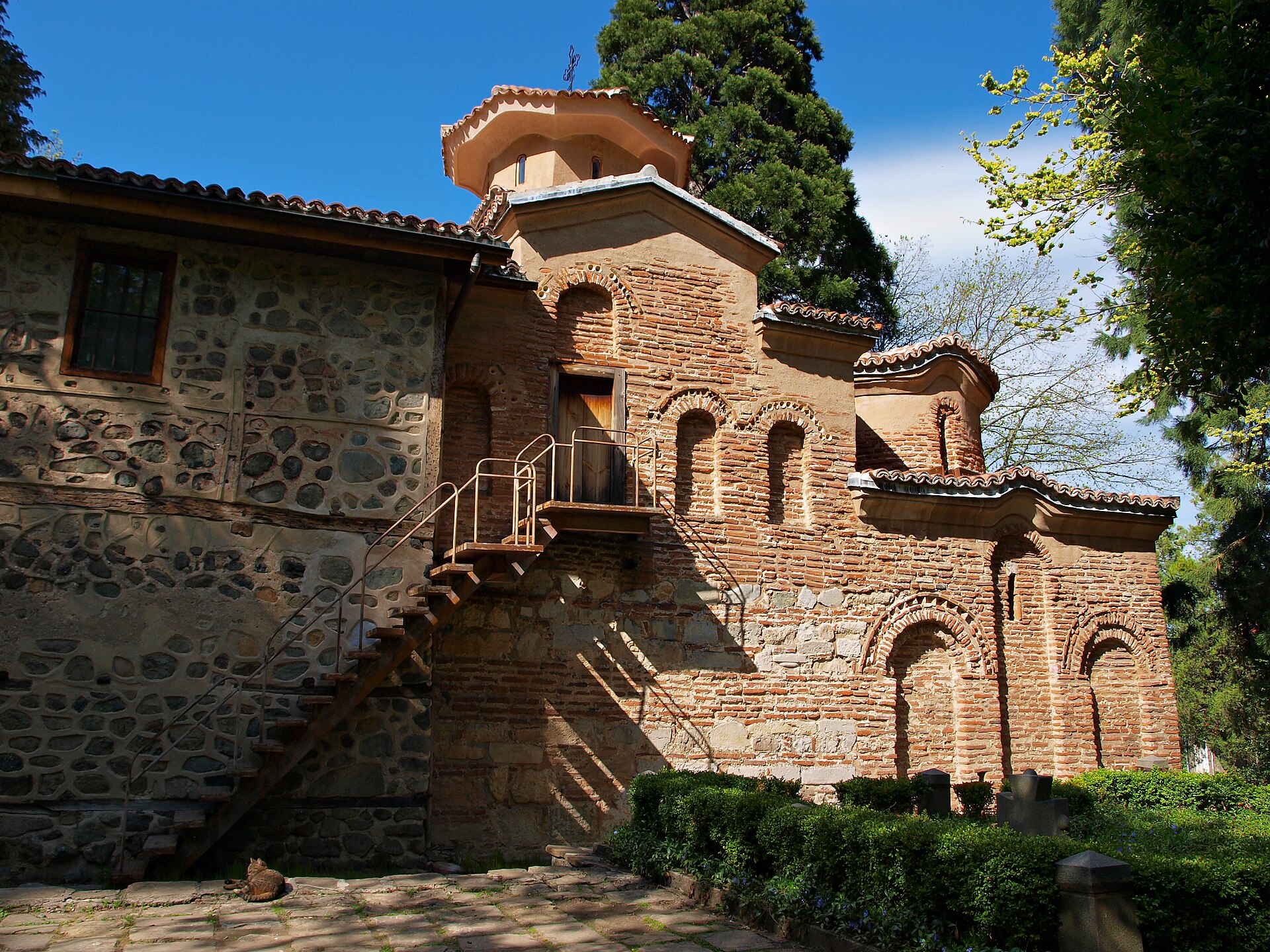
Boyana Church is a medieval Bulgarian Orthodox church located on the outskirts of Sofia at the foot of Vitosha Mountain. The complex is composed of three building phases constructed between the 10th and 19th centuries. It is most famous for its 13th-century frescoes, which represent one of the most complete and artistically significant surviving ensembles of medieval Eastern European wall painting. The church gained international recognition for the artistic quality and realism of its frescoes, painted in 1259 during the period of the Second Bulgarian Empire. These paintings are notable for their expressive figures and individualized portraits, which anticipate later developments in European Renaissance art. Because of their exceptional preservation and historical significance, Boyana Church was inscribed as a UNESCO World Heritage Site in 1979.
Key Facts
- Materials
- Stone, Brick, Plaster
- Civilization
- Second Bulgarian Empire
- Date(s)
- 10th–19th centuries
- Condition
- Preserved historic church with restricted interior access for conservation
- Original Function
- Orthodox Christian church
- Key Figures
- Sebastokrator Kaloyan, Desislava
- Architectural Style
- Medieval Bulgarian ecclesiastical architecture
Early Church Foundation
10th–11th centuryThe earliest section of Boyana Church dates to the late 10th or early 11th century and consisted of a small single-nave stone church. This structure reflects the architectural traditions of the First Bulgarian Empire and the early development of Orthodox Christian worship sites in the region around present-day Sofia.
Expansion Under the Second Bulgarian Empire
1259A major expansion took place in 1259 under Sebastokrator Kaloyan, a high-ranking noble related to the ruling Bulgarian dynasty. A second church structure was added to the original building, and the interior was decorated with a new cycle of frescoes. These paintings include biblical scenes, saints, and portraits of Kaloyan and his wife Desislava, providing rare depictions of medieval Bulgarian aristocracy.
Later Additions
19th centuryDuring the Bulgarian National Revival period a third section was added to the church, extending the structure westward. This addition reflects continued local religious use of the site even as the earlier medieval frescoes remained preserved inside the older sections.
Modern Preservation
20th century – presentSystematic conservation work began in the 20th century as scholars recognized the international significance of the frescoes. To protect the fragile paintings, visitor access to the interior is carefully controlled with limited group entry. The church was designated a UNESCO World Heritage Site in 1979.
Cultural Significance
Boyana Church holds a central place in the cultural heritage of Bulgaria due to its association with the artistic achievements of the Second Bulgarian Empire. The fresco cycle demonstrates the sophistication of medieval Bulgarian painting and provides visual insight into the religious, political, and social life of the 13th century. The church also plays an important role in modern Bulgarian cultural identity. Its preservation reflects national efforts to protect medieval artistic heritage, and it is frequently cited as one of the most significant monuments of Bulgarian medieval art.
Interpretive Notes
Scholarly debates and areas of uncertainty
Art historians debate the degree to which the Boyana frescoes anticipated stylistic developments associated with the European Renaissance. Some scholars argue that the expressive realism and individualized portraits represent an early departure from conventional Byzantine iconographic styles, while others interpret them as a regional development within the broader Byzantine artistic tradition. There is also ongoing discussion about the identity of the painters responsible for the 1259 frescoes. No written records identify the artists, and scholars rely on stylistic analysis to determine whether the work was produced by a local Bulgarian workshop or influenced by artists trained in Constantinople.
Visiting Information
Entry Rules
Open Tuesday through Sunday. Entry requires a ticket, and access to the interior is limited to small groups for short timed visits in order to protect the frescoes.
Best Times to Visit
Early morning visits generally offer the best chance of securing a timed entry slot. Spring and autumn provide more comfortable conditions for visiting the surrounding park area.
Photography
Photography is not permitted inside the church to protect the frescoes. Photography is allowed in the exterior grounds.
Preservation Notes
Interior access is strictly controlled to protect the medieval frescoes. Visitors must remain with their group during timed entry and avoid touching the walls or painted surfaces.
Nearby POIs
11 shown- National Historical Museum of Bulgaria1.2 km
- National Palace of Culture6.2 km
- Saint Nedelya Cathedral7.3 km
- Church of St. Nicholas of Myra7.4 km
- Church of Saint George7.4 km
- National Archaeological Institute7.5 km
- Church of St. Petka of the Saddlers7.5 km
- Serdica Archaeological Complex7.5 km
- National Art Gallery of Bulgaria7.6 km
- Sofia Synagogue7.6 km
- Banya Bashi Mosque7.7 km
Sources & Further Reading
- [1]
- [2]The Boyana Church Frescoes — Elka Bakalova. Bulgarian Academy of Sciences
- [3]Byzantine Art and Architecture — Robert Ousterhout. Cambridge University Press (2019)
Key Facts
- Materials
- Stone, Brick, Plaster
- Civilization
- Second Bulgarian Empire
- Date(s)
- 10th–19th centuries
- Condition
- Preserved historic church with restricted interior access for conservation
- Original Function
- Orthodox Christian church
- Key Figures
- Sebastokrator Kaloyan, Desislava
- Architectural Style
- Medieval Bulgarian ecclesiastical architecture
Nearby POIs
11 shown- National Historical Museum of Bulgaria1.2 km
- National Palace of Culture6.2 km
- Saint Nedelya Cathedral7.3 km
- Church of St. Nicholas of Myra7.4 km
- Church of Saint George7.4 km
- National Archaeological Institute7.5 km
- Church of St. Petka of the Saddlers7.5 km
- Serdica Archaeological Complex7.5 km
- National Art Gallery of Bulgaria7.6 km
- Sofia Synagogue7.6 km
- Banya Bashi Mosque7.7 km