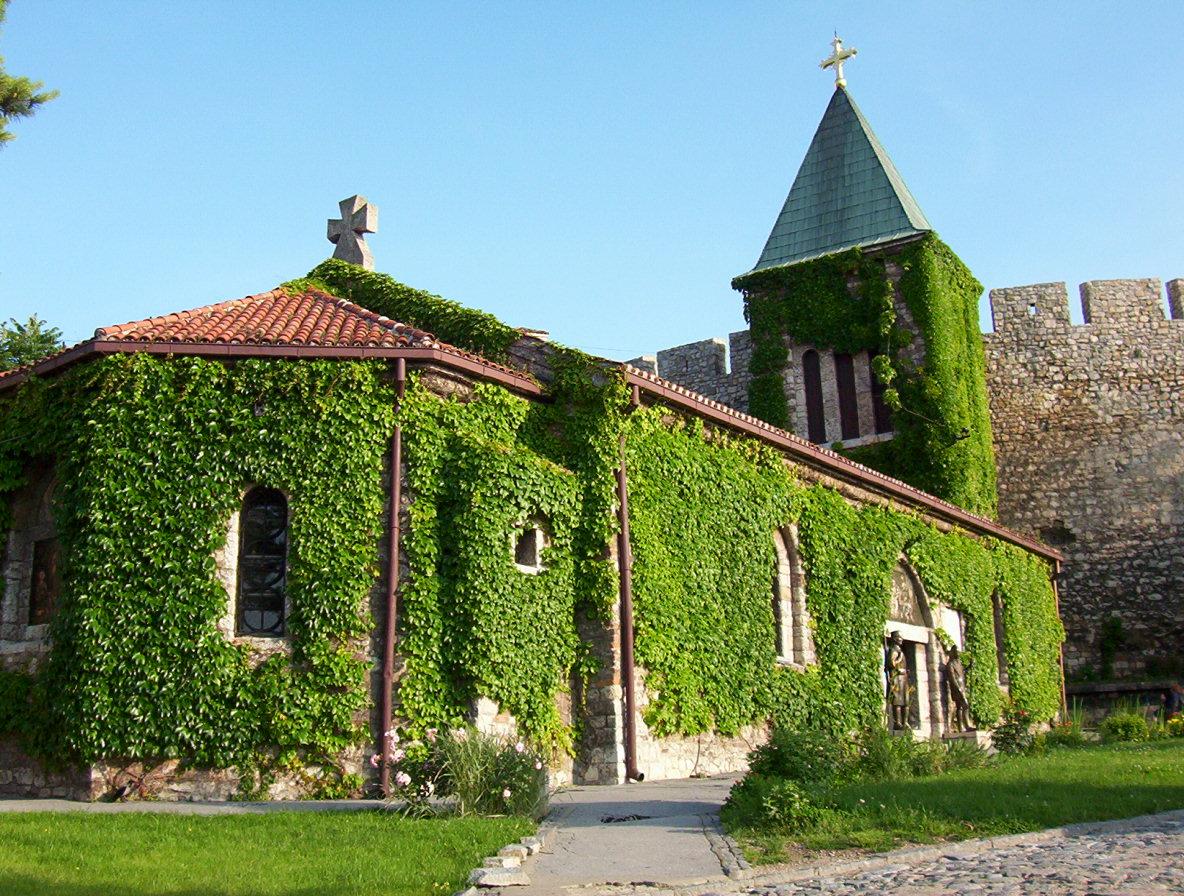
Ružica Church is located within the Belgrade Fortress complex and is one of the oldest religious sites in the area, with origins tracing back to the medieval period. The current structure largely dates to the early 20th century, following extensive damage and reconstruction after World War I. Historically associated with the Serbian Orthodox tradition, the site has undergone multiple phases of destruction and rebuilding due to its position within a strategic military zone. The present church is notable for its unique decorative elements, including chandeliers and objects made from repurposed military materials such as shell casings and weapon parts. Its setting within the fortress walls, combined with its layered history, reflects the intersection of religious practice and military history in Belgrade.
Key Facts
- Materials
- Stone, Brick
- Civilization
- Medieval Serbian, later Kingdom of Yugoslavia
- Date(s)
- Reconstructed 1925 (earlier origins medieval period)
- Condition
- Restored, active church
- Original Function
- Church
- Architectural Style
- Serbian Orthodox with fortress integration
Medieval Origins
Medieval periodThe site of Ružica Church is believed to date back to the medieval era, when it functioned as a place of worship within the fortified area of Belgrade. Its exact early form is not fully documented, but it was likely connected to the religious life of the Serbian population before successive conquests.
Ottoman and Habsburg Periods
16th–19th centuriesDuring centuries of Ottoman and later Habsburg control, the structure underwent repeated damage, abandonment, and repurposing. At times, it ceased functioning as a church and was used for military storage due to its location within the fortress.
Destruction in World War I
1914–1918The church suffered significant destruction during World War I as Belgrade Fortress became a key battleground. Much of the earlier structure was damaged or destroyed in artillery bombardments.
Reconstruction
1920sFollowing the war, the church was rebuilt and consecrated in 1925. The reconstruction incorporated both traditional ecclesiastical elements and symbolic references to the recent conflict, including the use of military materials in its interior decoration.
Modern Use
20th century – presentToday, Ružica Church remains an active Serbian Orthodox church and a notable site within the Belgrade Fortress complex. It attracts both worshippers and visitors interested in its historical and artistic features.
Cultural Significance
Ružica Church embodies the intersection of religious continuity and military history in Belgrade. Its repeated destruction and reconstruction reflect the broader historical experience of the city as a contested frontier between empires. The incorporation of military materials into its interior decoration serves as a symbolic transformation of instruments of war into objects of worship, reinforcing themes of memory, resilience, and reconciliation in Serbian cultural and religious identity.
Interpretive Notes
Scholarly debates and areas of uncertainty
There is limited archaeological evidence for the precise form and extent of the original medieval church, leading to differing interpretations about its early architectural layout and continuity through later periods. Scholars also debate the extent to which the current structure reflects historical authenticity versus 20th-century reinterpretation, particularly given the symbolic additions made during reconstruction.
Visiting Information
Entry Rules
Open daily. Entry is free. Located within the Belgrade Fortress complex.
Best Times to Visit
Early mornings and weekdays are typically quieter. Visiting alongside other fortress sites provides historical context for its military setting.
Photography
Photography permitted. Flash photography may be discouraged inside.
Preservation Notes
Visitors should remain quiet during services. Do not touch interior decorations, particularly the metal fixtures made from historical materials.
Nearby POIs
11 shown- Belgrade Fortress0.3 km
- Pobednik0.4 km
- Military Museum of Belgrade0.4 km
- Cathedral Church of St. Michael the Archangel0.8 km
- Residence of Princess Ljubica0.9 km
- National Museum of Serbia1.2 km
- Historical Museum of Serbia1.8 km
- House of the National Assembly of Serbia1.9 km
- Church of Saint Mark2.2 km
- Church of the Holy Trinity2.2 km
- Nikola Tesla Museum2.7 km
Sources & Further Reading
- [1]Belgrade Fortress: A Cultural History — Marko Popović. Institute for the Protection of Cultural Monuments of Serbia (2013)
- [2]Serbian Orthodox Churches in Belgrade — Aleksandar Kadijević. University of Belgrade (2007)
- [3]Ružica Church and Its Reconstruction. Belgrade Cultural Heritage Institute (1998)
Key Facts
- Materials
- Stone, Brick
- Civilization
- Medieval Serbian, later Kingdom of Yugoslavia
- Date(s)
- Reconstructed 1925 (earlier origins medieval period)
- Condition
- Restored, active church
- Original Function
- Church
- Architectural Style
- Serbian Orthodox with fortress integration
Nearby POIs
11 shown- Belgrade Fortress0.3 km
- Pobednik0.4 km
- Military Museum of Belgrade0.4 km
- Cathedral Church of St. Michael the Archangel0.8 km
- Residence of Princess Ljubica0.9 km
- National Museum of Serbia1.2 km
- Historical Museum of Serbia1.8 km
- House of the National Assembly of Serbia1.9 km
- Church of Saint Mark2.2 km
- Church of the Holy Trinity2.2 km
- Nikola Tesla Museum2.7 km