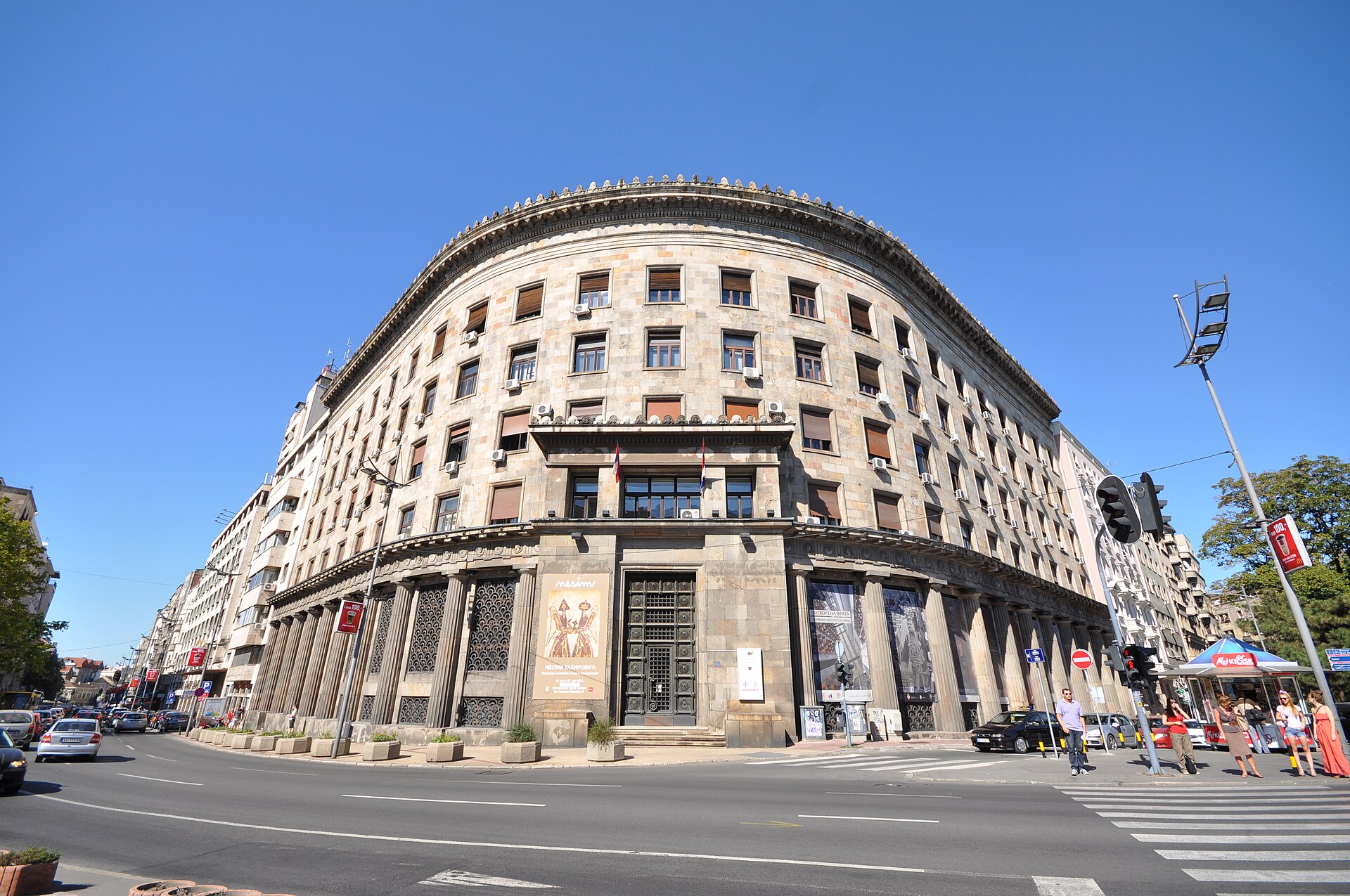
The Historical Museum of Serbia is a national institution dedicated to preserving and presenting the historical development of Serbia from antiquity to the modern era. Established in the 20th century, the museum collects, studies, and exhibits artifacts that reflect political, social, and cultural transformations across Serbian history, including medieval statehood, Ottoman rule, and the formation of the modern Serbian nation. Its collections include archaeological materials, documents, artworks, and personal objects associated with key historical events and figures. The museum plays a central role in shaping public understanding of Serbian identity and history through permanent and temporary exhibitions, research, and educational programs.
Key Facts
- Civilization
- Modern Serbian
- Accessibility
- Accessible; varies by exhibition space
- Date(s)
- 1963 CE (institution established)
- Condition
- Active museum
- Original Function
- Historical museum and research institution
- Key Figures
- Karađorđe Petrović, Miloš Obrenović
Foundation and Establishment
1963The Historical Museum of Serbia was founded to centralize the preservation and interpretation of Serbia’s historical heritage. Its mission focused on collecting artifacts and archival materials representing key phases of national development.
Collection Development
Late 20th centuryThroughout the latter half of the 20th century, the museum expanded its collections through acquisitions, donations, and archaeological research. It developed exhibitions covering medieval Serbia, the Ottoman period, and the 19th-century uprisings.
Modern Exhibitions and Role
21st centuryIn the modern era, the museum has focused on updating its exhibitions and improving public engagement. Temporary exhibitions address both national and regional historical themes, while efforts continue toward establishing a permanent exhibition space.
Cultural Significance
The Historical Museum of Serbia plays a key role in constructing and presenting narratives of Serbian national identity. Its exhibitions highlight major turning points such as medieval state formation, resistance to Ottoman rule, and the emergence of modern political institutions, shaping public memory and historical interpretation. As a state institution, the museum also reflects evolving perspectives on history, balancing scholarly research with public education. It serves as a space where historical narratives are curated, debated, and communicated to both domestic and international audiences.
Visiting Information
Entry Rules
Open Tuesday to Sunday. Ticketed entry required. Closed on Mondays.
Best Times to Visit
Late morning or early afternoon when exhibitions are fully open. Weekdays typically have fewer visitors than weekends.
Photography
Photography permitted in most areas without flash. Restrictions may apply to certain temporary exhibitions.
Preservation Notes
Do not touch artifacts. Follow posted guidelines within exhibition spaces. Some exhibits may have controlled lighting and climate conditions for preservation.
Nearby POIs
11 shown- House of the National Assembly of Serbia0.2 km
- Church of Saint Mark0.5 km
- Church of the Holy Trinity0.5 km
- National Museum of Serbia0.6 km
- Nikola Tesla Museum1 km
- Residence of Princess Ljubica1 km
- Cathedral Church of St. Michael the Archangel1.1 km
- Military Museum of Belgrade1.5 km
- Belgrade Fortress1.7 km
- Church of Saint Sava1.7 km
- Pobednik1.7 km
Sources & Further Reading
- [1]Historical Museum of Serbia Official Publications. Historical Museum of Serbia
- [2]Museums of Serbia: Cultural Heritage and Identity — Miloš Timotijević. Institute for Balkan Studies (2015)
- [3]Serbian History: A Cultural Overview — Sima Ćirković. Blackwell Publishing (2004)
Key Facts
- Civilization
- Modern Serbian
- Accessibility
- Accessible; varies by exhibition space
- Date(s)
- 1963 CE (institution established)
- Condition
- Active museum
- Original Function
- Historical museum and research institution
- Key Figures
- Karađorđe Petrović, Miloš Obrenović
Nearby POIs
11 shown- House of the National Assembly of Serbia0.2 km
- Church of Saint Mark0.5 km
- Church of the Holy Trinity0.5 km
- National Museum of Serbia0.6 km
- Nikola Tesla Museum1 km
- Residence of Princess Ljubica1 km
- Cathedral Church of St. Michael the Archangel1.1 km
- Military Museum of Belgrade1.5 km
- Belgrade Fortress1.7 km
- Church of Saint Sava1.7 km
- Pobednik1.7 km