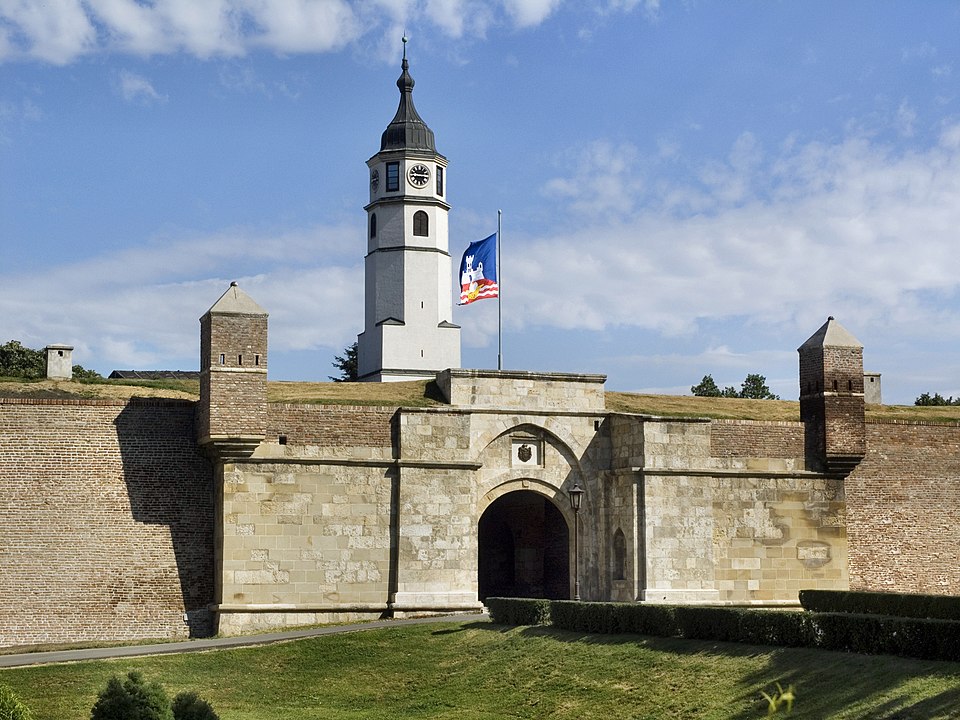
Belgrade Fortress is a historic defensive complex located at the confluence of the Sava and Danube rivers in Belgrade, Serbia. The fortress occupies a strategic hilltop position that has been continuously fortified and rebuilt by successive civilizations for more than two millennia. Its location controlled major river and land routes through the Balkans, making it a critical military stronghold throughout antiquity and the medieval and early modern periods. The present complex includes layers of fortifications constructed by the Romans, Byzantines, medieval Serbian rulers, the Kingdom of Hungary, the Ottoman Empire, and the Habsburg Monarchy. Much of the surviving structure dates from major reconstructions carried out during the 17th and 18th centuries under Austrian and Ottoman control. Today the fortress forms the centerpiece of Kalemegdan Park and is one of the most significant historical landmarks in Belgrade.
Key Facts
- Materials
- Stone, Brick, Earthworks
- Civilization
- Roman, Byzantine, Serbian, Ottoman, Habsburg
- Date(s)
- Initial fortifications 2nd century CE; major reconstructions 15th–18th centuries
- Condition
- Partially preserved fortress complex integrated into public park
- Original Function
- Strategic military fortress controlling the Danube–Sava confluence
- Key Figures
- Despot Stefan Lazarević, Suleiman the Magnificent, Prince Eugene of Savoy
- Strategic Location
- Confluence of the Danube and Sava rivers
Early Settlement and Roman Singidunum
1st–4th centuries CEThe strategic hill at the confluence of the Danube and Sava rivers was first fortified during the Roman period when the city of Singidunum developed as a frontier settlement along the empire’s northern defensive line. Roman military units established a castrum at the site, forming part of the Danube limes that protected the empire from incursions across the river frontier.
Byzantine and Medieval Control
5th–14th centuriesFollowing the collapse of Roman authority in the region, the fortress passed through several phases of control under the Byzantine Empire and various regional powers. The fortifications were repeatedly repaired and expanded as the settlement remained an important defensive position along the shifting frontier between the Byzantine world and emerging medieval states in the Balkans.
Serbian Capital under Stefan Lazarević
Early 15th centuryBelgrade became the capital of the Serbian Despotate under Despot Stefan Lazarević in the early 15th century. During this period the fortress underwent significant strengthening, including the construction of new defensive walls, towers, and gates that adapted the complex to contemporary siege warfare.
Ottoman and Habsburg Conflicts
15th–18th centuriesThe fortress became a major military objective during centuries of conflict between the Ottoman Empire and the Habsburg Monarchy. Control of Belgrade changed hands multiple times, leading to repeated reconstructions and modernization of the defenses. Large portions of the existing bastions, ramparts, and artillery positions date from these early modern military adaptations.
Modern Preservation
19th century – presentAfter the withdrawal of Ottoman forces from Belgrade in the 19th century, the fortress gradually lost its military function. The surrounding area was transformed into Kalemegdan Park, and archaeological work began documenting the site's complex historical layers. Today the fortress houses several museums and monuments and remains one of the most visited historic sites in Serbia.
Cultural Significance
Belgrade Fortress has long symbolized the strategic and political importance of the city within the Balkans. Its location at the meeting point of two major rivers made it a focal point for military campaigns and imperial rivalries between European and Ottoman powers. In modern Serbia the fortress serves as a central historical landmark and public space. Integrated into Kalemegdan Park, the site connects archaeological remains, monuments, and museums that collectively represent the long and complex history of Belgrade as a frontier city between empires.
Interpretive Notes
Scholarly debates and areas of uncertainty
Historians continue to examine the precise layout of the earliest Roman fortifications at Singidunum, as later medieval and early modern construction significantly altered the original defensive structures. Archaeological work has revealed multiple overlapping phases of walls and towers that complicate reconstruction of the site's earliest form. Scholars also debate the extent to which medieval Serbian fortifications survive within the current structure, since many of the visible bastions were heavily modified during Ottoman and Habsburg military modernization in the early modern period.
Visiting Information
Entry Rules
Open daily as part of Kalemegdan Park. Entry to the fortress grounds is free. Some museums and interior structures within the complex require separate tickets.
Best Times to Visit
Early morning or late afternoon offers easier access before peak visitor crowds. The fortress is busiest on weekends and during public events held in Kalemegdan Park.
Photography
Personal photography is permitted throughout the fortress grounds. Tripods, commercial filming, and drone use may require permission from city authorities.
Preservation Notes
Visitors should remain on designated paths and avoid climbing on fragile sections of the fortifications. Some archaeological areas and restoration zones may be temporarily closed.
Nearby POIs
11 shown- Pobednik0.2 km
- Military Museum of Belgrade0.2 km
- Ruzica0.3 km
- Cathedral Church of St. Michael the Archangel0.6 km
- Residence of Princess Ljubica0.7 km
- National Museum of Serbia1.1 km
- Historical Museum of Serbia1.7 km
- House of the National Assembly of Serbia1.8 km
- Church of Saint Mark2.1 km
- Church of the Holy Trinity2.1 km
- Nikola Tesla Museum2.6 km
Sources & Further Reading
- [1]Belgrade Fortress: A Cultural Monument of Exceptional Importance. Institute for the Protection of Cultural Monuments of Serbia
- [2]The History of Belgrade — Branko Pešić. Belgrade Cultural Center (2002)
- [3]Byzantium and the Balkans — Paul Stephenson. Cambridge University Press (2000)
Key Facts
- Materials
- Stone, Brick, Earthworks
- Civilization
- Roman, Byzantine, Serbian, Ottoman, Habsburg
- Date(s)
- Initial fortifications 2nd century CE; major reconstructions 15th–18th centuries
- Condition
- Partially preserved fortress complex integrated into public park
- Original Function
- Strategic military fortress controlling the Danube–Sava confluence
- Key Figures
- Despot Stefan Lazarević, Suleiman the Magnificent, Prince Eugene of Savoy
- Strategic Location
- Confluence of the Danube and Sava rivers
Nearby POIs
11 shown- Pobednik0.2 km
- Military Museum of Belgrade0.2 km
- Ruzica0.3 km
- Cathedral Church of St. Michael the Archangel0.6 km
- Residence of Princess Ljubica0.7 km
- National Museum of Serbia1.1 km
- Historical Museum of Serbia1.7 km
- House of the National Assembly of Serbia1.8 km
- Church of Saint Mark2.1 km
- Church of the Holy Trinity2.1 km
- Nikola Tesla Museum2.6 km