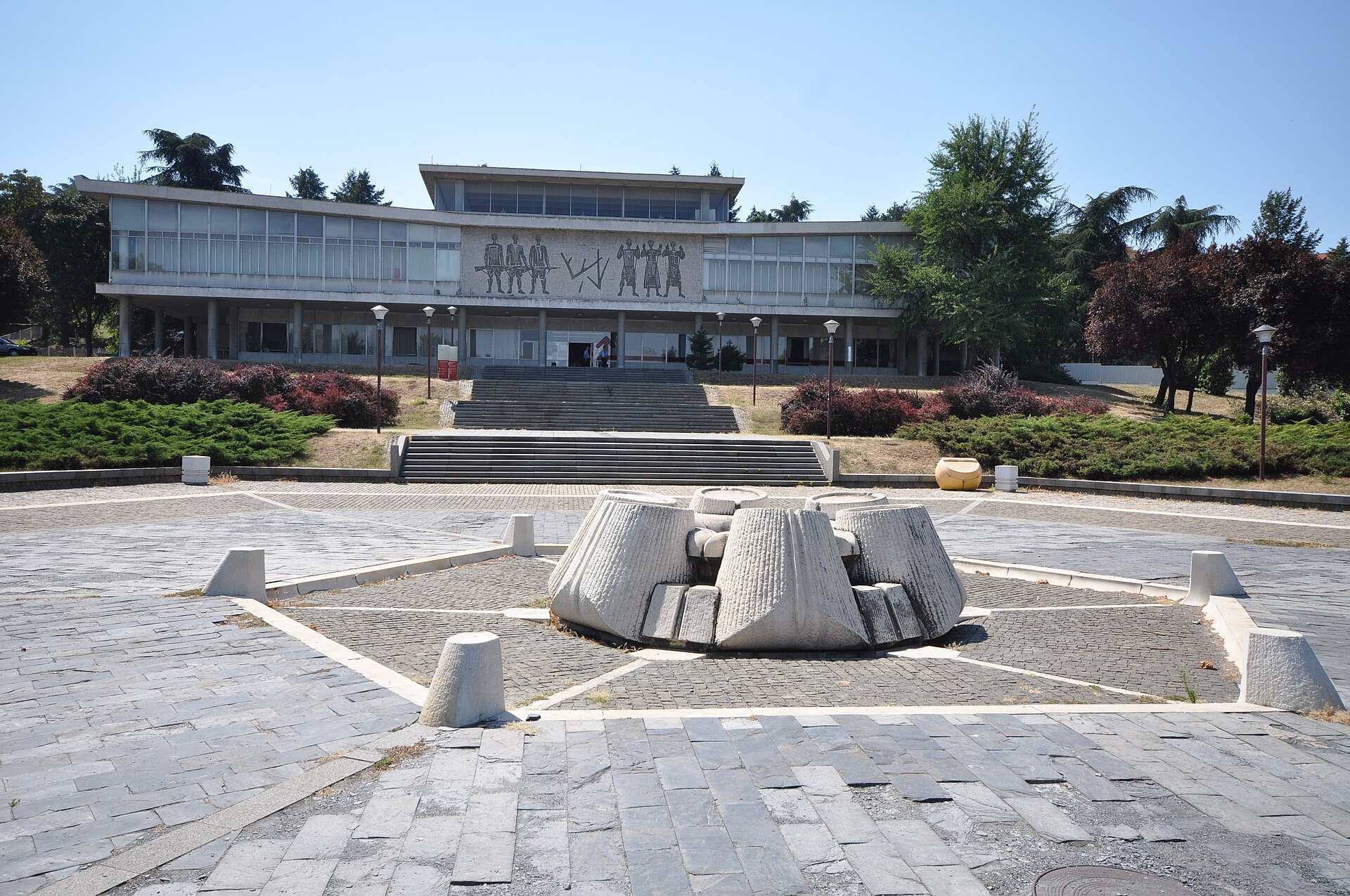
The Museum of Yugoslavia in Belgrade is a historical and cultural institution dedicated to preserving and interpreting the history of the former Socialist Federal Republic of Yugoslavia. Formed in 1996 through the merger of the Memorial Center “Josip Broz Tito” and the Museum of the Revolution of Yugoslav Peoples, it houses extensive collections related to political, social, and cultural life in the 20th century Balkans. The museum complex in the Dedinje district includes multiple exhibition buildings and the House of Flowers, the mausoleum of Josip Broz Tito. Its collections include state gifts, photographs, documents, and objects associated with the Yugoslav presidency, the Non-Aligned Movement, and everyday life under socialism, making it a key site for understanding the legacy of Yugoslavia.
Key Facts
- Materials
- Concrete, Glass, Stone
- Civilization
- Yugoslav / Serbian
- Accessibility
- Partially accessible; varies by building within the complex
- Collection Size
- Over 200,000 items
- Date(s)
- 1962–1982 (component buildings); museum established 1996
- Condition
- Active museum complex with permanent and temporary exhibitions
- Original Function
- Memorial and historical museum complex
- Key Figures
- Josip Broz Tito
- Architectural Style
- Modernist
Origins of the Memorial Complex
1960s - 1980The origins of the museum lie in the establishment of the Memorial Center dedicated to Josip Broz Tito during his lifetime. Buildings constructed in this period were intended to preserve documents, gifts, and artifacts connected to his presidency and Yugoslavia’s political development.
Formation of the Museum of Yugoslavia
1996In 1996, the Memorial Center “Josip Broz Tito” was merged with the Museum of the Revolution of Yugoslav Peoples to form the Museum of Yugoslavia. This institutional consolidation expanded the scope of the collection to encompass broader aspects of Yugoslav history beyond Tito’s personal legacy.
Post-Yugoslav Transition
1990s - early 2000sFollowing the breakup of Yugoslavia, the museum faced a period of reduced activity and redefinition. Its role shifted from state-sponsored commemoration to historical interpretation, reflecting changing political and cultural contexts in Serbia and the region.
Curatorial Reorientation
2000s - presentIn the 21st century, the museum has developed new exhibitions that critically engage with Yugoslav history, including themes of socialism, international relations, and everyday life. It has also expanded educational programs and international collaborations.
Cultural Significance
The Museum of Yugoslavia plays a central role in shaping public understanding of the Yugoslav past, both within Serbia and across the former Yugoslav republics. It preserves material culture associated with socialist governance, international diplomacy, and daily life, providing insight into a state that no longer exists but continues to influence regional identity. The museum also serves as a site of memory where different interpretations of Yugoslavia coexist. For some visitors, it represents a period of stability and international relevance, while for others it prompts reflection on political structures and their consequences. Its exhibitions contribute to ongoing discussions about identity, memory, and historical narrative in the Balkans.
Interpretive Notes
Scholarly debates and areas of uncertainty
Scholarly debates surrounding the museum often focus on how Yugoslavia is represented in public history. Questions arise over whether exhibitions sufficiently balance nostalgia with critical analysis of the political system and its limitations. There is also discussion about the role of museums in post-socialist societies, particularly how institutions like this one navigate contested histories and present them to diverse audiences with differing perspectives on the Yugoslav period.
Visiting Information
Entry Rules
Open Tuesday to Sunday. Closed Monday. Entry is ticketed; one ticket covers access to the full museum complex, including the House of Flowers.
Best Times to Visit
Late morning to early afternoon for full access to all buildings. Weekdays generally have fewer visitors than weekends.
Photography
Photography permitted in most areas without flash. Restrictions may apply for certain temporary exhibitions.
Preservation Notes
Do not touch exhibited objects. Follow posted routes between buildings. Some areas may have controlled access due to conservation requirements.
Nearby POIs
11 shown- House of Flowers0.1 km
- Church of Saint Sava1.7 km
- Nikola Tesla Museum2.4 km
- Church of Saint Mark2.8 km
- House of the National Assembly of Serbia2.8 km
- Historical Museum of Serbia2.9 km
- Church of the Holy Trinity2.9 km
- Residence of Princess Ljubica3.2 km
- National Museum of Serbia3.3 km
- Cathedral Church of St. Michael the Archangel3.3 km
- Military Museum of Belgrade3.8 km
Sources & Further Reading
- [1]Museum of Yugoslavia Official WebsiteView
- [2]Yugoslavia: Death of a Nation — Laura Silber, Allan Little. Penguin Books (1995)
- [3]Tito and His Comrades — Jože Pirjevec. University of Wisconsin Press (2018)
Key Facts
- Materials
- Concrete, Glass, Stone
- Civilization
- Yugoslav / Serbian
- Accessibility
- Partially accessible; varies by building within the complex
- Collection Size
- Over 200,000 items
- Date(s)
- 1962–1982 (component buildings); museum established 1996
- Condition
- Active museum complex with permanent and temporary exhibitions
- Original Function
- Memorial and historical museum complex
- Key Figures
- Josip Broz Tito
- Architectural Style
- Modernist
Nearby POIs
11 shown- House of Flowers0.1 km
- Church of Saint Sava1.7 km
- Nikola Tesla Museum2.4 km
- Church of Saint Mark2.8 km
- House of the National Assembly of Serbia2.8 km
- Historical Museum of Serbia2.9 km
- Church of the Holy Trinity2.9 km
- Residence of Princess Ljubica3.2 km
- National Museum of Serbia3.3 km
- Cathedral Church of St. Michael the Archangel3.3 km
- Military Museum of Belgrade3.8 km