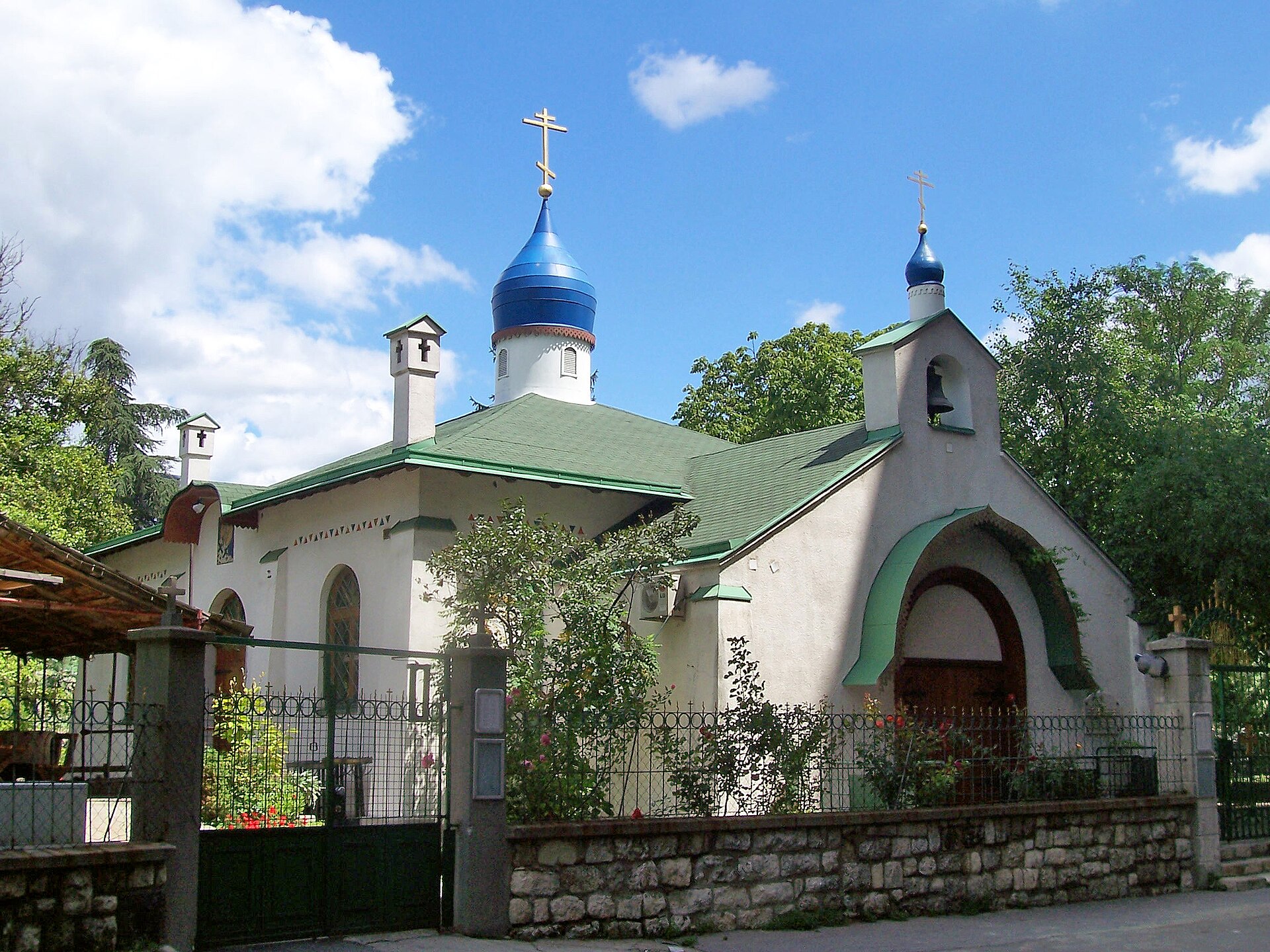
The Church of the Holy Trinity in Belgrade is a Russian Orthodox church constructed in the early 20th century to serve the émigré Russian community that settled in the city following the Russian Revolution. Located within Tašmajdan Park, the church was built between 1924 and 1925 under the patronage of Russian clergy in exile and with the support of the Serbian Orthodox Church. It became an important religious and cultural center for Russian refugees in the Kingdom of Yugoslavia. Architecturally, the church reflects traditional Russian Orthodox design, with a compact plan, domed roof, and decorative elements characteristic of ecclesiastical buildings from late Imperial Russia. The interior includes iconography and liturgical objects associated with the Russian Orthodox tradition. The site also contains the grave of General Pyotr Wrangel, a prominent leader of the anti-Bolshevik White Army, further linking the church to the history of Russian emigration.
Key Facts
- Materials
- Brick, Plaster
- Civilization
- Kingdom of Yugoslavia
- Date(s)
- 1924–1925
- Condition
- Active church, well-maintained
- Original Function
- Russian Orthodox parish church
- Key Figures
- Pyotr Wrangel
Russian Emigration to Belgrade
Post-1917Following the Russian Revolution of 1917 and the subsequent civil war, thousands of Russians fled to the Kingdom of Yugoslavia. Belgrade became a major center for this diaspora, with the Serbian state and church offering institutional and cultural support. The need for religious infrastructure led to the establishment of Russian Orthodox parishes in the city.
Construction of the Church
1924–1925The Church of the Holy Trinity was constructed in Tašmajdan Park to serve the growing Russian Orthodox community. Built with financial and organizational support from immmigrant groups and with the approval of Serbian authorities, the church was designed in a style consistent with Russian ecclesiastical traditions.
Interwar Period
1925–1941During the interwar years, the church functioned as a central religious and social hub for Russian immmigrants. It hosted liturgical services, commemorations, and community gatherings, reinforcing cultural identity among displaced populations.
World War II and Socialist Yugoslavia
1941–1990sDespite the disruptions of World War II and the establishment of a socialist government in Yugoslavia, the church remained active. It continued to serve a smaller but persistent Russian Orthodox community, maintaining its liturgical traditions under changing political conditions.
Contemporary Role
1990s–presentToday, the church operates as part of the Russian Orthodox Church Outside Russia and remains an active place of worship. It also serves as a historical marker of the Russian diaspora in Belgrade and maintains the grave of General Pyotr Wrangel as a site of remembrance.
Cultural Significance
The Church of the Holy Trinity represents the historical presence of Russian immmigrants in Belgrade and their integration into the cultural and religious landscape of the city. It functioned not only as a place of worship but also as a focal point for preserving Russian identity, language, and traditions in exile. Its continued operation reflects enduring ties between Serbian and Russian Orthodox communities. The presence of General Wrangel’s grave adds a layer of political and historical significance, connecting the site to the broader narrative of the Russian Civil War and the global dispersion of its participants.
Interpretive Notes
Scholarly debates and areas of uncertainty
The precise extent of Russian Orthodox Church Outside Russia’s administrative authority over the church in different periods remains a subject of discussion, particularly during the mid-20th century when ecclesiastical jurisdictions shifted due to geopolitical pressures. There is also limited archival consensus on the full scope of the church’s early funding sources, with some accounts emphasizing immmigrant contributions and others pointing to more direct institutional support from Yugoslav authorities.
Visiting Information
Entry Rules
Open daily. Entry is free. As an active church, access may be limited during services and religious ceremonies.
Best Times to Visit
Weekdays and early mornings are typically less crowded. Religious holidays in the Russian Orthodox calendar may see increased attendance.
Photography
Photography permitted outside. Interior photography may be restricted during services.
Preservation Notes
Visitors should remain respectful during services. Do not disturb active worship. Maintain silence inside the church.
Nearby POIs
11 shown- Church of Saint Mark0.1 km
- House of the National Assembly of Serbia0.3 km
- Historical Museum of Serbia0.5 km
- Nikola Tesla Museum0.6 km
- National Museum of Serbia1 km
- Church of Saint Sava1.4 km
- Residence of Princess Ljubica1.5 km
- Cathedral Church of St. Michael the Archangel1.6 km
- Military Museum of Belgrade2 km
- Belgrade Fortress2.1 km
- Ruzica2.2 km
Sources & Further Reading
- [1]Russian Emigration and Belgrade in the Interwar Period — Mira Radojević. Institute for Balkan Studies (2010)
- [2]The Russian Orthodox Church Outside Russia: A History — Vladimir Moss. Synaxis Press (2007)
- [3]Belgrade: A Cultural History — David Norris. Oxford University Press (2008)
Key Facts
- Materials
- Brick, Plaster
- Civilization
- Kingdom of Yugoslavia
- Date(s)
- 1924–1925
- Condition
- Active church, well-maintained
- Original Function
- Russian Orthodox parish church
- Key Figures
- Pyotr Wrangel
Nearby POIs
11 shown- Church of Saint Mark0.1 km
- House of the National Assembly of Serbia0.3 km
- Historical Museum of Serbia0.5 km
- Nikola Tesla Museum0.6 km
- National Museum of Serbia1 km
- Church of Saint Sava1.4 km
- Residence of Princess Ljubica1.5 km
- Cathedral Church of St. Michael the Archangel1.6 km
- Military Museum of Belgrade2 km
- Belgrade Fortress2.1 km
- Ruzica2.2 km