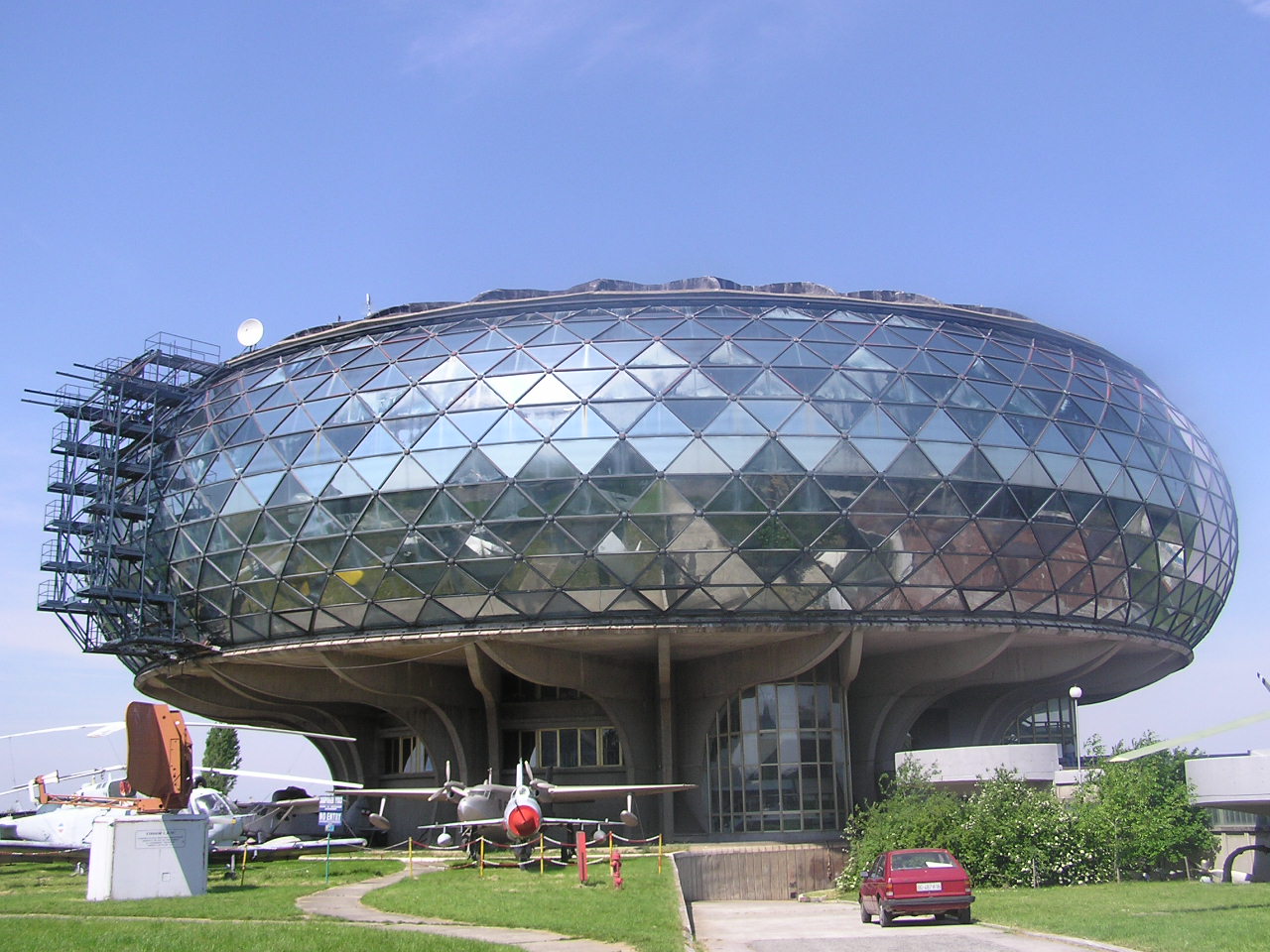
The Aeronautical Museum of Belgrade is located near Nikola Tesla Airport and is dedicated to the history of aviation in Serbia and the former Yugoslavia. Established in 1957 and opened in its current building in 1989, the museum houses a large collection of aircraft, engines, and aviation-related artifacts spanning from early flight to the late 20th century. The museum building itself is a notable example of late modernist architecture, designed with a circular glass façade that allows natural light to illuminate the interior exhibits. The collection includes both civilian and military aircraft, with particular emphasis on Yugoslav aviation development and aircraft used during the NATO bombing of 1999.
Key Facts
- Materials
- Glass, Concrete, Steel
- Civilization
- Socialist Federal Republic of Yugoslavia
- Notable Exhibits
- Yugoslav aircraft, Military aircraft from 1999 NATO bombing, Early aviation artifacts
- Date(s)
- Museum established 1957; current building opened 1989
- Condition
- Active museum
- Original Function
- Aviation museum
- Architectural Style
- Late modernist
Foundation of the Museum
1957The Aeronautical Museum was established to preserve and present the history of aviation in Yugoslavia. Its early collections focused on documenting both civilian and military developments in flight, as well as the contributions of Yugoslav engineers and pilots.
Development of the Collection
1950s–1980sOver several decades, the museum expanded its holdings through acquisitions from the Yugoslav Air Force, private donors, and aviation institutions. The growing collection necessitated the construction of a purpose-built facility near Belgrade’s main airport.
Construction of the Current Building
1980sThe museum’s distinctive circular building was completed and opened to the public in 1989. Its glass-dominated design allowed for the display of large aircraft while creating a recognizable architectural landmark.
1999 NATO Bombing Context
1999The museum’s collection expanded to include aircraft and artifacts associated with the NATO bombing of Yugoslavia. These exhibits provide material evidence of late 20th-century conflict and its impact on the country’s aviation infrastructure.
Modern Role
2000s–presentToday, the museum continues to function as Serbia’s primary institution for aviation heritage. It presents exhibitions on technological development, military history, and the cultural significance of flight, while maintaining its collection of historic aircraft.
Cultural Significance
The museum reflects the importance of aviation in Yugoslav and Serbian technological development, particularly during the 20th century when domestic aircraft production and military aviation played significant roles in national identity and defense. Its exhibits related to the 1999 NATO bombing contribute to public memory and historical interpretation of recent conflict, positioning the museum as both a technical and commemorative space.
Visiting Information
Entry Rules
Open Tuesday–Sunday. Ticketed entry.
Best Times to Visit
Weekday mornings are typically quieter. Clear weather days improve visibility of outdoor aircraft displays.
Photography
Photography permitted. Flash may be restricted indoors.
Preservation Notes
Do not touch aircraft or exhibits unless permitted. Some outdoor displays may be exposed to weathering; follow marked paths.
Nearby POIs
11 shown- Gardos Tower10.4 km
- Pobednik12.9 km
- Military Museum of Belgrade13 km
- Belgrade Fortress13 km
- Ruzica13.2 km
- Cathedral Church of St. Michael the Archangel13.2 km
- Residence of Princess Ljubica13.2 km
- House of Flowers13.6 km
- Museum of Yugoslavia13.6 km
- National Museum of Serbia13.8 km
- Historical Museum of Serbia14.1 km
Sources & Further Reading
- [1]
- [2]Aviation in Yugoslavia 1918–1991 — Zoran Modli. Aeropress (2000)
- [3]Cold War Aviation in Eastern Europe — E. R. Hooton. Midland Publishing (2010)
Key Facts
- Materials
- Glass, Concrete, Steel
- Civilization
- Socialist Federal Republic of Yugoslavia
- Notable Exhibits
- Yugoslav aircraft, Military aircraft from 1999 NATO bombing, Early aviation artifacts
- Date(s)
- Museum established 1957; current building opened 1989
- Condition
- Active museum
- Original Function
- Aviation museum
- Architectural Style
- Late modernist
Nearby POIs
11 shown- Gardos Tower10.4 km
- Pobednik12.9 km
- Military Museum of Belgrade13 km
- Belgrade Fortress13 km
- Ruzica13.2 km
- Cathedral Church of St. Michael the Archangel13.2 km
- Residence of Princess Ljubica13.2 km
- House of Flowers13.6 km
- Museum of Yugoslavia13.6 km
- National Museum of Serbia13.8 km
- Historical Museum of Serbia14.1 km