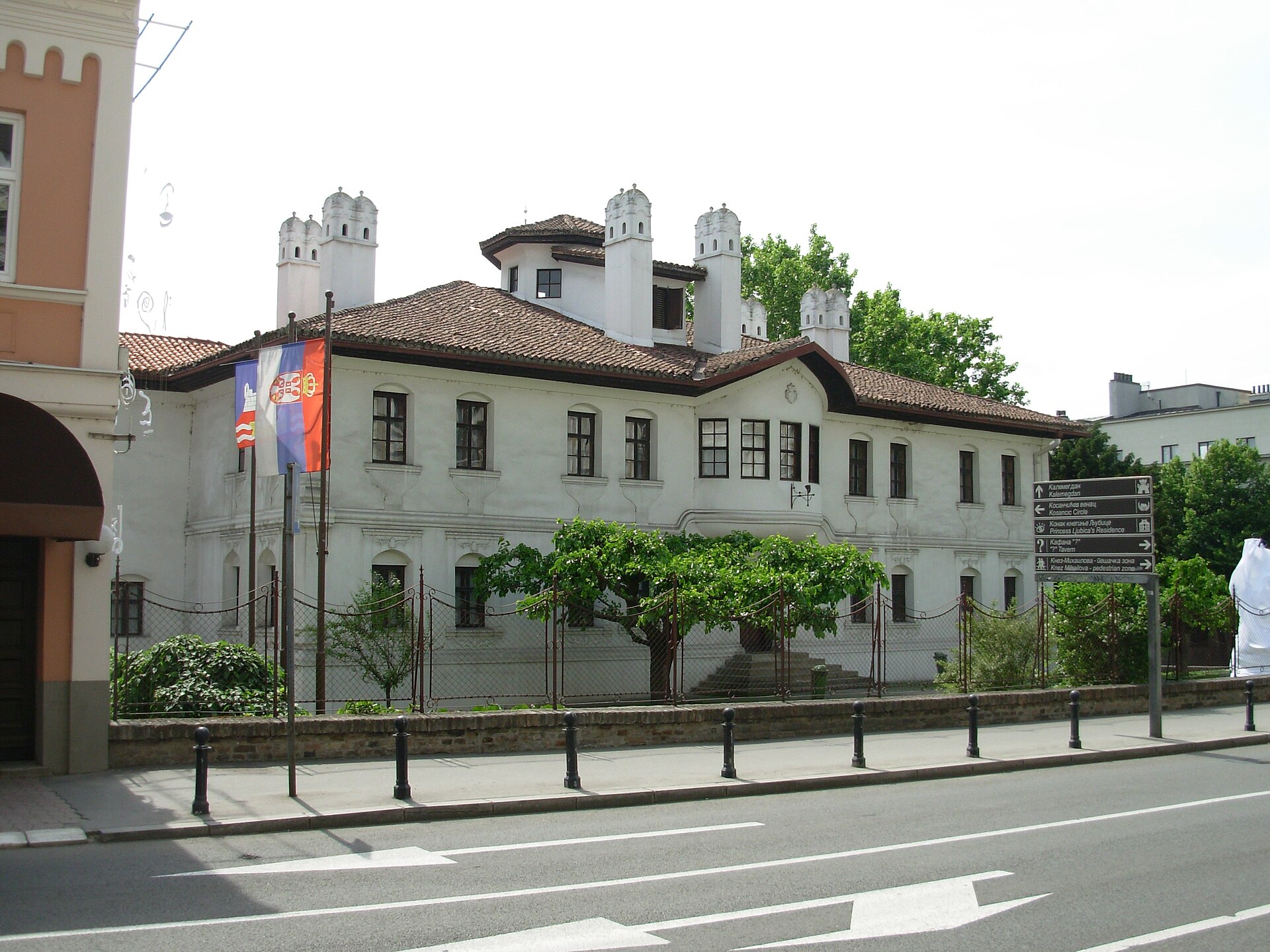
The Residence of Princess Ljubica in Belgrade was constructed between 1829 and 1831 as the urban residence of Princess Ljubica Obrenović, wife of Prince Miloš Obrenović. Built during a formative period of Serbian autonomy within the declining Ottoman Empire, the residence reflects both the political ambitions of the Obrenović dynasty and the transitional architectural character of early 19th-century Belgrade. The building combines Ottoman residential design with emerging European influences, featuring an enclosed courtyard, wooden upper floors, and projecting bay windows. Today, it operates as a museum under the Belgrade City Museum, presenting domestic life, furnishings, and cultural practices of the Serbian elite during the early modern period.
Key Facts
- Materials
- Brick, Wood, Plaster
- Civilization
- Principality of Serbia
- Date(s)
- 1829–1831
- Condition
- Restored, functioning as a museum
- Original Function
- Royal residence
- Key Figures
- Princess Ljubica Obrenović, Prince Miloš Obrenović
- Architectural Style
- Balkan-Ottoman with early European influences
Construction under Prince Miloš
1829–1831The residence was commissioned by Prince Miloš Obrenović for his wife, Princess Ljubica, during a period when Serbia was consolidating autonomy from Ottoman rule. It was built in a prominent area of Belgrade, close to administrative and religious centers, reflecting the emerging authority of the Serbian ruling class.
Royal Domestic Life
1830s–1840sThe building served as the primary residence of Princess Ljubica and her children. It functioned as both a domestic space and a site of informal political activity, where members of the ruling family engaged with advisors and local elites.
Later Uses and Decline
Mid–late 19th centuryAfter the Obrenović family ceased to use the residence as a primary home, the building underwent various changes in function. It was repurposed for administrative and educational uses, leading to alterations in its internal layout and gradual deterioration.
Restoration and Museum Conversion
20th centuryIn the mid-20th century, conservation efforts were undertaken to restore the residence to its early 19th-century appearance. The building was incorporated into the Belgrade City Museum system and opened to the public as a museum focused on urban life in Serbia during the period of national revival.
Present-Day Function
Late 20th century – presentToday, the residence operates as a cultural institution, exhibiting period furniture, decorative arts, and historical narratives associated with the Obrenović dynasty. It stands as a key example of residential architecture from the era of early Serbian state formation.
Cultural Significance
The residence reflects the transitional identity of early 19th-century Serbia, positioned between Ottoman administrative traditions and the emerging structures of a modern European state. Its architectural synthesis illustrates how elite households adapted inherited forms while signaling new political and cultural orientations. As a preserved domestic space, it provides insight into gender roles, court life, and social hierarchy within the Obrenović court. The figure of Princess Ljubica is central to Serbian historical memory, and the residence contributes to narratives of dynastic legitimacy and national development.
Visiting Information
Entry Rules
Open Tuesday–Sunday. Ticketed entry through the Belgrade City Museum.
Best Times to Visit
Weekday mornings offer quieter access. Spring and autumn provide more comfortable conditions for visiting the surrounding historic district.
Photography
Photography permitted without flash. Tripods may require permission.
Preservation Notes
Do not touch exhibited objects or original surfaces. Some interior areas have restricted access to preserve historical materials.
Nearby POIs
11 shown- Cathedral Church of St. Michael the Archangel0.1 km
- Military Museum of Belgrade0.6 km
- National Museum of Serbia0.6 km
- Belgrade Fortress0.7 km
- Pobednik0.7 km
- Ruzica0.9 km
- Historical Museum of Serbia1 km
- House of the National Assembly of Serbia1.2 km
- Church of Saint Mark1.5 km
- Church of the Holy Trinity1.5 km
- Nikola Tesla Museum2 km
Sources & Further Reading
- [1]
- [2]Serbia: The Emergence of the Modern State — Misha Glenny. Penguin Books (2012)
- [3]Architecture in Serbia in the 19th Century — Aleksandar Kadijević. University of Belgrade (2005)
Key Facts
- Materials
- Brick, Wood, Plaster
- Civilization
- Principality of Serbia
- Date(s)
- 1829–1831
- Condition
- Restored, functioning as a museum
- Original Function
- Royal residence
- Key Figures
- Princess Ljubica Obrenović, Prince Miloš Obrenović
- Architectural Style
- Balkan-Ottoman with early European influences
Nearby POIs
11 shown- Cathedral Church of St. Michael the Archangel0.1 km
- Military Museum of Belgrade0.6 km
- National Museum of Serbia0.6 km
- Belgrade Fortress0.7 km
- Pobednik0.7 km
- Ruzica0.9 km
- Historical Museum of Serbia1 km
- House of the National Assembly of Serbia1.2 km
- Church of Saint Mark1.5 km
- Church of the Holy Trinity1.5 km
- Nikola Tesla Museum2 km