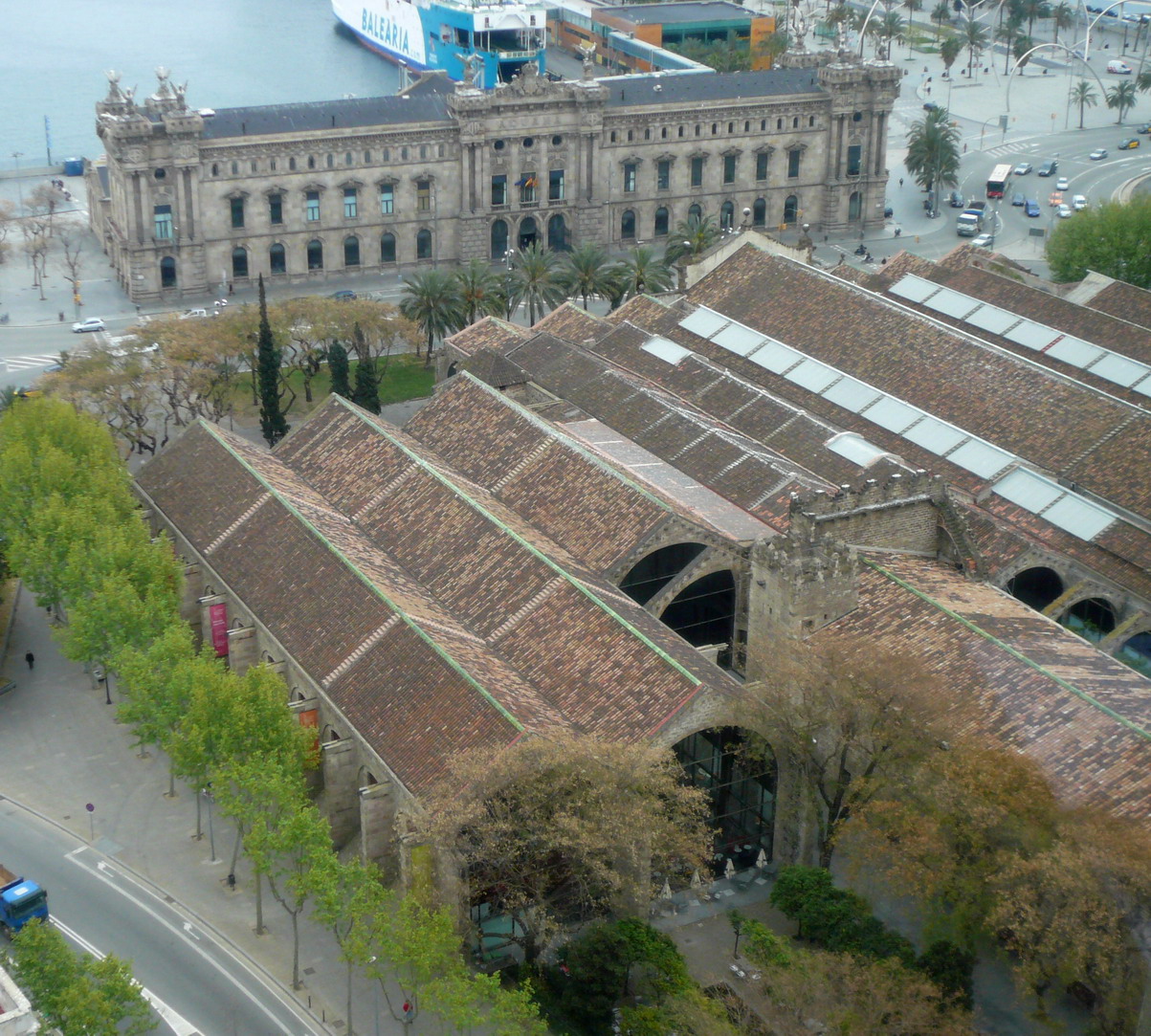
The Maritime Museum of Barcelona is housed within the Drassanes Reials, the former royal shipyards of Barcelona. This Gothic-style complex, constructed primarily between the 13th and 18th centuries, served as the industrial heart of the Crown of Aragon's naval power, where galleys were built and maintained for Mediterranean trade and warfare.
Today, the museum preserves an extensive collection of maritime artifacts, including a full-scale replica of the galley Real, the flagship of Don John of Austria at the Battle of Lepanto. The site itself is considered one of the most significant examples of civil Gothic architecture in Europe, showcasing the evolution of naval engineering and the city's historical reliance on the sea.
Key Facts
- Materials
- Stone, Brick
- Civilization
- Catalan / Crown of Aragon
- Accessibility
- Fully accessible with ramps and elevators
- Date(s)
- 13th - 18th century
- Condition
- Restored and active as a museum
- Original Function
- Royal Shipyards (Drassanes)
- Key Figures
- Peter III of Aragon, Don John of Austria
Origins of the Royal Shipyards
13th centuryThe construction of the Drassanes began under the reign of Peter III of Aragon. The site was strategically chosen near the port to facilitate the rapid construction and repair of the galleys that powered the naval expansion of the Crown of Aragon.
Expansion and Peak
14th - 16th centuryThe shipyards were expanded significantly to accommodate larger vessels. During this era, the facility became one of the most productive naval centers in the Mediterranean, playing a crucial role in the logistics of the Battle of Lepanto in 1571.
Military and Industrial Transition
18th - 19th centuryAs naval technology shifted toward larger sailing ships that could not be accommodated by the shipyard's slips, the facility transitioned into a military barracks and artillery depot, preserving the structure from demolition.
Establishment as a Museum
1929 - presentThe site was officially inaugurated as the Maritime Museum of Barcelona in 1941, following a period of restoration. It continues to serve as a center for maritime research and the preservation of Catalan naval heritage.
Cultural Significance
The museum serves as a testament to Barcelona's identity as a Mediterranean maritime power. It bridges the gap between the city's medieval industrial past and its modern cultural landscape, highlighting the technological prowess of the medieval shipbuilders who defined the region's geopolitical influence.
Interpretive Notes
Scholarly debates and areas of uncertainty
There is ongoing academic discussion regarding the exact architectural phases of the original 13th-century construction, as subsequent modifications during the 16th and 18th centuries obscured some of the earliest structural elements.
Visiting Information
Entry Rules
Open daily. Tickets can be purchased online or at the entrance. Concessions are available for students, seniors, and residents. No specific dress code is required.
Best Times to Visit
Weekday mornings are generally quieter. The museum is spacious, making it suitable for visits even during peak tourist seasons in Barcelona.
Photography
Personal photography is permitted without flash or tripods. Commercial photography requires prior authorization from the museum administration.
Preservation Notes
The building is a protected historical monument. Visitors are requested to refrain from touching the historical ship replicas and to follow marked paths to protect the original stone flooring.
Nearby POIs
11 shown- Columbus Monument0.2 km
- Palau Guell0.4 km
- Basilica de Santa Maria del Pi0.8 km
- Cathedral of the Holy Cross and Saint Eulalia1 km
- Santa Maria del Mar1.1 km
- Barcelona Museum of Contemporary Art1.2 km
- Museu Picasso1.2 km
- Arc de Triomf1.8 km
- Casa Batllo2 km
- Museu Nacional d'Art de Catalunya2 km
- Magic Fountain of Montjuic2.1 km
Sources & Further Reading
- [1]
- [2]Barcelona and the Sea: A History — Garcia-Diego, J.A.. Maritime History Review (1998)
Key Facts
- Materials
- Stone, Brick
- Civilization
- Catalan / Crown of Aragon
- Accessibility
- Fully accessible with ramps and elevators
- Date(s)
- 13th - 18th century
- Condition
- Restored and active as a museum
- Original Function
- Royal Shipyards (Drassanes)
- Key Figures
- Peter III of Aragon, Don John of Austria
Nearby POIs
11 shown- Columbus Monument0.2 km
- Palau Guell0.4 km
- Basilica de Santa Maria del Pi0.8 km
- Cathedral of the Holy Cross and Saint Eulalia1 km
- Santa Maria del Mar1.1 km
- Barcelona Museum of Contemporary Art1.2 km
- Museu Picasso1.2 km
- Arc de Triomf1.8 km
- Casa Batllo2 km
- Museu Nacional d'Art de Catalunya2 km
- Magic Fountain of Montjuic2.1 km