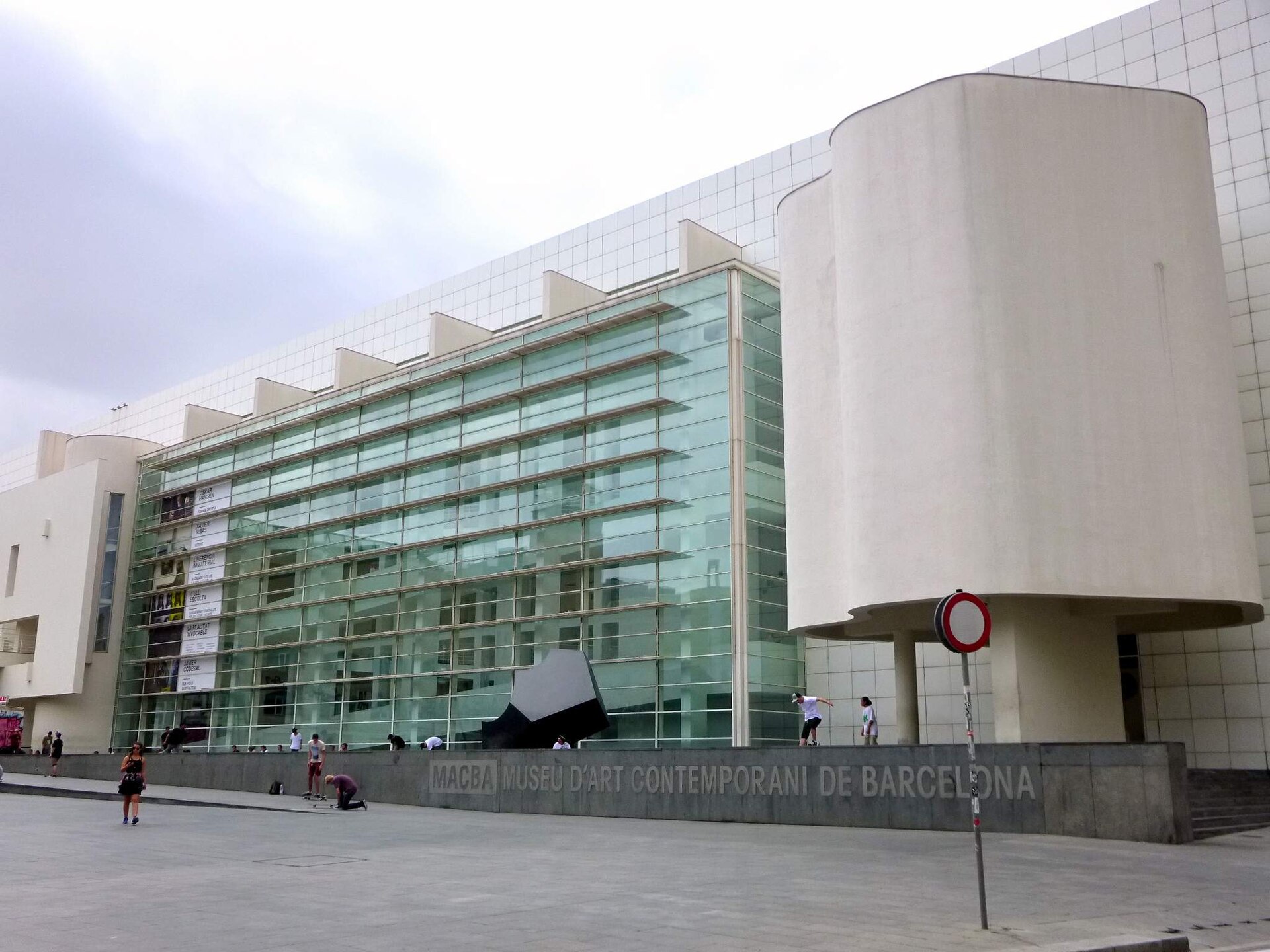
The Barcelona Museum of Contemporary Art (MACBA) is a major cultural institution located in the El Raval neighborhood of Barcelona. Opened in 1995, the museum is housed in a striking modernist building designed by American architect Richard Meier, characterized by its stark white facade, geometric forms, and extensive use of natural light to create a dialogue with the surrounding historic urban fabric.
The museum's collection focuses on art produced from the mid-20th century to the present day, with a particular emphasis on Catalan and Spanish artists, as well as international contemporary movements. It serves as a center for research, exhibition, and public debate, playing a significant role in the cultural revitalization of the Raval district.
Key Facts
- Materials
- White enameled aluminum panels, Glass, Concrete
- Civilization
- Contemporary Spanish
- Accessibility
- Fully wheelchair accessible
- Date(s)
- 1990-1995
- Condition
- Active
- Original Function
- Contemporary Art Museum
- Key Figures
- Richard Meier, Xavier Miserachs
Conception and Planning
1980sThe project was initiated in the late 1980s as part of a broader urban renewal effort in Barcelona. The city government commissioned Richard Meier to design a structure that would anchor the cultural transformation of the historic Raval quarter.
Construction and Inauguration
1990-1995Construction began in 1990, facing the challenge of integrating a large-scale modernist structure into a dense, medieval street layout. The museum officially opened its doors to the public in November 1995.
Expansion and Modern Era
21st CenturyIn 2006, the museum expanded with the addition of the MACBA Study Center, housed in the adjacent Convent dels Àngels, further integrating the institution into the local community and expanding its research capabilities.
Cultural Significance
MACBA is a cornerstone of Barcelona's contemporary art scene and a symbol of the city's post-Olympic urban transformation. Its presence in the Raval has been a catalyst for social and cultural change, though it has also been a focal point for discussions regarding gentrification and the role of high-culture institutions in working-class neighborhoods.
Interpretive Notes
Scholarly debates and areas of uncertainty
The architectural impact of the building on the historic Raval neighborhood remains a subject of debate among urban planners and architectural historians, specifically regarding the contrast between Meier's 'white box' aesthetic and the surrounding traditional architecture.
Visiting Information
Entry Rules
Open daily except Tuesdays. Tickets can be purchased online or at the museum entrance. Concessions are available for students, seniors, and residents.
Best Times to Visit
Weekday mornings are generally quieter. The museum plaza is a popular gathering spot for local skateboarders, which is a unique cultural aspect of the site's exterior environment.
Photography
Personal photography is permitted in the galleries without flash or tripods. Professional photography requires prior authorization.
Preservation Notes
The building's white facade requires regular maintenance to preserve its aesthetic integrity. Visitors are asked to refrain from touching artworks.
Nearby POIs
11 shownSources & Further Reading
- [1]Richard Meier: The Museum of Contemporary Art in Barcelona — Richard Meier. Electa (1995)
- [2]
Key Facts
- Materials
- White enameled aluminum panels, Glass, Concrete
- Civilization
- Contemporary Spanish
- Accessibility
- Fully wheelchair accessible
- Date(s)
- 1990-1995
- Condition
- Active
- Original Function
- Contemporary Art Museum
- Key Figures
- Richard Meier, Xavier Miserachs