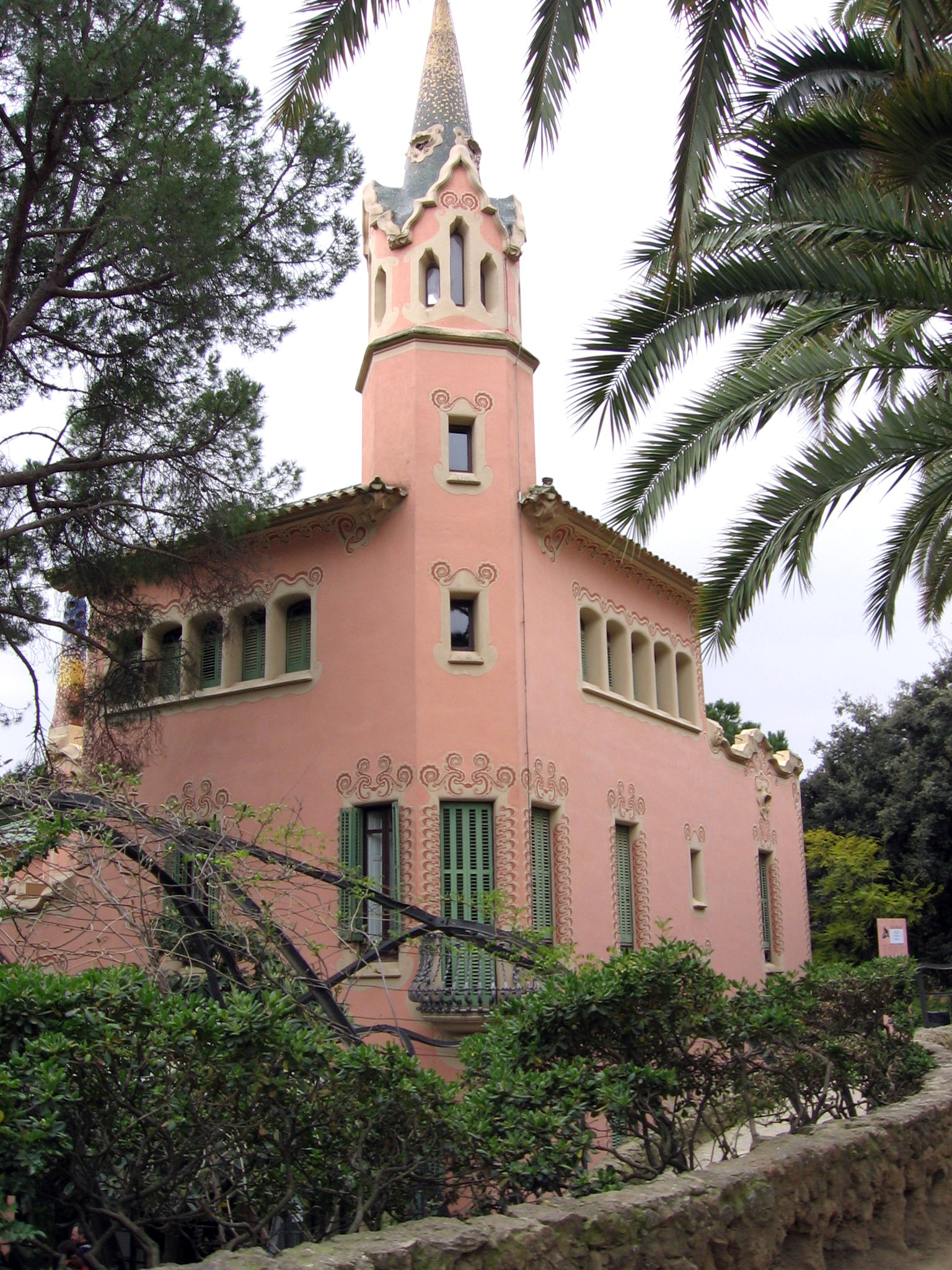
The Gaudí House Museum, located within Park Güell in Barcelona, served as the residence of the architect Antoni Gaudí from 1906 to 1925. Designed by Francesc d'Assís Berenguer i Mestres, the house was originally built as a show home for the park's residential development project, which ultimately failed to attract buyers.
Following Gaudí's departure to live in the Sagrada Família workshop, the house was eventually converted into a museum in 1963. It now houses a significant collection of furniture, personal objects, and decorative elements designed by Gaudí for various projects, including Casa Batlló and Casa Milà, offering insight into his domestic aesthetic and design philosophy.
Key Facts
- Materials
- Stone, Brick, Ceramic tiles, Iron
- Civilization
- Catalan Modernisme
- Accessibility
- Limited accessibility due to historic architecture
- Date(s)
- 1903-1905
- Condition
- Restored and maintained as a museum
- Original Function
- Show home for Park Güell development
- Key Figures
- Antoni Gaudí, Eusebi Güell, Francesc d'Assís Berenguer i Mestres
Construction and Early Use
1903-1905The house was constructed as a model residence for the Park Güell housing estate. Designed by Gaudí's close collaborator Francesc Berenguer, it was intended to demonstrate the potential of the site to prospective buyers.
Gaudí's Residence
1906-1925Antoni Gaudí moved into the house in 1906 and lived there for nearly two decades with his father and niece. During this period, he worked on major projects including the Sagrada Família and the completion of Park Güell.
Museum Transformation
1963-PresentAfter passing through several private owners, the house was opened to the public as a museum in 1963. It is managed by the Construction Board of the Sagrada Família Foundation, which oversees the preservation of the building and the collection.
Cultural Significance
The museum is a vital site for understanding the private life and design language of Antoni Gaudí. It highlights the transition of Catalan Modernisme from architectural structure to interior design, showcasing how Gaudí applied his organic, nature-inspired motifs to everyday furniture and household items.
Interpretive Notes
Scholarly debates and areas of uncertainty
There is ongoing discussion regarding the extent of Francesc Berenguer's contribution to the design versus Gaudí's direct oversight. While officially attributed to Berenguer, the architectural language is deeply intertwined with Gaudí's stylistic preferences, leading to debates about the attribution of specific structural details.
Visiting Information
Entry Rules
Tickets must be purchased online in advance. The museum is located within the Park Güell complex, but requires a separate admission ticket from the park itself.
Best Times to Visit
Early morning or late afternoon to avoid the peak tourist crowds of Park Güell. Weekdays during the off-season offer the most quiet experience.
Photography
Personal photography is permitted for non-commercial use. Flash and tripods are prohibited.
Preservation Notes
The house is a historic structure with fragile original interiors. Visitors are required to follow marked paths and refrain from touching the furniture or displays.
Nearby POIs
11 shown- Casa Vicens1.2 km
- CosmoCaixa Barcelona1.8 km
- Basilica de la Sagrada Familia2.1 km
- Casa Mila2.2 km
- Casa Batllo2.7 km
- Design Museum of Barcelona3.2 km
- Arc de Triomf3.4 km
- Barcelona Museum of Contemporary Art3.7 km
- Can Framis Museum3.7 km
- Cathedral of the Holy Cross and Saint Eulalia3.9 km
- Basilica de Santa Maria del Pi4 km
Sources & Further Reading
- [1]Gaudí House Museum Official Guide — Construction Board of the Sagrada Família Foundation. Fundació Junta Constructora del Temple Expiatori de la Sagrada Família (2021)View
- [2]Antoni Gaudí: A Life Devoted to Architecture — Gijs van Hensbergen. HarperCollins (2001)
Key Facts
- Materials
- Stone, Brick, Ceramic tiles, Iron
- Civilization
- Catalan Modernisme
- Accessibility
- Limited accessibility due to historic architecture
- Date(s)
- 1903-1905
- Condition
- Restored and maintained as a museum
- Original Function
- Show home for Park Güell development
- Key Figures
- Antoni Gaudí, Eusebi Güell, Francesc d'Assís Berenguer i Mestres
Nearby POIs
11 shown- Casa Vicens1.2 km
- CosmoCaixa Barcelona1.8 km
- Basilica de la Sagrada Familia2.1 km
- Casa Mila2.2 km
- Casa Batllo2.7 km
- Design Museum of Barcelona3.2 km
- Arc de Triomf3.4 km
- Barcelona Museum of Contemporary Art3.7 km
- Can Framis Museum3.7 km
- Cathedral of the Holy Cross and Saint Eulalia3.9 km
- Basilica de Santa Maria del Pi4 km