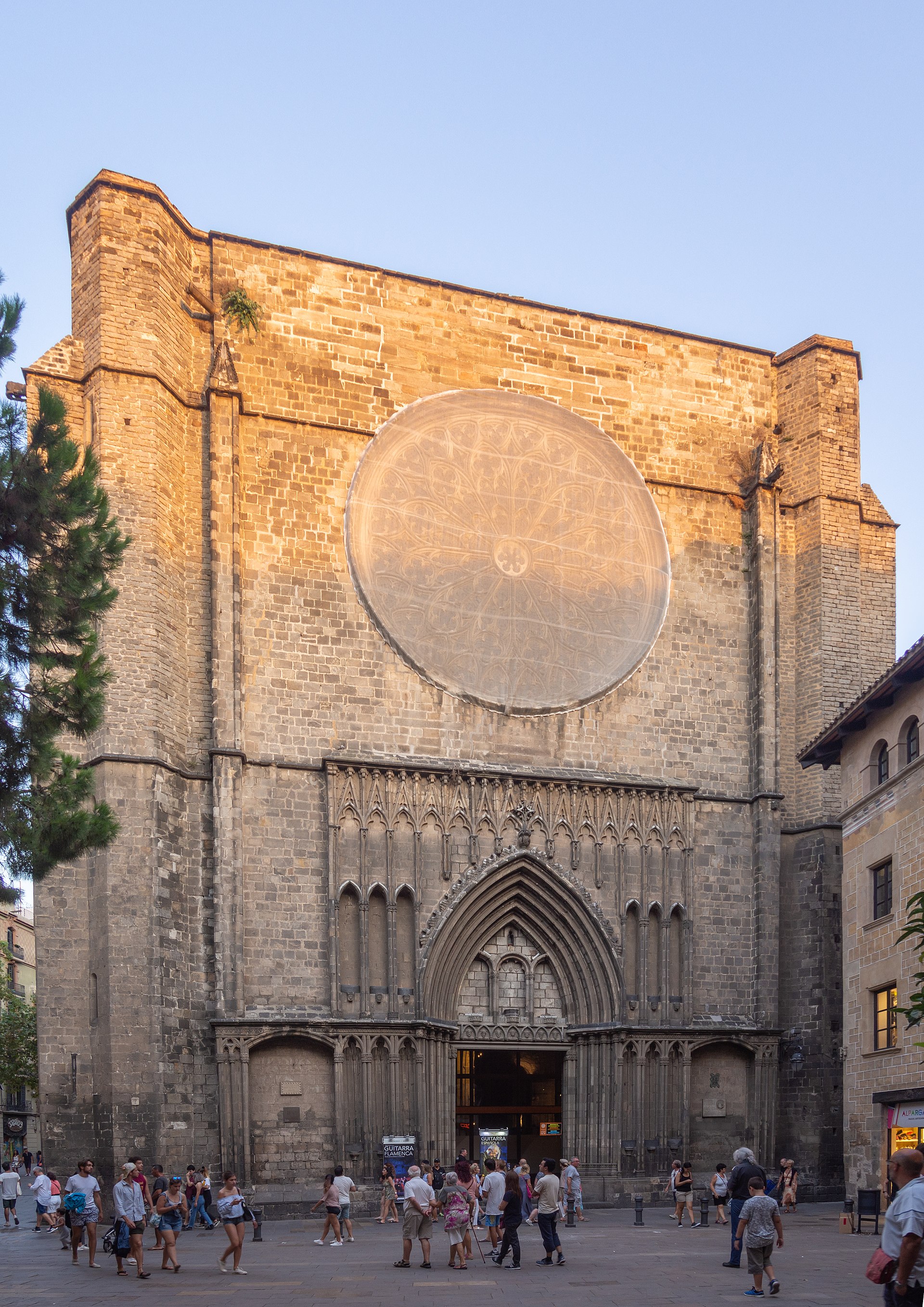
The Basilica de Santa Maria del Pi is a prominent example of Catalan Gothic architecture located in the Gothic Quarter of Barcelona. Construction of the current structure began in 1319 and was completed in 1391, replacing an earlier Romanesque church that had served the local community since the 10th century. The basilica is characterized by its massive, single-nave design, which reflects the architectural preferences of the period in Catalonia, prioritizing expansive, unobstructed interior space over the traditional multi-aisled layout.
The exterior is dominated by a robust octagonal bell tower and a monumental rose window, which is one of the largest of its kind in Catalonia. Despite suffering significant damage during the Spanish Civil War, the basilica has undergone extensive restoration efforts to preserve its structural integrity and historical features, including its collection of medieval stained glass and liturgical art.
Key Facts
- Materials
- Stone, Stained glass
- Civilization
- Catalan
- Accessibility
- Ground level accessible, tower access via stairs
- Date(s)
- 1319-1391
- Condition
- Well-preserved, active religious site
- Original Function
- Parish church
- Key Figures
- Jaume II of Aragon
Early Origins
10th - 13th centuryThe site was originally occupied by a small Romanesque church located outside the Roman walls of Barcelona. The name 'del Pi' (of the Pine) is believed to refer to a pine tree that stood in the church square.
Gothic Construction
1319-1391The current Gothic basilica was commissioned to accommodate the growing population of the city. The design focused on a single, wide nave supported by side chapels, a hallmark of the Catalan Gothic style.
Civil War and Restoration
1936-1939During the Spanish Civil War, the basilica was set on fire, resulting in the destruction of the main altar and significant damage to the interior. Post-war restoration work was required to stabilize the structure and restore the damaged architectural elements.
Cultural Significance
The Basilica de Santa Maria del Pi serves as a vital cultural and religious landmark in Barcelona. Historically, it was the parish church for the city's merchants and artisans, reflecting the social structure of medieval Barcelona. Its architecture remains a primary reference point for the study of Catalan Gothic design.
Today, the basilica is a center for local community life and hosts various cultural events, including classical music concerts. It is also a significant repository of Catalan religious art, housing a collection that spans several centuries of local history.
Interpretive Notes
Scholarly debates and areas of uncertainty
There is ongoing academic discussion regarding the exact influence of the Cistercian architectural style on the single-nave design of the basilica, specifically comparing it to other contemporary Catalan structures like the Cathedral of Girona.
Visiting Information
Entry Rules
Open to the public for visits and religious services. Modest dress is required. Tickets are required for tourist visits and access to the bell tower.
Best Times to Visit
Weekday mornings to avoid weekend crowds. The bell tower offers the best visibility during clear weather conditions.
Photography
Personal photography is permitted without flash. Professional photography requires prior authorization from the parish office.
Preservation Notes
Visitors are requested to remain within designated areas and refrain from touching the historic stonework or artwork. Restoration projects are ongoing to maintain the facade.
Nearby POIs
11 shownSources & Further Reading
- [1]The Gothic Architecture of Barcelona — Joan Bassegoda i Nonell. Editorial RM (1973)
- [2]Catalan Gothic: A Study of Space and Light — Maria Rosa Terradas. University of Barcelona Press (2015)
Key Facts
- Materials
- Stone, Stained glass
- Civilization
- Catalan
- Accessibility
- Ground level accessible, tower access via stairs
- Date(s)
- 1319-1391
- Condition
- Well-preserved, active religious site
- Original Function
- Parish church
- Key Figures
- Jaume II of Aragon